 Save to Pinterest
 I discovered shakshuka by accident on a gray morning in a Tel Aviv market, watching a vendor crack eggs into a bubbling pan with such ease that it looked like magic. The smell alone—cumin and paprika mingling with ripe tomatoes—made me stop dead in my tracks. Years later, I realized this dish is less about technique and more about understanding when to pause and let the sauce do the talking. It became my answer to the question of what to cook when I wanted something that felt both fancy and impossibly simple.
The first time I made this for friends, someone asked for the recipe before they even finished eating, which felt like the highest compliment. I remember the kitchen smelled incredible, that warm spice-and-tomato aroma that made everyone gravitate toward the stove. My friend Sarah dipped a piece of pita into the sauce before the eggs were even done, and I didn't stop her because I knew exactly what she was feeling.
Ingredients
- Olive oil (2 tbsp): Use good quality oil here—this is one of the few ingredients that tastes like itself, and it makes a real difference in the final dish.
- Yellow onion (1 medium, finely chopped): The sweetness balances the acid of the tomatoes, and chopping it small helps it dissolve into the sauce rather than staying chunky.
- Red bell pepper (1, diced): This adds body and a subtle sweetness that rounds out the spices without needing extra sugar.
- Garlic (3 cloves, minced): Mince it fine and add it after the onions soften, otherwise it burns and tastes bitter.
- Red chili (1 small, finely chopped, optional): I learned to deseed it if I want heat without overwhelming bitterness, and to add it early so the flavor melds with everything else.
- Crushed tomatoes (1 can, 400g): Canned tomatoes are actually your friend here because they're picked at peak ripeness—fresh tomatoes often disappoint in this application.
- Fresh ripe tomatoes (2 medium, chopped): These add texture and brightness that the canned tomatoes alone can't quite deliver.
- Tomato paste (1 tsp): A small amount concentrates the tomato flavor and helps thicken the sauce naturally.
- Ground cumin (1 tsp): Toast it lightly in your mind—this is the spice that makes people say, "what is that amazing flavor?"
- Sweet paprika (1 tsp): This is your color and your warmth; it doesn't add heat, just depth and visual appeal.
- Ground cayenne pepper (¼ tsp, optional): Add this only if you want noticeable heat; shakshuka is more about comfort than fire.
- Ground coriander (½ tsp): This subtle spice ties everything together in a way that's hard to identify but impossible to miss without it.
- Salt and black pepper (to taste): Add salt early and taste often—the sauce concentrates as it simmers, so you'll need less than you think.
- Eggs (4 large): Room temperature eggs cook more evenly, and large eggs fit nicely into wells without cracking or overflowing.
- Fresh parsley (2 tbsp, chopped): This is your brightness at the end, cutting through the richness with a green, herbaceous note.
- Fresh cilantro (2 tbsp, chopped): Optional but worth it if you like its distinctive flavor; it adds another layer of freshness.
- Crumbled feta cheese (optional): The salt and tang of feta against the soft yolk is a moment worth savoring.
Tired of Takeout? 🥡
Get 10 meals you can make faster than delivery arrives. Seriously.
One email. No spam. Unsubscribe anytime.
Instructions
- Heat your oil and build your base:
- Pour olive oil into a large skillet over medium heat and let it warm for about a minute—you want it shimmering but not smoking. Add the chopped onion and diced bell pepper, stirring occasionally as they soften into something almost translucent, about 5 to 7 minutes total.
- Bloom the aromatics:
- Add the minced garlic and red chili, stirring constantly for just about a minute until the kitchen smells incredible and the raw garlic edge is gone. This quick bloom is crucial—it transforms those raw flavors into something aromatic and warm.
- Build your sauce foundation:
- Pour in the crushed tomatoes, add your fresh chopped tomatoes, and stir in the tomato paste until everything is well combined. The mixture should look thick and vibrant, almost like a loose stew at this point.
- Season and simmer:
- Sprinkle in the cumin, paprika, cayenne (if using), coriander, salt, and pepper, stirring everything together. Reduce heat to medium-low and let it simmer for 10 to 12 minutes, stirring occasionally, until the sauce darkens slightly and thickens enough that a spoon dragged through it leaves a brief trail.
- Cradle the eggs:
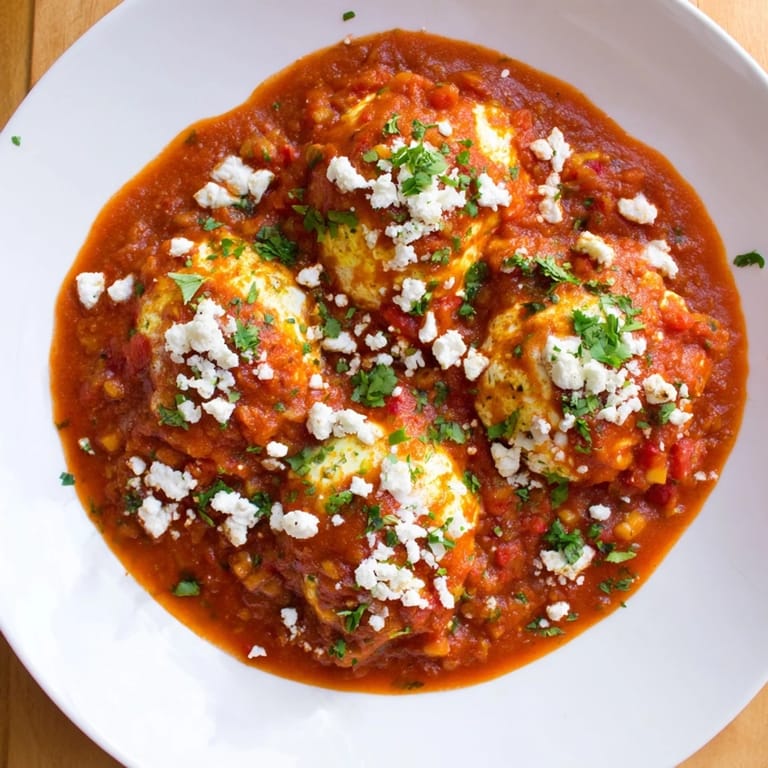
- Using the back of a spoon, make 4 shallow wells in the sauce, spacing them evenly so they don't touch. Crack an egg into each well, letting it settle into the warm sauce without breaking the yolk.
- Cover and cook with patience:
- Place a lid on the skillet and keep the heat at medium-low—you're not trying to rush this part. After 6 to 8 minutes, peek under the lid; the egg whites should be set and opaque while the yolks still jiggle slightly when you gently shake the pan.
- Finish and serve:
- Remove from heat and scatter the fresh parsley and cilantro across the top, along with crumbled feta if you're using it. Serve immediately in the skillet with warm pita or crusty bread for scooping and soaking up every drop of sauce.
 Save to Pinterest
 There was an evening when my neighbor stopped by and I invited him in for what I'd just finished making, and watching him dip bread into that golden yolk and close his eyes for a second—that's when I understood why this dish matters. It's not fancy or complicated, but somehow it makes people slow down and pay attention to what they're eating.
The Magic of Spices
The reason this dish tastes so much more interesting than the sum of its parts is the spice combination, which creates something warm and layered rather than harsh. Cumin brings an earthy comfort, paprika adds color and mild sweetness, and coriander ties everything together with a subtle floral note that most people can't quite name. When I stopped thinking of spices as optional flavor boosts and started treating them as essential ingredients that needed proper introduction to the dish, shakshuka became something I made again and again.
Sauce Texture and Timing
The most common mistake is cooking the sauce for too short a time, which leaves it thin and watery instead of thick and clingy. The 10 to 12 minutes of simmering might feel long when you're hungry, but that's when the flavors concentrate, the tomato acidity mellows, and the sauce thickens into something that actually clings to the eggs instead of drowning them. I learned this by making it too quickly once and ending up with something that looked more like tomato soup with eggs floating in it.
Variations and Additions
While the classic version is perfect as-is, this dish is flexible enough to welcome additions without losing its identity. I've added sautéed spinach, roasted eggplant, or even caramelized onions on different occasions, and each time it felt like a natural expansion rather than a disruption. The sauce is forgiving and actually improves when it has more vegetables to embrace.
- Stir in a handful of fresh spinach or thinly sliced eggplant during the simmering phase so it softens into the sauce.
- A dollop of labneh or Greek yogurt on the side provides a cool, tangy contrast that balances the warm spices beautifully.
- For a smokier flavor, add a pinch of smoked paprika when you add the regular paprika.
 Save to Pinterest
 This is the kind of dish that tastes like home, whether that's Jerusalem or your own kitchen. Make it often, adjust the spices to your mood, and remember that the best version is always the one shared with someone you actually like.
Answers to Recipe Questions
- → What spices are essential for authentic flavor?
Cumin, sweet paprika, and ground coriander provide the warm base flavors, while cayenne and red chili add optional heat.
- → How to achieve perfectly cooked eggs in the sauce?
Make small wells in the simmering sauce, crack eggs into each, cover, and cook until whites are set but yolks remain soft, about 6-8 minutes.
- → Can I customize the vegetables used?
Yes, you can add sautéed spinach or eggplant for variation, enhancing both flavor and texture.
- → What accompaniments pair well with this dish?
Warm pita, crusty bread, labneh, or Greek yogurt complement the rich sauce and provide balance.
- → Is this dish suitable for gluten-free diets?
Yes, the core ingredients contain no gluten. Just be cautious with any sides like bread if gluten is a concern.