 Save to Pinterest
 My kitchen smells like chicken broth and thyme on the days when life feels a bit overwhelming, and that's when I know this soup needs to happen. There's something about the simplicity of it—just one pot, a handful of vegetables, and the gentle bubbling sound of everything coming together—that makes cooking feel less like a task and more like taking a breath. I discovered this recipe on a Tuesday afternoon when my fridge was half-empty and my energy was lower, and somehow it became the thing I reach for whenever I need comfort without complexity.
I made this for my neighbor when she came home from the hospital, and watching her sit at my kitchen counter with a steaming bowl, tears streaming down her face because she could finally taste food again, reminded me why simple recipes matter. She asked for the recipe that night, and three years later she still texts me photos of her version with variations I never would have thought of. That's when recipes stop being just instructions and become conversations between people who care.
Ingredients
- Boneless, skinless chicken breasts: Cut them into small, bite-sized pieces so they cook through quickly and distribute evenly throughout the soup—nobody wants hunting for chicken.
- Medium onion, finely chopped: The finer you chop it, the more it dissolves into the broth and sweetens everything, creating flavor without a noticeable chunk.
- Carrots, peeled and sliced: Slicing rather than dicing keeps them visible in the bowl and gives you that satisfying texture contrast against the tender rice.
- Celery stalks, sliced: This is the secret backbone flavor—don't skip it thinking it won't matter, because it absolutely will.
- Garlic cloves, minced: Three cloves sounds bold until they hit hot oil and transform into something mellow and golden; trust the amount.
- Long-grain white rice, rinsed: Rinsing removes the starch so your soup stays clear and bright instead of turning cloudy, which makes a surprising difference in how it looks and feels.
- Low-sodium chicken broth: Use the good stuff here—this is basically your soup's backbone, so a quality broth makes all the difference.
- Olive oil or unsalted butter: Either works, though butter adds a whisper of richness that oil can't quite match.
- Dried thyme: One teaspoon is enough to say hello without overwhelming everything else; dried thyme is actually better here than fresh since it holds its flavor through the simmering.
- Bay leaf: It sits quietly doing its work for 20 minutes, then you fish it out—simple, effective, necessary.
- Black pepper and salt: Wait until the end to add more salt since the broth already carries some; this way you won't accidentally over-season.
- Fresh parsley, chopped: Stir this in right before serving so it stays bright and verdant, adding color and a whisper of freshness at the last moment.
- Lemon wedges, optional: A squeeze of lemon at the table wakes up the whole bowl and lets everyone customize their own brightness level.
Tired of Takeout? 🥡
Get 10 meals you can make faster than delivery arrives. Seriously.
One email. No spam. Unsubscribe anytime.
Instructions
- Build your flavor foundation:
- Heat oil or butter in your pot over medium heat until it shimmers, then add onion, carrots, and celery. Sauté for about 5 minutes, stirring occasionally—you want the vegetables to soften slightly and release their sweetness into the oil, filling your kitchen with that unmistakable savory aroma.
- Wake up the garlic:
- Add minced garlic and cook for just 1 minute, stirring constantly so it softens but doesn't brown or turn bitter. You'll know it's ready when you catch that pungent, almost sharp smell beginning to mellow into something sweet.
- Sear the chicken briefly:
- Toss in your chicken pieces and cook for 2 to 3 minutes, stirring as you go, until the outside develops a light golden color. They don't need to cook through at this point—this is just about sealing in flavor, and honestly, the partial browning adds an invisible depth.
- Bring everything together:
- Add the rinsed rice, chicken broth, thyme, bay leaf, salt, and pepper all at once, stirring well to distribute the rice and seasonings evenly. Watch as everything combines into something that smells like actual comfort.
- Simmer gently to completion:
- Bring to a boil, then immediately reduce heat to low, cover, and let it simmer for 20 to 25 minutes, stirring every few minutes to prevent sticking. The rice will gradually absorb the liquid, the chicken will turn opaque and tender, and you'll know it's done when you taste a grain of rice and it's completely soft.
- Finalize and season:
- Fish out the bay leaf with a spoon, then taste a spoonful and adjust salt and pepper as needed—everyone's broth is slightly different, so trust your own palate here. Stir in the fresh parsley right before ladling into bowls.
- Serve with warmth:
- Ladle into bowls and set a lemon wedge on the side for anyone who wants to add brightness, then watch people relax as they eat something this straightforward and good.
 Save to Pinterest
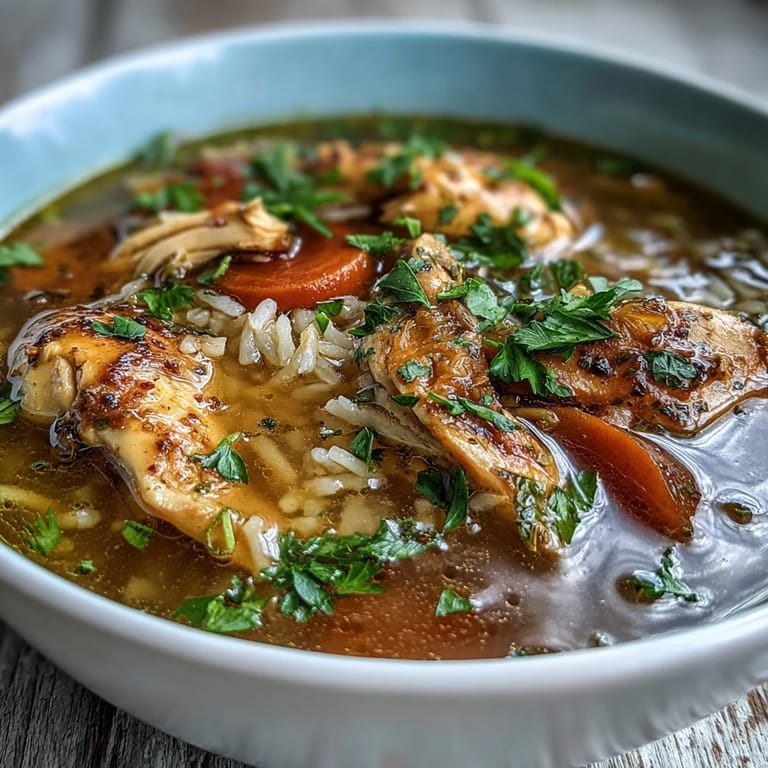
 There's a moment near the end of cooking when you uncover the pot and the steam rises up and suddenly you can see the actual chicken floating in rich, golden broth surrounded by rice swollen with flavor—that's when you realize how much effort went into creating something that tastes effortless. It's a small magic, the kind that happens every time you make it, and it never gets old.
Ways to Make It Your Own
I learned pretty quickly that this soup welcomes experimentation, which is part of why it's become such a reliable foundation in my cooking. You can swap the white rice for brown rice—just add 15 to 20 extra minutes of simmering time and be patient while it absorbs the liquid. If you want vegetables beyond the basic three, spinach or kale added in the final 5 minutes wilts beautifully without falling apart or turning the broth murky.
The Flavor Deepening Secret
Once, while helping my mom clean out her refrigerator, I found a Parmesan rind she'd been saving, and on impulse I dropped it into the soup while it simmered. Within minutes, the broth tasted rounder, deeper, more complex—not obviously cheesy, just mysteriously richer. I fish it out before serving, but that 20-minute swim in hot broth transfers a subtle umami that makes people ask what your secret ingredient is, and you get to smile mysteriously and say nothing.
Storage and Reheating Wisdom
Leftovers actually taste better the next day because the flavors have more time to mingle and deepen, though the rice will have absorbed even more liquid than it already did. Reheat gently on the stovetop with a splash of extra broth to bring it back to the right consistency, or use the microwave in a pinch—either way, this soup never becomes less than wonderful, just different from one day to the next.
- Store in an airtight container in the refrigerator for up to four days, or freeze for up to three months in portions that thaw exactly when you need them.
- If you're making this ahead, slightly undercook the rice by 2 minutes, since it will continue softening as it cools and reheats.
- A squeeze of fresh lemon right before eating makes even day-three leftovers taste bright and newly made.
 Save to Pinterest
 This soup has become my answer to so many questions—when someone's sick, when the week is long, when you want something that tastes like care. Make it once and you'll have it forever.
Answers to Recipe Questions
- → What type of rice works best in this soup?
Long-grain white rice is ideal for this dish; it cooks evenly and absorbs flavors well. Brown rice can be used but requires a longer simmering time.
- → Can I use chicken thighs instead of breasts?
Yes, boneless skinless chicken thighs can be substituted for a richer flavor and juicier texture. Adjust cooking time accordingly.
- → How can I add extra vegetables to the dish?
Spinach or kale can be stirred in during the last few minutes of cooking to add vibrant greens and extra nutrients.
- → Is it necessary to rinse the rice before cooking?
Rinsing the rice removes excess starch, preventing the soup from becoming too thick and helping the grains remain separate.
- → What seasoning adjustments can enhance flavor?
Adding a Parmesan rind during simmering enriches the broth's depth. Fresh lemon wedges served alongside brighten the final taste.