 Save to Pinterest
 There's something about arranging a Turkish meze platter that makes you feel like you're welcoming people into your home, even before they arrive. I learned this while visiting Istanbul years ago, watching vendors in the Grand Bazaar layer their platters with such care—each cheese, each olive, each herb placed with intention. The beauty of it struck me: this wasn't just food, it was a gesture, a way of saying sit with me and let's share something good. Since then, pulling together a meze has become my favorite way to start any gathering, turning simple ingredients into something that feels both generous and effortless.
I remember pulling this together for a Sunday afternoon when friends dropped by unexpectedly, and instead of ordering something, I raided the pantry and fridge. Within twenty minutes, the platter was done, and watching people dive in—that quiet contentment of sharing food made from what you already had—reminded me why I keep returning to this approach. There's freedom in knowing you can create something memorable without stress.
Ingredients
- Chickpeas (1 can, drained): The foundation of silky hummus—rinse them well to remove the starchy liquid that can make it gluey instead of creamy.
- Tahini (2 tbsp): This sesame paste is the secret to authentic texture; store it in the fridge and give it a good stir before using, as it settles.
- Extra-virgin olive oil: Use the good stuff here—it's tasted raw, so quality matters more than anywhere else in the recipe.
- Garlic (1 clove, minced): Raw garlic in hummus packs a punch, so go easy unless you love bold flavors.
- Fresh lemon juice (2 tbsp): Bottled won't give you the same brightness; squeeze it fresh just before blending.
- Ground cumin (1/2 tsp): This warm spice is what makes the hummus taste authentically Turkish rather than generic.
- Feta cheese (100 g, cubed): Salty and tangy, it's the anchor of the cheese section—look for creamy versions that crumble slightly.
- Beyaz peynir or extra feta: This mild white cheese balances the feta's intensity and adds a creamy contrast.
- Kasseri or halloumi: The semi-hard cheese brings a slightly salty, firmer texture that rounds out the trio.
- Mixed Turkish olives (100 g): Green ones are bright and briny, black ones are mellow—mixing both creates complexity in each bite.
- Dried oregano (1/2 tsp): Toss this with the olives and oil to wake them up with a Mediterranean warmth.
- Fresh vegetables (cucumber, tomato, lemon): These add crunch, acidity, and color—arrange them just before serving so they stay crisp.
- Fresh parsley (2 tbsp): The final flourish that makes everything look alive on the platter.
- Warm pita or flatbread: Toast it lightly so it's soft but has a bit of structure for scooping.
Tired of Takeout? 🥡
Get 10 meals you can make faster than delivery arrives. Seriously.
One email. No spam. Unsubscribe anytime.
Instructions
- Blend the hummus:
- Add chickpeas, tahini, olive oil, minced garlic, lemon juice, cumin, salt, and pepper to a food processor and pulse, scraping down the sides every few seconds, until you reach a silky consistency—usually about two minutes. Taste and adjust, adding more lemon if it needs brightness or more salt if it feels flat.
- Transfer and drizzle:
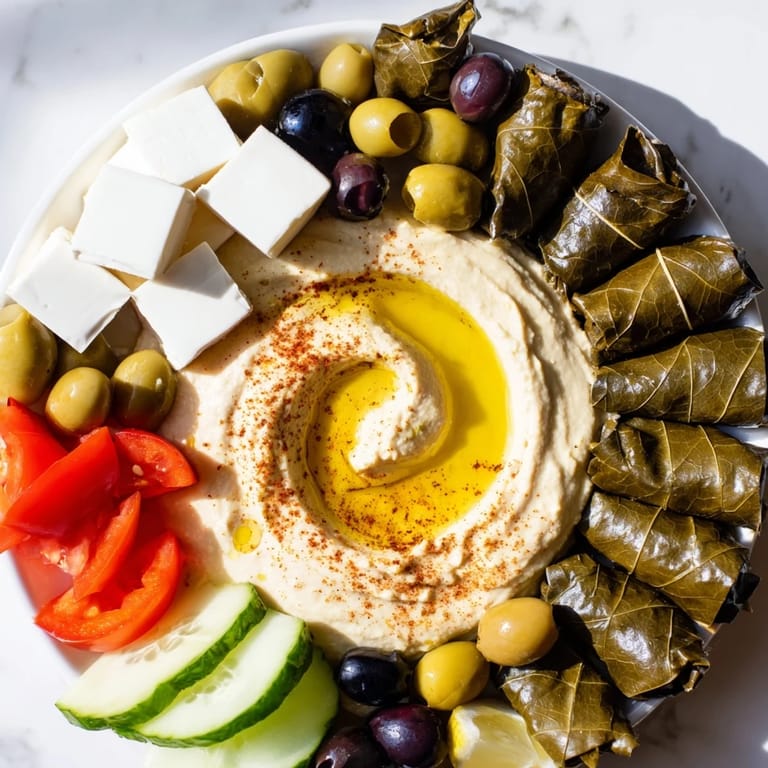
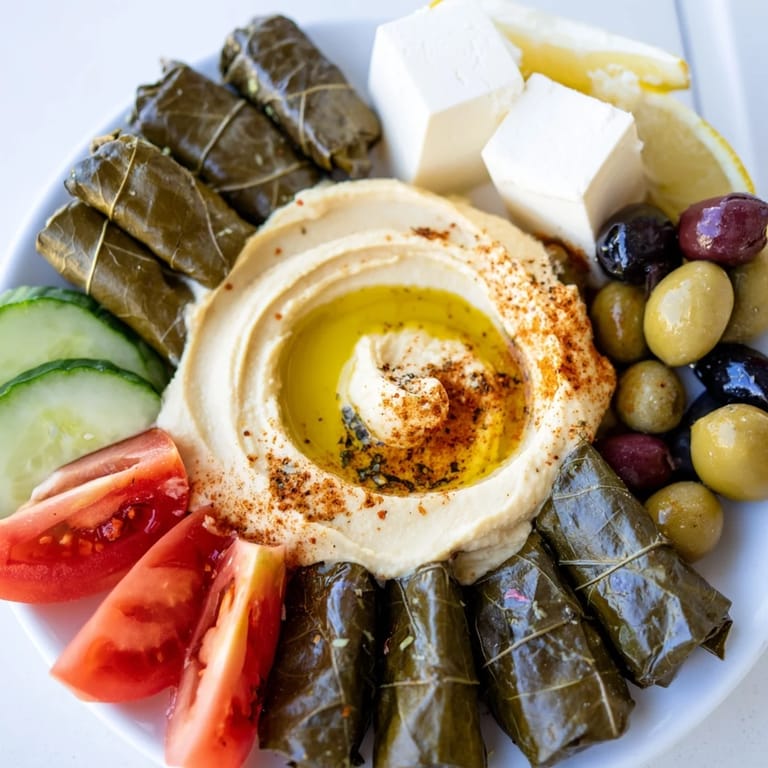
- Scoop the hummus into a serving bowl and create a shallow well in the center with the back of a spoon, then drizzle with olive oil and a pinch of paprika or sumac for that signature look. This little detail makes it feel intentional.
- Arrange the dolmas:
- Place the stuffed grape leaves neatly on your platter, nestling them so they don't roll—this is where presentation starts building the invitation to dig in.
- Compose the cheeses:
- Cut each cheese into bite-sized pieces and group them by type on the platter, leaving space between so colors and textures remain distinct. The visual variety is half the appeal.
- Dress the olives:
- Toss the olives with olive oil and dried oregano in a small bowl, letting the flavors mingle for a minute before placing them on the platter or in their own little dish. The oil on them catches the light beautifully.
- Layer in the freshness:
- Arrange cucumber slices, tomato wedges, and lemon wedges around the platter, then scatter the fresh parsley over everything to add color and a hint of herbal aroma.
- Serve with warmth:
- Warm your pita in a dry skillet or wrapped in foil in the oven, cut it into triangles, and set it nearby for scooping and wrapping.
 Save to Pinterest
 The first time I served this to my partner's family, his grandmother took one bite of the hummus and closed her eyes—not in criticism, but in recognition. She told me it reminded her of her mother's kitchen in Ankara, and suddenly I understood that food carries memory in ways words can't. That's what a meze platter does when it's made with attention: it becomes more than snacks, it becomes a moment where people feel seen and welcomed.
Building Your Platter Like You Mean It
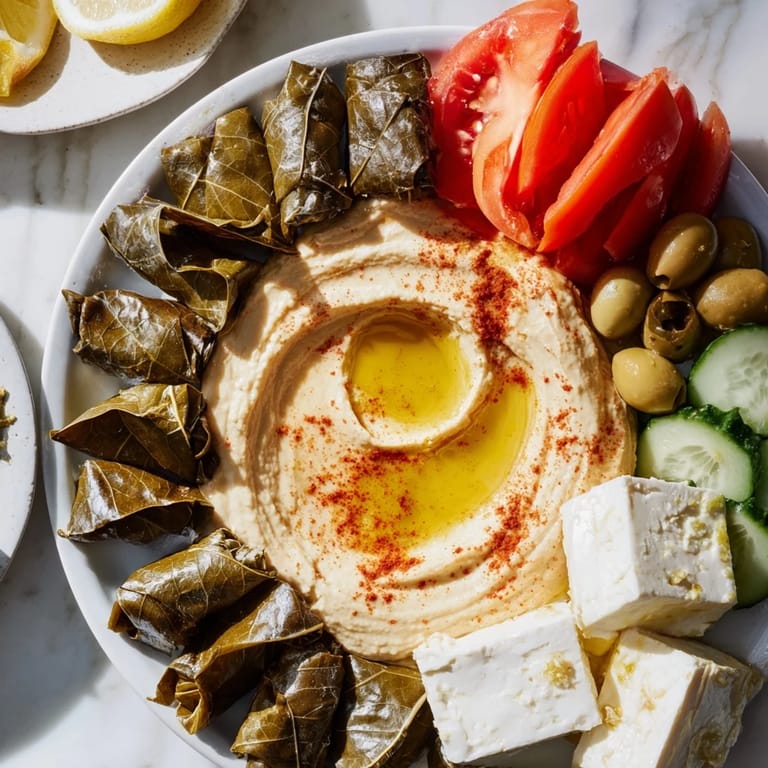
The secret to a meze that feels effortless is actually planning where everything goes. I lay out my serving platter first, completely empty, and imagine the flow: where does the eye land? Usually I anchor with the hummus bowl in the center, surround it with the brightest elements (tomatoes, parsley, lemon), and tuck the cheeses and olives into the pockets. The negative space matters as much as what fills it—a crowded platter looks chaotic, but a thoughtfully spaced one looks generous. Step back and look at it from where people will sit, adjusting until it feels balanced to you.
When to Make This Ahead (and When Not To)
You can prepare the hummus hours before serving, even a day ahead—it actually deepens in flavor overnight. The cheese can be cut and refrigerated, covered, for several hours. But the fresh vegetables and the olive oil drizzle should happen within 30 minutes of serving; cucumbers wilt, tomatoes weep into the platter, and that beautiful pool of oil on the hummus gets dull when it sits. I've learned that the best meze is the one where you finish the last touches just as people arrive.
Why This Works as a Meal
A meze platter shouldn't feel like an appetizer trying to apologize for not being a main course—it's its own complete experience when you approach it that way. The proteins come from the cheese and chickpeas, the healthy fats from the olives and tahini, the fiber and crunch from the vegetables. Pair it with warm bread and you have something that satisfies without heaviness. I've built entire evenings around a platter like this, and somehow it always feels like enough.
- Serve it with a crisp white wine like Turkish Narince, or try raki if you want to feel like you're in Istanbul.
- Add roasted red peppers or grilled eggplant if you want to expand without complicating the prep.
- Make extra hummus—people always want more, and it keeps for up to five days refrigerated.
 Save to Pinterest
 There's something deeply human about gathering around food that asks nothing except to be enjoyed. A meze platter, for all its simplicity, somehow creates that feeling every single time. When you set one down in the center of the table, you're not just offering food—you're offering a moment.
Answers to Recipe Questions
- → What are the key ingredients in the Turkish meze platter?
Key ingredients include creamy hummus made with chickpeas and tahini, stuffed grape leaves (dolmas), assorted cheeses like feta and halloumi, marinated mixed olives, fresh cucumber, tomato wedges, lemon, parsley, and warm pita or flatbread.
- → How can I prepare the hummus component?
Blend drained chickpeas, tahini, olive oil, minced garlic, fresh lemon juice, cumin, salt, and pepper in a food processor until smooth. Adjust seasoning as needed and drizzle with olive oil before serving.
- → Can I make the dolmas from scratch?
Yes, to make dolmas from scratch, cook rice with fresh herbs and spices, then carefully stuff grape leaves before cooking them gently until tender.
- → What garnishes complement the platter?
Sliced cucumber and tomato wedges, fresh lemon wedges, and chopped parsley add color and freshness to the platter, balancing the richness of the cheeses and hummus.
- → What drinks pair well with the meze platter?
Traditional pairings include crisp white wines such as Turkish Narince or a classic raki for a more authentic experience.
- → Are there common allergens to be aware of?
This platter contains sesame from tahini, dairy from the cheeses, and gluten if served with regular pita. Be mindful of potential nut traces in store-bought elements.