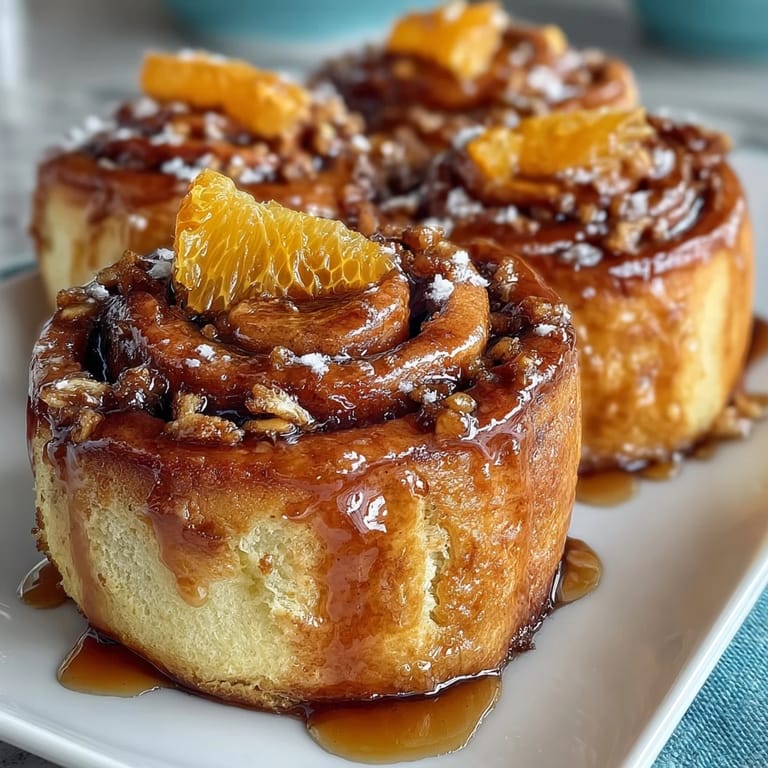
 Save to Pinterest
 There's something magical about waking up to the smell of orange rolls baking—especially when you didn't have to wake up early to make them. My neighbor brought over a batch one Sunday morning, still warm from her oven, and I was completely won over by how the citrus brightness cut through the buttery sweetness. She mentioned she'd mixed the dough the night before, which seemed like a game-changer for someone like me who isn't exactly a morning person. That first bite, with the tender crumb and the zesty glaze, made me realize overnight rolls weren't just convenient—they were actually better this way.
I made these for my book club last month, and honestly, it was one of those rare moments where something I baked actually impressed people—not just politely, but genuinely. Everyone kept reaching for seconds, and someone asked if I'd bought them from a bakery. I loved being able to say I'd made them the day before and just popped them in the oven that morning, looking completely calm while they emerged golden and fragrant.
Ingredients
- All-purpose flour (3 1/2 cups): The structure of your rolls, so measure it by weight if you can—it makes a real difference in how tender they turn out.
- Granulated sugar (1/4 cup for dough, 1/2 cup for filling): Sugar feeds the yeast and creates that golden crust, so don't skip it or reduce it significantly.
- Instant dry yeast (2 1/4 tsp): Make sure it's fresh; old yeast won't give you the rise you're counting on overnight.
- Salt (1/2 tsp): A small amount, but it balances the sweetness and strengthens the dough structure.
- Whole milk (3/4 cup, lukewarm): Warm milk activates the yeast, so test it on your wrist—it should feel comfortable, not hot.
- Unsalted butter (1/4 cup melted for dough, 1/4 cup softened for filling): This is what makes them tender and rich; room temperature matters for the filling so it spreads smoothly.
- Large eggs (2, room temperature): They bind the dough and add richness, so let them sit on the counter for a bit before mixing.
- Fresh orange zest (zest of 2 large oranges for dough, 1 large orange for filling): This is the star—use a microplane for fine zest that distributes evenly.
- Powdered sugar (1 cup for glaze): Sifted if you have lumps, so your glaze stays smooth and drizzles beautifully.
- Fresh orange juice (2–3 tbsp for glaze): Freshly squeezed is noticeably better, and the amount depends on how thick you like your glaze.
Tired of Takeout? 🥡
Get 10 meals you can make faster than delivery arrives. Seriously.
One email. No spam. Unsubscribe anytime.
Instructions
- Mix your dry base:
- In a large bowl, whisk together flour, sugar, yeast, and salt so the yeast is evenly distributed throughout. This prevents little pockets of raw yeast flavor in your finished rolls.
- Combine the wet ingredients:
- In another bowl, warm the milk briefly and mix it with melted butter, room-temperature eggs, and fresh orange zest. You want everything to be at a similar temperature so the dough comes together evenly.
- Bring it together:
- Pour the wet mixture into the dry ingredients and stir until a shaggy, sticky dough forms. Don't worry if it looks messy—that's exactly right.
- Knead until silky:
- By hand or with a stand mixer using the dough hook, knead for 7–8 minutes until the dough becomes smooth, elastic, and only slightly sticky. You'll feel when it transitions from rough to supple.
- Let it rise the first time:
- Place the dough in a greased bowl, cover loosely with plastic wrap, and let it sit in a warm spot for 1–2 hours until it roughly doubles. A sunny windowsill or turned-off oven with the light on works well.
- Roll and fill:
- Punch down the dough gently and roll it out on a lightly floured surface into a 10x16-inch rectangle. The dough should be thin enough to fill but thick enough to handle without tearing.
- Spread the filling:
- Brush softened butter evenly across the dough, then sprinkle with sugar and orange zest, leaving a small edge bare so it seals when rolled. The filling should be generous but not so much that it squishes out when you cut.
- Roll tightly:
- Starting from the longer edge, roll the dough up as tightly as you can without tearing it, then use a sharp knife or unflavored dental floss to cut it into 12 even rolls. Dental floss works surprisingly well because it doesn't compress the dough like a knife does.
- Arrange and refrigerate:
- Place rolls cut-side up in a greased 9x13-inch baking dish, cover tightly with plastic wrap, and refrigerate overnight—or up to 16 hours. This is the magic step that makes your morning easy.
- Bring them to room temperature:
- The next morning, remove the rolls from the fridge and let them sit at room temperature for 45–60 minutes until they're puffy and nearly doubled. This gradual warming helps them rise beautifully in the oven.
- Bake until golden:
- Preheat your oven to 350°F, then bake the rolls for 22–25 minutes until the tops are deep golden brown. They should smell incredible—that's your cue they're nearly done.
- Make the glaze:
- While the rolls bake, whisk together powdered sugar, fresh orange juice, and zest until smooth and pourable. If it's too thick, add more juice a teaspoon at a time.
- Finish with a drizzle:
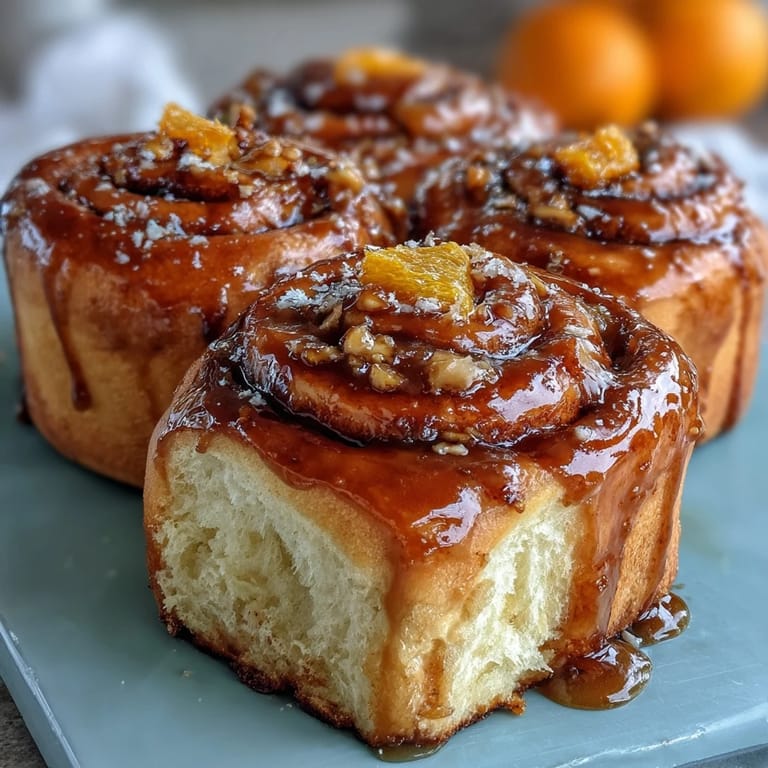
- Remove the rolls from the oven and let them cool for just a minute or two, then drizzle the glaze generously over the warm rolls. The warmth helps the glaze set slightly while staying glossy.
 Save to Pinterest
 I made a batch during a snowstorm last winter, and my partner woke up to the smell of them baking while the snow came down outside. We sat at the kitchen table in our pajamas, eating warm rolls with coffee, and he said something like, "This is why I love you," which felt like the highest compliment a roll could receive. That moment stuck with me more than the recipe itself did.
Why Orange Zest is Everything
Fresh orange zest is genuinely the difference between these rolls and the forgettable cinnamon-sugar ones you've made a hundred times. The citrus oils release the moment you zest the orange, filling your kitchen with this bright, cheerful smell that makes people automatically smile when they walk in. If you're used to dried zest or orange extract, fresh zest tastes like it came from a completely different fruit—sharper, fresher, more alive somehow.
The Overnight Rise Secret
Letting the dough sit in the fridge overnight isn't just about convenience, though that's lovely. Cold fermentation actually develops the flavor and improves the texture—the rolls stay tender longer because the dough has time to fully hydrate, and the yeast works slowly at a pace that creates more complex flavor. It's one of those rare cases where taking the lazy route actually makes something better.
How to Tell When Everything's Ready
Learning to read your dough instead of just following times has completely changed how I bake. The first rise is done when the dough looks relaxed and about double in size—it should jiggle slightly when you tap the bowl. When you pull the rolls out in the morning, they should be visibly puffy but still have a little spring back when you gently poke them, which means they'll rise more in the oven.
- The glaze should be pourable but still coat the back of a spoon—not so thick it sits in clumps, not so thin it runs right off.
- If your kitchen is particularly cold, you can let the rolls sit longer in the morning; there's a pretty wide window where they'll turn out beautifully.
- Leftover rolls keep in an airtight container for three days and reheat wonderfully wrapped in foil at 300°F for about ten minutes.
 Save to Pinterest
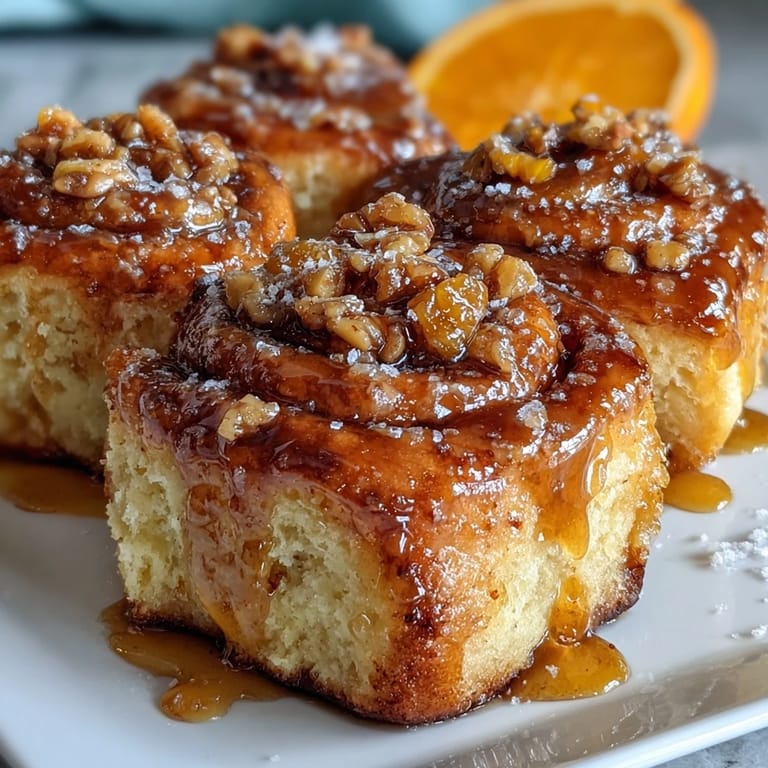
 These rolls have become my go-to breakfast for when I want to impress without stress. Make them once, and you'll understand why overnight rolls are a game-changer for anyone who loves good food but loves sleep more.
Answers to Recipe Questions
- → How long should the dough rise overnight?
Cover the rolls tightly and refrigerate overnight to let the dough rest and flavors develop slowly, typically 8 hours.
- → Can I add spices to the filling?
Yes, a pinch of ground cardamom blends well with the orange zest for a subtle warm spice touch.
- → What type of flour is best for these rolls?
All-purpose flour works well to create soft, tender rolls with good structure.
- → How do I make the glaze for topping?
Whisk powdered sugar with fresh orange juice and zest until smooth, then drizzle over warm rolls just before serving.
- → What is the best way to cut the dough into even pieces?
Use a sharp knife or dental floss to slice the rolled dough evenly into 12 pieces for uniform baking.