 Save to Pinterest
 There's a moment in every cook's life when a dish just clicks, and for me, it happened on a drizzly autumn evening when I was trying to recreate the soul-warming comfort of French onion soup in a completely different form. I'd spent hours watching onions transform in a hot pan, their sweetness deepening into something almost caramel-like, and thought: why not tuck this magic inside a chicken breast? The result was so unexpectedly elegant that I've made it countless times since, each time remembering that first happy accident in my kitchen.
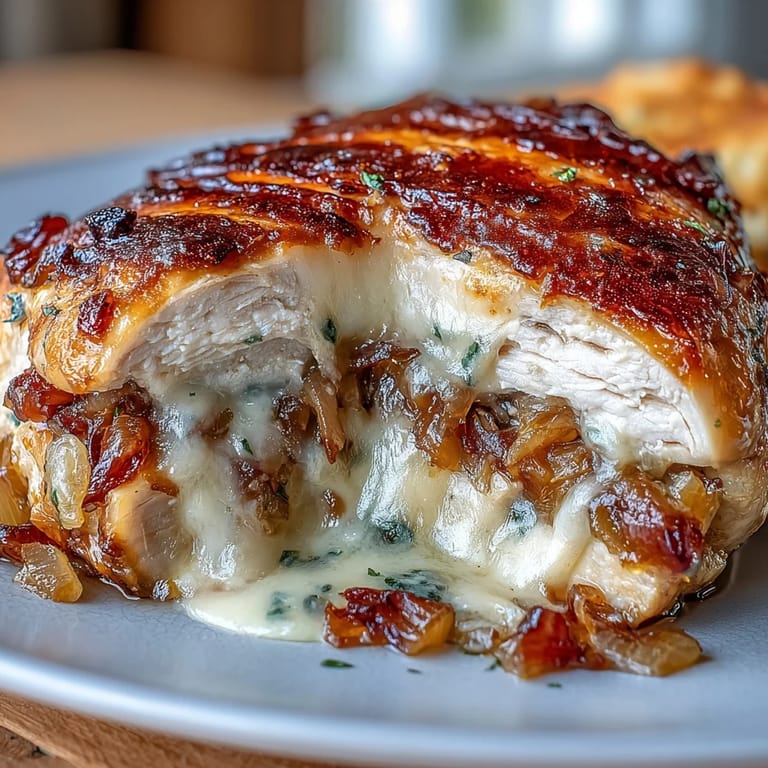
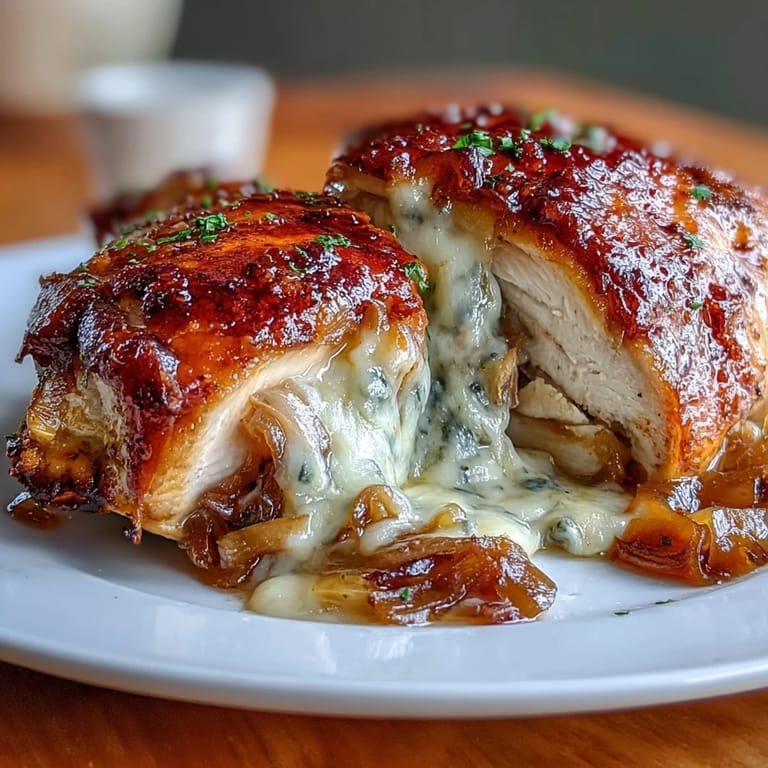
I'll never forget cooking this for my neighbor Sarah, who'd been hesitant about chicken ever since a dry breast incident years before. When she cut into hers and that molten cheese and sweet onion filling poured out, her expression shifted—skepticism melted into genuine delight. She asked for the recipe that same night, and now it's become her go-to dish when she wants to feel like she's mastered something special.
Ingredients
- Boneless, skinless chicken breasts: The canvas for everything else; pat them dry before butterflying so they stay tender and cook evenly.
- Yellow onions: They caramelize into something entirely different from their raw selves, turning sweet and deep amber without any rush.
- Unsalted butter: Non-negotiable for the gentle, even cooking of the onions, letting their natural sugars shine.
- Garlic: Added only after the onions have softened so it doesn't burn and turn bitter.
- Fresh thyme: A whisper of herbaceous earthiness that bridges French onion soup and this unexpected chicken dish perfectly.
- Balsamic vinegar: The secret that makes you wonder what it is—just a teaspoon cuts through the richness and adds complexity.
- Beef broth: This mimics the deep, savory base of traditional French onion soup, bringing umami depth.
- Gruyère cheese: Melts into creamy perfection; Swiss works in a pinch, but Gruyère has a nutty sophistication that feels right here.
- Parmesan cheese: The topcoat that gets golden and crispy, adding a salty, aged counterpoint to the soft filling.
Tired of Takeout? 🥡
Get 10 meals you can make faster than delivery arrives. Seriously.
One email. No spam. Unsubscribe anytime.
Instructions
- Start your oven and prep your space:
- Heat your oven to 400°F and get your oven-safe skillet ready, because you'll be moving from stovetop to oven without pausing.
- Coax magic from the onions:
- Melt butter in a large skillet over medium heat, add sliced onions, and let them cook for about 15 minutes, stirring regularly so they caramelize evenly instead of browning too fast. You're looking for that deep golden color and the sweet smell that fills your whole kitchen.
- Deepen the flavor:
- Once onions are soft and golden, add minced garlic, thyme, a pinch of sugar, and salt; cook just 2 more minutes until the garlic becomes fragrant. Then pour in balsamic vinegar and beef broth, letting them simmer until the liquid mostly evaporates and the onions turn richly caramelized, about 5 minutes.
- Butterfly your chicken with intention:
- Pat each breast dry with paper towels, then using a sharp knife, carefully cut a horizontal pocket into the thickest side of each breast, being careful not to slice all the way through. You want a cozy pocket, not two separate pieces.
- Season and stuff generously:
- Season the inside and outside of each breast with salt and pepper, then fill each pocket with a generous spoonful of those beautiful caramelized onions and a slice of Gruyère cheese. If the pocket wants to spring open, secure it with a toothpick.
- Crown with cheese:
- Sprinkle the grated Parmesan over the top of each stuffed breast so it gets golden and crispy as it cooks.
- Sear until golden:
- Heat olive oil in an oven-safe skillet over medium-high heat and sear the stuffed breasts for 2 to 3 minutes per side until the outside turns golden brown. This isn't about cooking them through; it's about creating a flavorful crust.
- Finish in the oven:
- Transfer the skillet directly to your 400°F oven and bake for 20 to 25 minutes, until the internal temperature reaches 165°F at the thickest part. You can check this with a meat thermometer if you want absolute certainty.
- Rest before serving:
- Let the chicken rest for 5 minutes once it comes out of the oven so the juices redistribute and stay inside instead of running onto your plate. Garnish with fresh parsley if you have it.
 Save to Pinterest
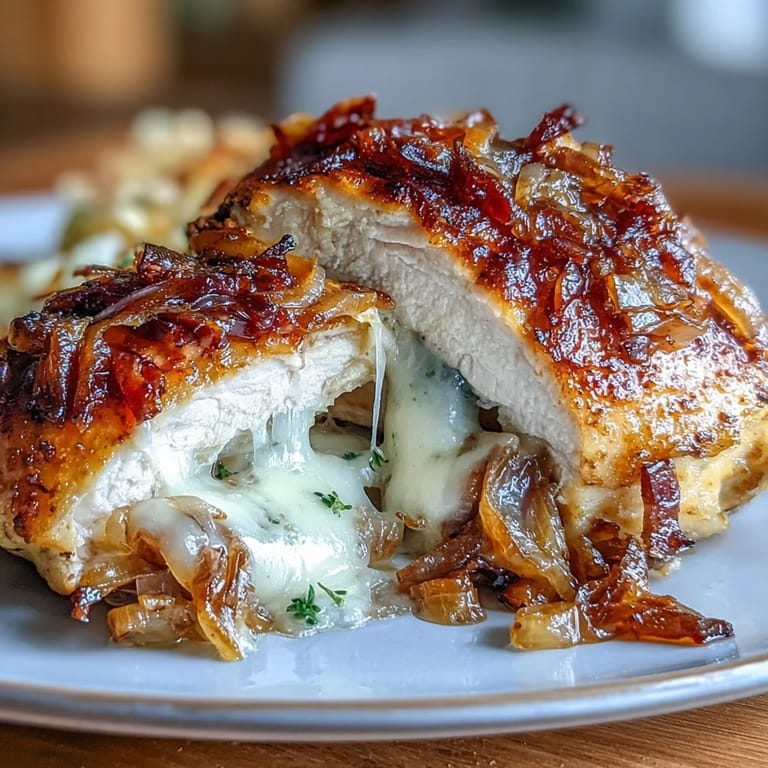
 There's something almost theatrical about serving this dish, the way your guests will cut into their chicken and watch the filling spill out in that golden, savory pool. It transforms a simple weeknight dinner into something that feels like you've been planning it all day, even if you started thinking about it just an hour before.
Building Deeper Flavor
The magic of this dish lives in the long, slow caramelization of the onions, which is where most of the actual cooking time lives. Unlike a quick sauté, true caramelization means letting the natural sugars in the onions break down and concentrate, turning them deep golden and almost jammy. This isn't something you can skip or rush; it's the foundation that makes everything else worth doing, and it's also the one step that makes people ask if you're some kind of secret chef.
Cheese Choices and Why They Matter
Gruyère is the gold standard here because it melts smoothly without becoming greasy, and it has a slightly nutty, aged complexity that echoes the depth of French onion soup. If you can't find it or want to experiment, Swiss cheese works beautifully because it has a similar melting quality and subtle sweetness. The Parmesan on top serves a different purpose entirely—it gets crispy and adds a salty, aged bite that contrasts with the soft filling underneath, creating texture and preventing the dish from feeling one-dimensional.
Making It Your Own
This recipe feels solid as written, but it also welcomes small adjustments depending on your mood and what you have on hand. A splash of dry white wine when you're caramelizing the onions adds complexity and a whisper of acidity that brightens everything. You can add a small handful of fresh thyme sprigs directly into the filling for more herbal presence, or even sneak in a teaspoon of Dijon mustard if you want an unexpected savory note that nobody will quite be able to identify but will make them say the chicken tastes exceptional.
 Save to Pinterest
 This dish has quietly become one of those recipes that reminds me why I love cooking—it's elegant without being fussy, it tastes like it took all afternoon even when it didn't, and it turns a regular Tuesday night into something worth remembering. Make it once and you'll find yourself coming back to it again and again.
Answers to Recipe Questions
- → How do I caramelize the onions for best flavor?
Cook sliced onions slowly in butter over medium heat, stirring often, until golden and soft—about 15 minutes. Adding a pinch of sugar and a splash of balsamic vinegar enhances sweetness and depth.
- → Can I substitute the cheese used in the filling?
Gruyère can be replaced with Swiss or provolone cheese depending on preference, maintaining a melty, creamy texture inside the chicken.
- → How do I ensure the chicken stays juicy after stuffing?
Carefully cut a pocket without piercing through, season well inside and out, and sear before baking to lock in juices. Resting 5 minutes post-bake helps redistribute moisture.
- → What can I serve alongside this chicken dish?
Roasted vegetables or creamy mashed potatoes complement the rich flavors, creating a balanced and satisfying meal.
- → Is this dish suitable for a gluten-free diet?
Yes, provided you use gluten-free beef broth and check all labels carefully to avoid gluten-containing ingredients.