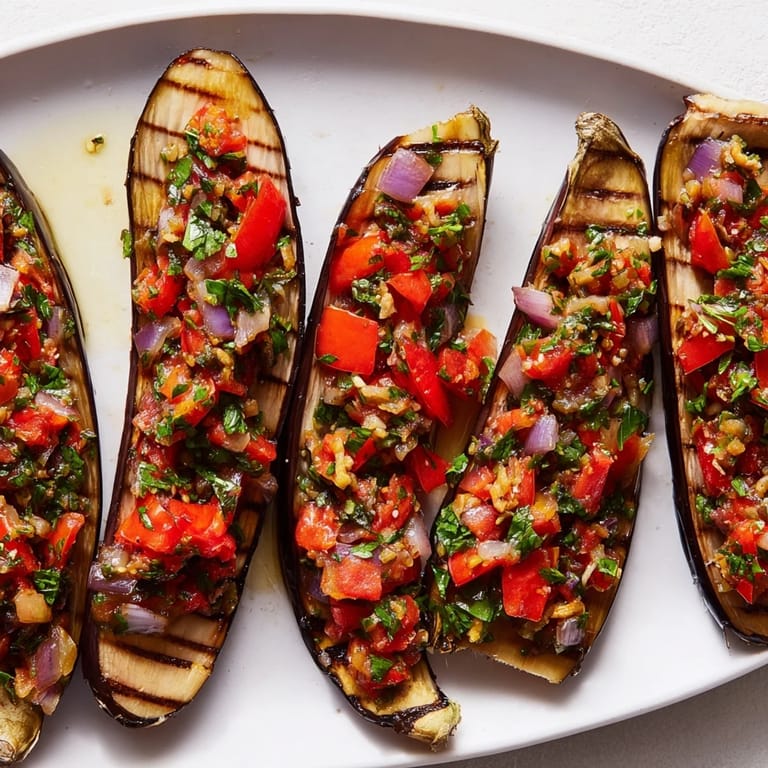
 Save to Pinterest
 My first encounter with imam bayildi happened in a small Istanbul kitchen where an elderly woman named Fatma was preparing it for her family's weekly gathering. She moved with such ease, halving the eggplants and stuffing them with tomato and onion filling that smelled like her garden. Watching her work, I realized this wasn't just a dish—it was a quiet meditation on generosity, built entirely around vegetables and olive oil. Since that afternoon, I've made it countless times, and it never fails to transport me back to that warm kitchen and the way she smiled when everyone came back for seconds.
I remember making this for a potluck at work where everyone brought something traditional from their heritage. When I set down the imam bayildi—still warm, glistening with olive oil—a colleague from Turkey stopped mid-conversation and asked where I'd learned to make it. That moment of recognition felt like being handed a small key to a world I'd been drawn to for years. It taught me that food travels further than recipes ever could.
Ingredients
- Eggplants (4 medium, about 250g each): Look for ones that are smooth and heavy for their size, with unblemished skin—they'll have better flavor and fewer seeds.
- Onions (3 medium, thinly sliced): The slow cooking mellows them into sweetness; this is where the dish's soul lives.
- Ripe tomatoes (4, peeled and diced): Canned tomatoes work in winter, but fresh ones in season make all the difference—you'll taste the brightness.
- Garlic cloves (4, minced): Don't skip this; it anchors the entire filling with warmth and depth.
- Green bell peppers (2, seeded and finely chopped): They add gentle sweetness and a whisper of color that balances the richness.
- Flat-leaf parsley (1 bunch, chopped): Stir it in at the very end so it stays vibrant and fresh-tasting.
- Extra virgin olive oil (120 ml / ½ cup): This is your base flavor; use something you'd drizzle on bread, not cooking oil.
- Water (120 ml / ½ cup): Creates the gentle steam that keeps everything moist during baking.
- Lemon juice (½ lemon): The acid brightens everything and prevents the dish from feeling heavy.
- Sugar (1 tsp): A small amount balances the acidity of tomatoes without making the dish sweet.
- Sea salt (1½ tsp, plus more to taste): Taste as you go; different tomatoes and olive oils need different amounts.
- Ground black pepper (½ tsp): Fresh-ground makes a noticeable difference.
- Paprika (1 tsp, optional): Adds a subtle warmth and a hint of smokiness that feels right for Turkish cooking.
Tired of Takeout? 🥡
Get 10 meals you can make faster than delivery arrives. Seriously.
One email. No spam. Unsubscribe anytime.
Instructions
- Prepare the eggplants:
- Wash them and peel lengthwise stripes, alternating with the skin so you create a striped pattern—this looks beautiful and helps them cook evenly. Cut a slit down the length of each one, careful to leave about an inch on each end intact so they hold their shape. Sprinkle generously with salt and let them sit for 20 minutes; this draws out bitterness and moisture.
- Make the filling:
- Heat half your olive oil in a large skillet and add the onions, letting them cook slowly over medium heat until they're soft and sweet, about 8 minutes. You're not rushing this—the slower they go, the better they taste. Add garlic and bell peppers, cook for 3 minutes until fragrant, then stir in the diced tomatoes, sugar, salt, pepper, and paprika if using.
- Simmer and season:
- Let the filling bubble gently for about 10 minutes until it thickens slightly and the flavors meld together. When you stir it, it should move slowly on the spoon, not watery. Remove from heat and stir in the chopped parsley—it should stay bright green, never cooked.
- Brown the eggplants:
- Rinse and pat the salted eggplants dry, then heat the remaining olive oil in a clean skillet over medium heat. Working in batches if needed, gently fry the eggplants on all sides until they're lightly golden and have softened a bit, about 8 minutes total. This step matters because it keeps them from absorbing too much liquid while baking.
- Stuff and arrange:
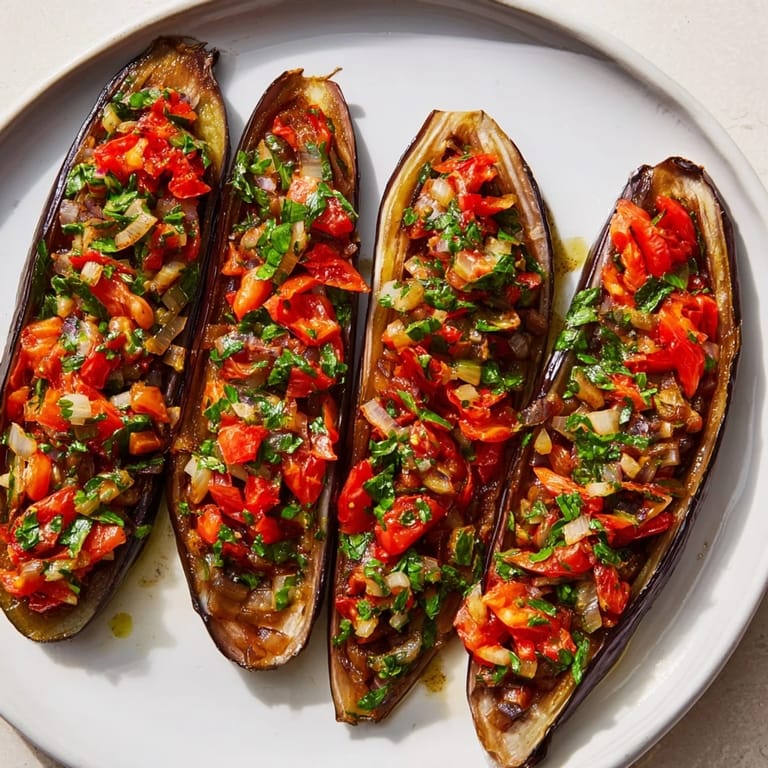
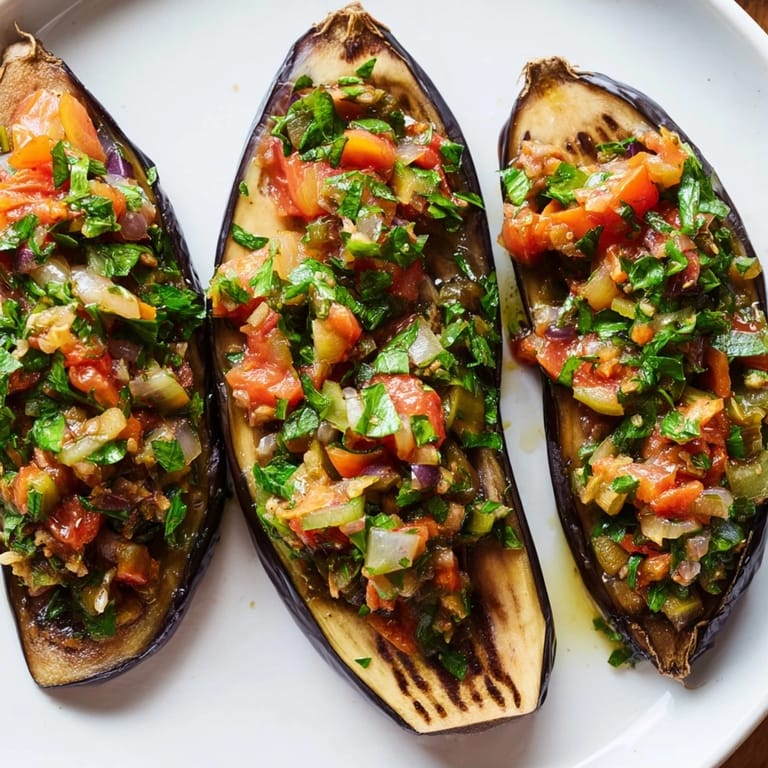
- Place the eggplants in a baking dish, then carefully open each slit and spoon in the tomato-onion filling generously, letting some nestle into the cracks. Drizzle lemon juice over everything and pour water around the eggplants—not over them, or the filling will wash out.
- Bake covered:
- Cover the dish tightly with foil and bake at 180°C (350°F) for 35 minutes. The eggplants will soften and the filling will heat through gently.
- Finish and rest:
- Remove the foil and bake for another 10 to 15 minutes until the eggplants are tender and the filling is bubbling slightly at the edges. Let everything cool to room temperature before serving—this is when the flavors settle and deepen, and the texture becomes silky rather than hot and steamy.
 Save to Pinterest
 One summer, I made this for friends who'd just moved into a house with a garden full of overgrown eggplants. We picked them together in the warm evening, and as I cooked, the smell of simmering tomatoes and garlic drifted through their kitchen windows. By the time we sat down to eat, something shifted in the room—the conversation slowed, people savored bites instead of rushing through. That's when I understood why this dish has survived centuries; it invites people to notice their food and each other at the same time.
The Story Behind Imam Bayildi
The name means 'the imam fainted'—legend says it was an imam who swooned at the sight and taste of eggplant prepared this way, overwhelmed by the dish's elegance and the sheer amount of olive oil that went into it. Whether or not the story is true, it captures something real: this is a dish built on restrained luxury. There's no meat, no cream, just vegetables and oil treated with such care that they become something transcendent. That restraint is what makes it feel both festive and everyday at once.
Timing and Make-Ahead Magic
This is one of those dishes that rewards planning ahead. Make it a day or two before you need it—the flavors meld and deepen as it rests, and the eggplant becomes even more tender and absorbent. Reheat gently in a low oven if you want it warm, or serve it straight from the refrigerator at room temperature, which is actually how it tastes best. It's the kind of recipe that fits perfectly into a busy life because the work is front-loaded and the payoff grows with time.
Serving and Variations
Serve imam bayildi with crusty bread to soak up the oil and juices, or alongside rice or bulgur to make it more filling. A dollop of thick yogurt on the side adds cool creaminess that balances the richness beautifully. Some cooks add a pinch of cinnamon or allspice to the filling for warmth, while others sneak in a chopped green chili for heat—both feel authentic, both change the dish in subtle ways.
- For a spiced version, dust the filling lightly with cinnamon or allspice before stuffing.
- A small diced chili stirred into the filling brings gentle heat without overpowering the vegetables.
- Serve cold or at room temperature for the truest, most balanced flavor.
 Save to Pinterest
 Imam bayildi is proof that the most memorable food often comes from simplicity and patience. There's something deeply satisfying about serving a dish that asks so little but gives so much back in flavor and presence.
Answers to Recipe Questions
- → How do you prepare the eggplants?
Eggplants are peeled in alternating stripes, salted to reduce bitterness, rinsed, dried, then lightly fried until soft and golden before stuffing.
- → What ingredients make up the filling?
The filling combines sautéed onions, garlic, green bell peppers, diced tomatoes, parsley, and spices like paprika and black pepper for a flavorful blend.
- → Can this dish be served cold?
Yes, Imam Bayildi is traditionally enjoyed warm or at room temperature, allowing its flavors to deepen after resting.
- → What cooking method is used after stuffing?
Stuffed eggplants are baked covered with foil to cook gently, then uncovered briefly to develop a bubbling filling and tender texture.
- → Are there suggested variations to enhance flavor?
Adding a pinch of cinnamon, allspice, or chopped green chili to the filling provides added depth or a spicy kick respectively.