Save to Pinterest
 The first time I bit into a proper sabich wasn't at a fancy restaurant or in someone's home kitchen—it was from a cramped street stall in Tel Aviv, the vendor working with practiced efficiency while the smell of frying eggplant mixed with tahini and fresh herbs made my stomach rumble. I watched him stuff that pita with golden fried eggplant slices, a perfectly halved hard-boiled egg, vegetables that glistened with olive oil, and a generous pour of creamy tahini that threatened to overflow. That sandwich changed how I thought about vegetarian food; it wasn't a compromise, it was a celebration. I've been chasing that exact feeling in my own kitchen ever since, and after plenty of burnt edges and undercooked middles, I finally cracked the code.
I made this for my brother the week he told me he was going vegetarian, and honestly, I was terrified it would feel like I was trying too hard or making some kind of point. But when he took that first bite, closed his eyes, and just went quiet—that's when I knew this wasn't about convincing anyone of anything. It was just really, genuinely good food that happened to have no meat in it.
Ingredients
- Eggplant (2 medium, sliced 1/2-inch rounds): The star of the show—those thin slices fry up to crispy, golden edges while staying creamy inside, and that's where the magic lives. Salt them first and let them sit; you're not being fussy, you're removing moisture so they fry instead of steam.
- All-purpose flour (1/2 cup): A light dredge is all you need—too much and it becomes breading, which isn't what sabich is about.
- Vegetable oil (1 cup, for frying): You need enough oil to actually fry, not sauté, so don't skimp here or your eggplant will absorb oil instead of crisping up.
- Large eggs (4): Hard-boiled and sliced, they add protein and richness without weighing the sandwich down.
- Tomatoes and cucumber: These need to be diced small and dressed quickly so they release their juices into the salad—that's the moisture that keeps everything bright and alive.
- Fresh parsley, cilantro, and lemon juice: Don't underestimate these—they're what makes it taste like Israel and not just a fried vegetable sandwich.
- Tahini paste (1/2 cup): This is your sauce, your binder, your reason for the whole sandwich to exist. Get the good stuff if you can; cheap tahini tastes bitter.
- Pita bread (4 large): Warm them right before assembly so they're still tender enough to hold everything without tearing, but sturdy enough to actually be pita and not a napkin.
- Amba (optional but honestly, use it): It's that tangy, slightly spicy pickled mango sauce, and it's what elevates this from good to unforgettable.
Tired of Takeout? 🥡
Get 10 meals you can make faster than delivery arrives. Seriously.
One email. No spam. Unsubscribe anytime.
Instructions
- Salt the eggplant and let it weep:
- Sprinkle those eggplant slices with salt and set them on a plate for 15 minutes—you'll see beads of moisture collect on the surface. This matters because if you skip it, the eggplant will absorb oil instead of frying, and you'll end up with something greasy instead of crispy.
- Pat them bone-dry and flour them lightly:
- Use paper towels to dry each slice thoroughly, then give them the lightest dusting of flour—you want a whisper, not a coating. Shake off any excess.
- Get your oil hot and fry until golden:
- Heat the oil in a large skillet over medium-high heat until it shimmers and moves easily around the pan. Fry each eggplant slice about 2 to 3 minutes per side until it's golden brown and the edges are starting to curl slightly. Drain on paper towels as soon as they come out—let them cool a moment, but serve them while they're still warm.
- Boil the eggs while the eggplant cooks:
- In a saucepan, cover the eggs with water, bring to a boil, then turn the heat down to a simmer for exactly 9 minutes. This gives you a fully cooked yolk that's still soft at the center. Move them straight into ice water to stop the cooking, then peel and slice them.
- Make the Israeli salad quickly:
- Dice everything small—tomatoes, cucumber, red onion—then toss immediately with parsley, lemon juice, olive oil, salt, and pepper. The acid from the lemon will make the vegetables release their juice, creating a light dressing.
- Whisk the tahini until it's creamy:
- In a small bowl, whisk tahini paste with water, lemon juice, and minced garlic until it's smooth and pourable. If it's too thick, add more water a tablespoon at a time—you want it to flow like heavy cream, not like cement.
- Warm your pitas and slice them open:
- A warm pita is flexible and forgiving; a cold one tears and fights you. Warm them in a skillet for about 30 seconds per side, or wrap them in a towel to keep them steamy.
- Build each sandwich with intention:
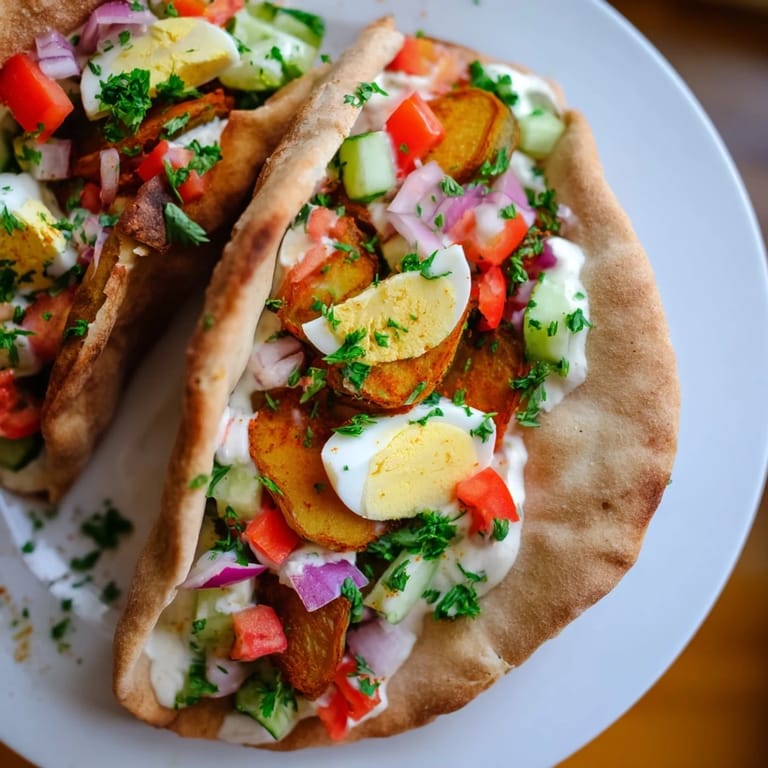
- Lay out a pita, drizzle the inside with tahini sauce, then layer in crispy eggplant, egg slices, a generous handful of Israeli salad, a dollop of amba if you're using it, pickles, cilantro, and hot sauce if you want heat. Don't be shy—this sandwich is meant to be abundant.
 Save to Pinterest
 There's a moment when you first assemble a sabich—standing there with warm pita in one hand and that gorgeous drizzle of tahini going into it—when you realize this is the kind of food that makes people stop eating to look at what they're eating. It's not fancy, but it's unmistakably delicious, and that's something.
The Fried Eggplant Secret
Fried eggplant can go wrong in so many ways, and I learned this the hard way. Too little oil and it's dense and chewy. Too much heat and the outside burns before the inside softens. Too long on the pan and it drinks oil like a sponge. The trick is respecting the salt step—it's not optional, it's essential—and keeping your oil at that sweet spot where it shimmers but doesn't smoke. Watch the first slice like a hawk. If it's brown and crispy after about two minutes, your oil is the right temperature. If it's pale, turn up the heat. If it's dark and smoking, turn it down. You're looking for that golden-brown finish with just a hint of caramelization at the edges.
Building the Perfect Tahini Sauce
Tahini can be intimidating because it's so prone to seizing up and looking broken, but here's what I learned: it's actually really forgiving if you approach it the right way. Start with your tahini and lemon juice together—the acid helps loosen it up. Then add water gradually while whisking constantly, and you'll feel it transform from paste to sauce. Some people swear by adding the water first, but I find that gives you less control. The garlic should be minced almost to a paste, or it'll have a harsh, raw quality that overpowers everything else. Taste as you go. If it tastes too strong or acidic, add more tahini. Too thick, add more water. This is one of those sauces where you're not following a formula; you're building it to your preference.
Making It Your Own
The beauty of sabich is that it's forgiving enough to bend to what you have and what you love. I've made it with roasted eggplant instead of fried when I didn't feel like dealing with the oil, and while it's not quite the same, it's still delicious. Some days I skip the amba and add more hot sauce. Some days I double the parsley. The core—crispy eggplant, eggs, fresh vegetables, tahini—that's non-negotiable, but everything around it is fair game.
- If you can't find amba, a mix of lime juice and a tiny bit of hot sauce gets you 70% of the way there.
- For a vegan version, crispy chickpeas or marinated tofu work as a substitute for the eggs and add real substance.
- Make the Israeli salad and tahini sauce ahead if you want, but fry the eggplant and assemble everything right before serving for the best texture.
 Save to Pinterest
 This is the kind of meal that made me understand why street food exists—it's not cheap eating, it's honest eating. Everything on that plate has a purpose, and together they create something that's more interesting than any single component alone.
Answers to Recipe Questions
- → How do you prepare the eggplant for sabich?
Slice the eggplant into rounds, sprinkle with salt, and let sit for 15 minutes to draw out moisture. Then pat dry and dredge lightly in flour before frying until golden brown on both sides.
- → What ingredients are used in the Israeli salad?
The salad includes diced tomatoes, cucumber, finely chopped red onion, fresh parsley, lemon juice, olive oil, salt, and pepper, tossed together for a fresh, vibrant flavor.
- → How is the tahini sauce made?
Whisk tahini paste with water, lemon juice, minced garlic, and salt until smooth. Adjust the water to reach the desired creamy consistency.
- → Can sabich be adapted for a vegan diet?
Yes, omit the hard-boiled eggs or substitute them with tofu to make the dish vegan-friendly. Use gluten-free pita if needed.
- → What optional toppings enhance the sabich flavors?
Pickled mango sauce (amba), sliced pickles, hot sauce, and fresh cilantro add tang, spice, and extra freshness when included.
- → What type of pita is best for assembly?
Warm pita breads that can be sliced open to create pockets work best to hold the fried eggplant, eggs, salad, and sauces securely.