 Save to Pinterest
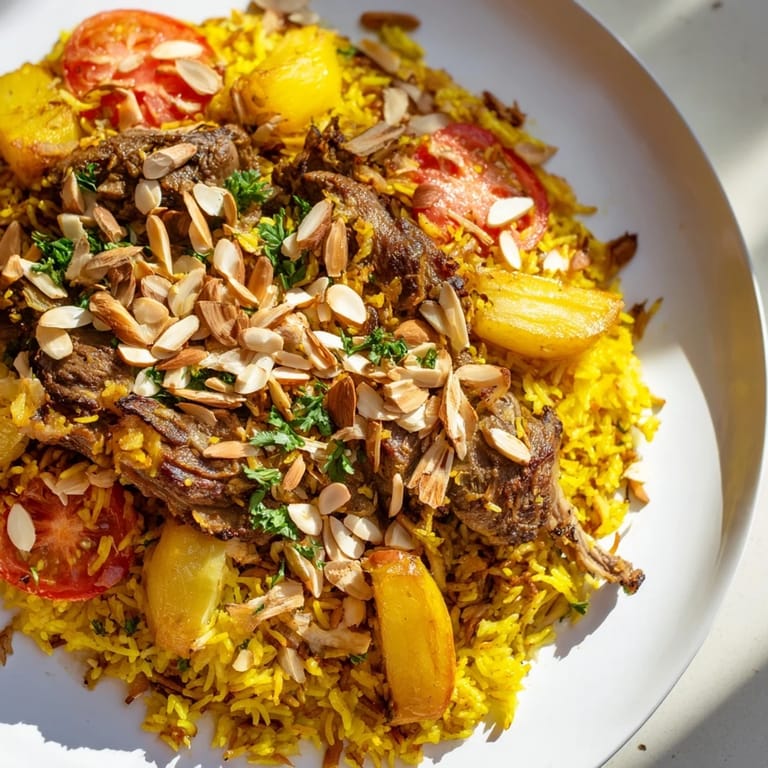
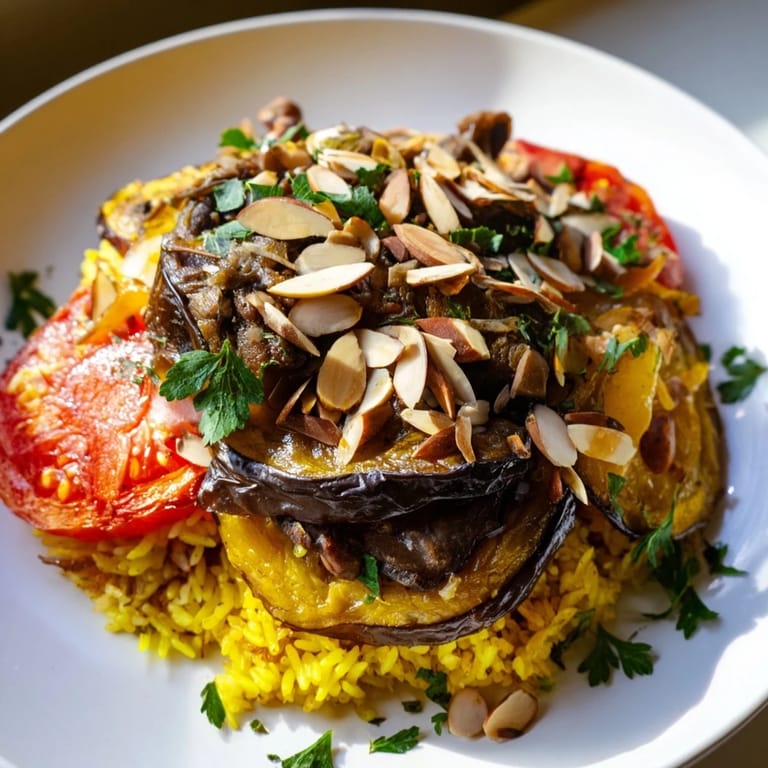
 The first time I flipped a maqluba, my hands were shaking. I'd spent ninety minutes layering rice, meat, and vegetables in a heavy pot, and now I had to trust that everything would hold together as I inverted the whole thing onto a platter. When that golden, fragrant dome emerged intact, studded with caramelized potatoes and almonds, I understood why this Palestinian dish commands such respect in the kitchen—it's theater and comfort rolled into one.
I made this for my neighbor who'd just returned from visiting family in Ramallah, and watching her face when I lifted the lid—steam rising, the aroma hitting first—told me I'd gotten something right. She corrected my technique gently, mentioned her grandmother's way, and suddenly we were planning for me to cook it again the following week. Food that opens doors like that deserves a permanent place in your rotation.
Ingredients
- Bone-in lamb shanks or chicken pieces (900 g): The bone adds richness and depth that boneless cuts can't match; the meat becomes fall-apart tender after simmering.
- Long-grain basmati rice (2 cups): It stays separate and absorbs the broth perfectly, carrying the spices into every grain without becoming mushy.
- Eggplant and potatoes: These create a golden, slightly caramelized layer that holds the structure together and adds texture contrasts.
- Ground allspice, cinnamon, turmeric, and cumin: This combination is unmistakably Palestinian; they build warmth rather than heat.
- Slivered almonds or pine nuts: Toasting them first brings out their sweetness, and they scatter across the top like edible gold.
- Fresh parsley and good broth: The parsley brightens everything at the end, and the broth's quality matters—use homemade or low-sodium store-bought for best flavor.
Tired of Takeout? 🥡
Get 10 meals you can make faster than delivery arrives. Seriously.
One email. No spam. Unsubscribe anytime.
Instructions
- Prepare the rice properly:
- Rinse basmati rice under cold water three to four times until the water runs clear, then soak for thirty minutes and drain. This removes excess starch and ensures each grain cooks separately instead of clumping together.
- Season and sear the meat:
- Toss your lamb or chicken with black pepper, allspice, cinnamon, and salt, then sear it hard in a pot with hot oil until deeply browned on all sides. This creates flavor you can taste in every bite.
- Build the broth base:
- Sauté sliced onions until soft, return the meat, and simmer everything in broth for thirty to forty minutes until the meat is nearly tender. You're building a seasoned liquid that will perfume the rice from below.
- Roast the vegetables:
- While meat simmers, brush eggplant and potato slices with oil and roast at two hundred degrees Celsius until golden and tender, about twenty to twenty-five minutes. This gives them color and prevents them from releasing too much water into the rice.
- Layer with intention:
- Start with tomato slices on the bottom of a heavy pot, then layer potatoes, eggplant, cooked meat with onions, and finally the drained rice on top. Press the rice down gently so the layers stay compressed.
- Add the seasoned broth:
- Stir turmeric, cumin, and salt into the reserved broth, then pour it over the rice until just covered (about three to four cups). The rice needs to swim a little.
- Create a steam seal:
- Place a heatproof plate smaller than the pot directly on top of the rice, then cover with the pot lid. This keeps everything compact and helps the rice cook evenly.
- Cook low and undisturbed:
- Bring to a gentle simmer over medium heat, then reduce to low and cook for thirty-five to forty minutes without lifting the lid or stirring. You'll hear a faint sizzle, then silence—that's when the rice is absorbing the last of the liquid.
- Rest before the flip:
- Remove from heat and let rest, covered, for fifteen minutes. This resting period lets everything settle and makes the flip much more stable.
- The dramatic flip:
- Place a large serving platter over the pot, take a breath, and flip everything in one confident motion. If you hear it moving slightly, you've done it right.
- Finish with garnish:
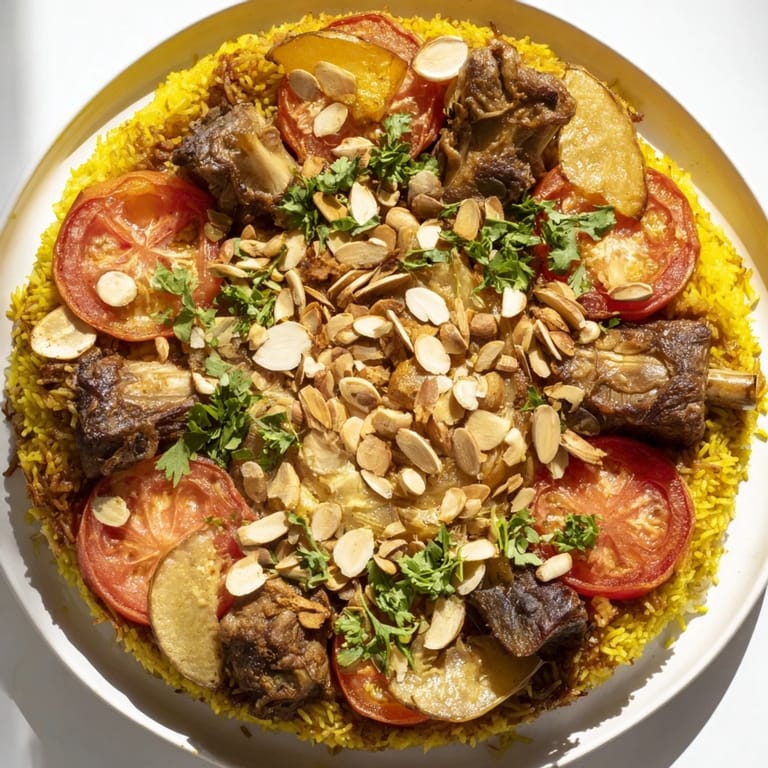
- Scatter toasted almonds and fresh parsley over the top, and serve immediately with cool yogurt or a bright salad on the side.
 Save to Pinterest
 There's a moment after the flip works, when you step back and see what you've built—golden, layered, steaming—and you realize you've just made something that tastes like history and skill. That moment is why maqluba matters.
Why Layering Matters
The layers aren't just for show. Putting tomatoes on the bottom means they release their acidity as they cook, flavoring everything above them. The vegetables in the middle create a barrier that keeps the meat flavors from overwhelming the rice, while also providing structure. Rice on top absorbs the broth from above while steaming from below, cooking perfectly. Each layer has a job, and respecting that is what separates a good maqluba from a great one.
Timing and Temperature Control
The entire cook depends on gentle, patient heat. If your flame is too high after the initial simmer, the bottom will scorch and the rice on top won't cook through. If your broth is cold when you pour it in, you'll add fifteen minutes to the cooking time. The rhythm matters—there's a sweet spot where everything cooks at the same rate, and finding it means tasting the dish for doneness around the thirty-five-minute mark.
Variations and Flexibility
This recipe is sturdy enough to bend. Cauliflower florets roasted the same way work beautifully instead of eggplant if that's what you have. Boneless chicken thighs cook faster than lamb and are just as delicious. Some cooks add a layer of yogurt-soaked bread under the rice, others finish with a drizzle of pomegranate molasses. The bones-and-broth technique is what matters; everything else can adapt to your pantry and mood.
- Try stirring a pinch of baharat spice blend into your broth if you want deeper complexity.
- A squeeze of fresh lemon juice over the finished dish brightens all the warm spices beautifully.
- Make it a day ahead and reheat gently in a low oven—the flavors actually deepen.
 Save to Pinterest
 This is the kind of dish that announces itself—the flip, the fragrance, the presentation. Cook it when you have people around who'll appreciate the effort and the story behind every spice.
Answers to Recipe Questions
- → What type of meat works best for Maqluba?
Bone-in lamb shanks or chicken pieces are ideal, providing rich flavor and tenderness after slow simmering.
- → How do you prepare the rice for Maqluba?
Rinse the basmati rice until water runs clear, soak for 30 minutes, then drain before layering with spices like turmeric and cumin.
- → What vegetables are typically used in this layered dish?
Roasted eggplant, potato slices, and fresh tomato rounds create a hearty and colorful vegetable layer.
- → How is the dish cooked without stirring the layers?
The assembled pot is covered and cooked gently over low heat to allow the broth to absorb and layers to cook evenly without disturbance.
- → What is the final presentation technique for Maqluba?
After cooking, the pot is inverted onto a large serving platter, flipping the layers upside down to reveal an attractive, composed dish.
- → Can I substitute any ingredients for a different flavor?
Cauliflower florets can replace eggplant for variation, and boneless chicken thighs speed up preparation while maintaining moisture.