 Save to Pinterest
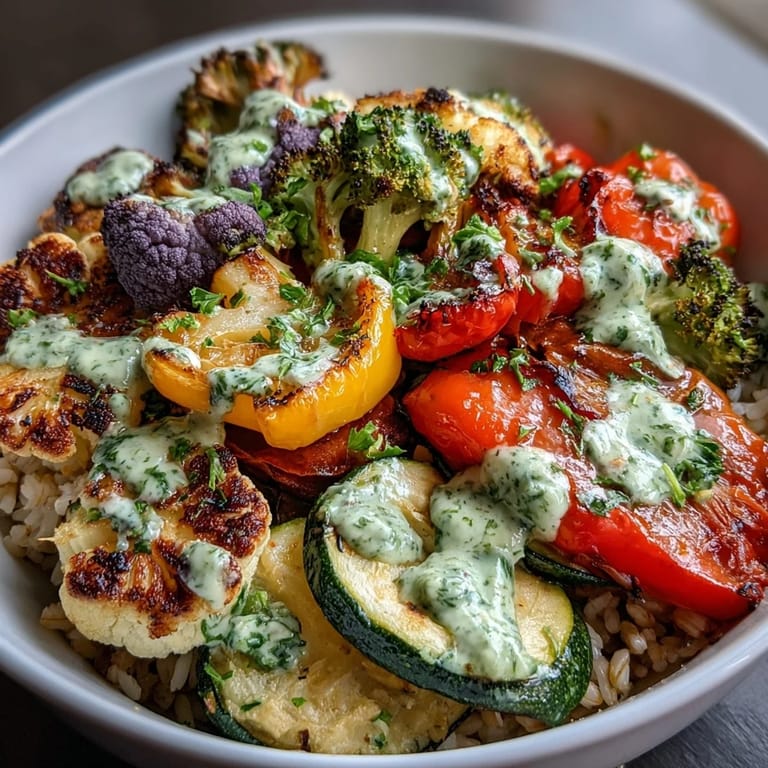
 My tiny apartment kitchen was a disaster zone, cluttered with half-used spice jars and mismatched cutting boards, when I first threw together this rainbow bowl on a rainy Tuesday. I had zero plan and a fridge full of random vegetables that were dangerously close to wilting. The oven was already hot from baking something else, so I figured why not toss everything on a sheet pan and see what happened. What came out was this gorgeous, caramelized jumble of color that made me feel like I had my life together, even though I absolutely did not. That accidental dinner became my go-to whenever I need to feel nourished without the fuss.
I made this for my sister when she visited last spring, mostly because I wanted to prove I could cook something that wasnt pasta with jarred sauce. She wandered into the kitchen while I was tossing the vegetables with olive oil, and the smell of raw garlic and fresh herbs from the sauce I was blending made her stop mid-sentence. We ate on the couch with oversized bowls balanced on our knees, and she kept saying it tasted like sunshine. I think that was the moment I realized that cooking for people you love doesnt have to be complicated to feel special.
Ingredients
- Red bell pepper: Sweet and crisp, it caramelizes beautifully in the oven and adds a pop of ruby color that makes the whole bowl come alive.
- Yellow bell pepper: Slightly milder than the red, it roasts into tender, golden ribbons that balance the earthier vegetables.
- Purple cauliflower florets: If you can find it, the purple variety turns this into a showstopper, though regular cauliflower works just as well and gets wonderfully nutty when roasted.
- Broccoli florets: The edges crisp up like little savory chips while the stems stay tender, giving you two textures in one bite.
- Cherry tomatoes: They burst in the oven and release their juices, creating sticky, sweet spots on the pan that you will fight over.
- Zucchini: Slice it thick or it will turn to mush, it soaks up the olive oil and gets soft with browned edges that add depth.
- Carrot: A sturdy root vegetable that holds its shape and brings a subtle sweetness that rounds out the sharper flavors.
- Olive oil: Use a good one here, it coats every vegetable and helps them caramelize instead of steam.
- Sea salt and black pepper: Simple seasonings that let the natural sweetness of the roasted vegetables shine through.
- Brown rice: Nutty and chewy, it provides a hearty base that soaks up the herb sauce without getting soggy.
- Fresh parsley, cilantro, and basil: The holy trinity of this sauce, they blend into a bright green drizzle that tastes like summer in a jar.
- Lemon juice: A splash of acid cuts through the richness and wakes up every other flavor on the plate.
- Garlic: One small clove is all you need, it mellows in the blender but still adds a gentle bite.
- Extra virgin olive oil: The backbone of the sauce, it emulsifies with the herbs and lemon into something silky and luscious.
Tired of Takeout? 🥡
Get 10 meals you can make faster than delivery arrives. Seriously.
One email. No spam. Unsubscribe anytime.
Instructions
- Get the oven ready:
- Crank your oven to 425 degrees Fahrenheit so it is screaming hot by the time your vegetables hit the pan. This high heat is what gives you those crispy, caramelized edges instead of sad, steamed veggies.
- Prep and season the vegetables:
- Spread all your chopped vegetables across a large baking sheet in a single layer, then drizzle with olive oil and sprinkle with salt and pepper. Toss everything with your hands so each piece is lightly coated and glistening.
- Roast until golden:
- Slide the pan into the oven and roast for 25 to 30 minutes, giving everything a good stir halfway through. You will know they are done when the edges are bronzed and the vegetables are tender enough to pierce easily with a fork.
- Cook the brown rice:
- Rinse your rice under cold water until the water runs clear, then combine it with water and salt in a saucepan. Bring it to a boil, then lower the heat, cover tightly, and let it simmer gently for 30 to 35 minutes until the grains are fluffy and all the water is absorbed.
- Blend the herb sauce:
- Toss parsley, cilantro, basil, lemon juice, garlic, olive oil, salt, and pepper into a blender or food processor. Blitz until smooth and vibrantly green, scraping down the sides if needed.
- Assemble your bowls:
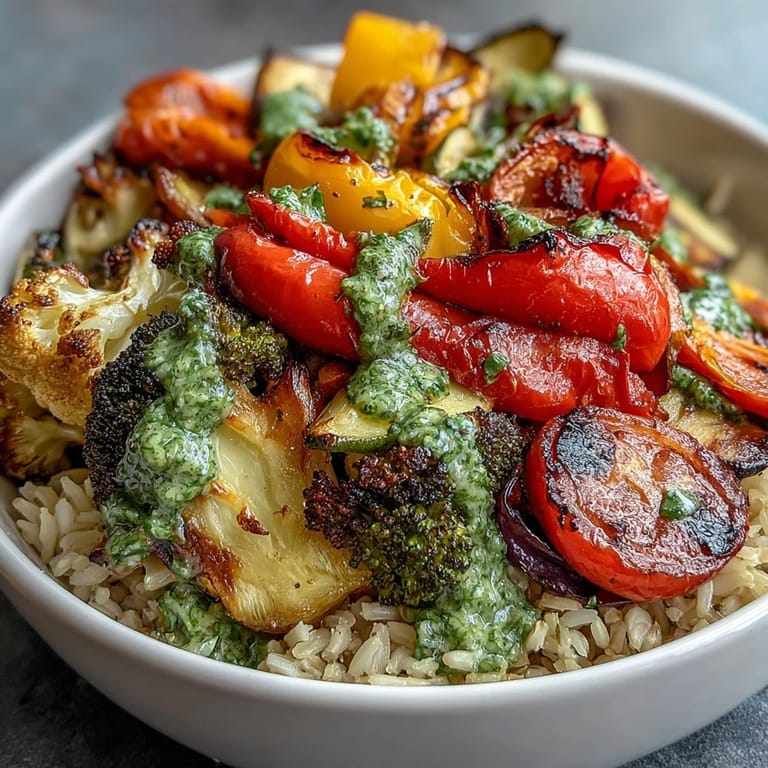
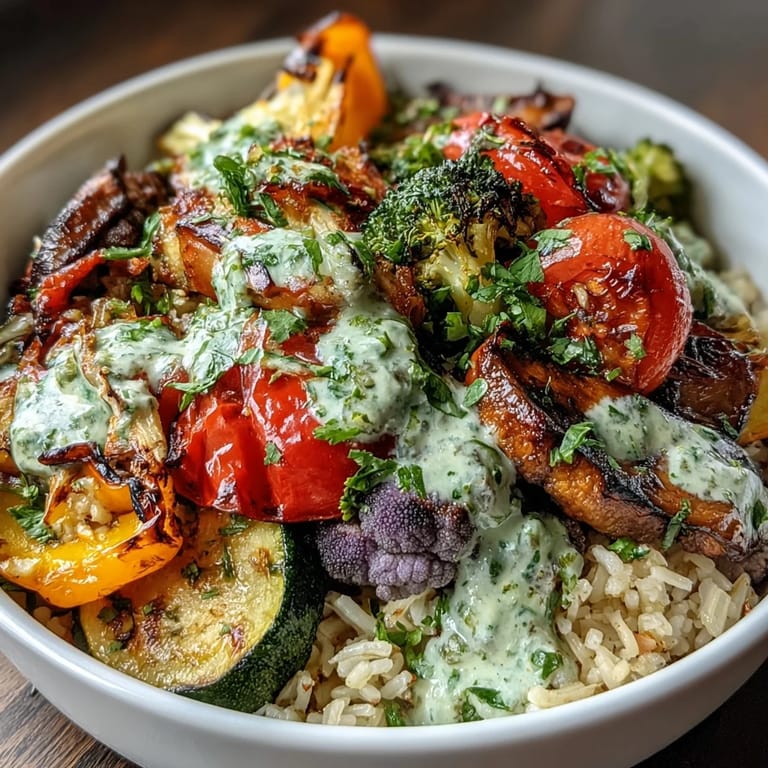
- Spoon a generous mound of brown rice into each bowl, pile on the roasted vegetables in a colorful heap, and drizzle the herb sauce over the top. Serve immediately while everything is still warm and fragrant.
 Save to Pinterest
 One evening, I packed this into mason jars for a potluck at a friends place, and I was nervous it would look weird or fall apart in transit. But when I unscrewed the lids and poured everything into bowls, people crowded around the table asking for the recipe. Someone said it reminded them of a dish they had at a farm-to-table spot in Portland, and I did not have the heart to tell them I made it up on a whim. That night, I learned that the best compliment is when something homemade feels restaurant-worthy without any of the pretension.
Swapping and Adding
This bowl is endlessly flexible, so treat the vegetable list as a suggestion rather than a rule. I have tossed in cubed sweet potatoes, wedges of red onion, and even asparagus spears when they were on sale. If you want to make it more filling, roast a can of drained chickpeas alongside the vegetables or cube some firm tofu and let it get crispy in the oven. The herb sauce works with almost anything green and fresh, so feel free to swap in dill or mint if that is what you have languishing in the crisper.
Storing and Reheating
Leftovers keep beautifully for up to four days in the fridge, stored in separate containers so the rice does not get soggy from the vegetables. When you are ready to eat, reheat the rice and vegetables in the microwave or on the stovetop with a splash of water to revive them. The herb sauce is best served cold or at room temperature, so drizzle it on after reheating for a fresh burst of flavor. I have even eaten this cold straight from the fridge on a hot afternoon, and it was surprisingly satisfying.
Pairing and Serving Ideas
This bowl stands alone as a complete meal, but it also plays well with others if you want to round out the table. A crisp Sauvignon Blanc with citrusy notes complements the herb sauce, though I often just pour myself sparkling water with a squeeze of lemon and call it a day. If you are feeding a crowd, set out the rice, vegetables, and sauce in separate bowls and let everyone build their own, it turns dinner into a casual, interactive experience.
- Try sprinkling toasted sesame seeds or crushed nuts on top for extra crunch and richness.
- A dollop of hummus or tahini sauce on the side adds creaminess and ties everything together.
- Serve with warm pita or naan if you want to make it feel more like a feast.
 Save to Pinterest
 Every time I make this, I am reminded that good food does not have to be fussy or follow a strict plan. It just needs to be colorful, nourishing, and made with a little bit of care.
Answers to Recipe Questions
- → What vegetables work best for roasting?
Root vegetables like carrots, sweet potatoes, and beets roast beautifully. Bell peppers, zucchini, broccoli, cauliflower, and onions also caramelize well. Choose vegetables that will finish cooking at the same time, or cut denser vegetables smaller.
- → Can I make the herb sauce ahead?
Absolutely. The herb sauce stays fresh in the refrigerator for up to 5 days. Store it in an airtight container and give it a quick stir before using. The flavors may even develop and intensify overnight.
- → How do I prevent soggy roasted vegetables?
Avoid overcrowding your baking sheet—spread vegetables in a single layer with space between pieces. Roast at high heat (425°F) and don't flip too frequently. Let the vegetables develop that golden caramelization before stirring.
- → What proteins can I add?
Chickpeas, white beans, or lentils blend seamlessly with these flavors. Crispy tofu cubes, roasted tempeh, or grilled chicken also work well. Even a poached or fried egg on top makes this a complete meal.
- → Can I use other grains?
Quinoa, farro, wheat berries, or even millet make excellent substitutes for brown rice. Adjust cooking liquid and time according to package directions. For a grain-free version, use cauliflower rice or serve over mixed greens.
- → How should I store leftovers?
Store components separately in airtight containers for up to 4 days. Keep the roasted vegetables, rice, and sauce apart until ready to eat. Reheat vegetables and rice gently, then add fresh sauce before serving.