 Save to Pinterest
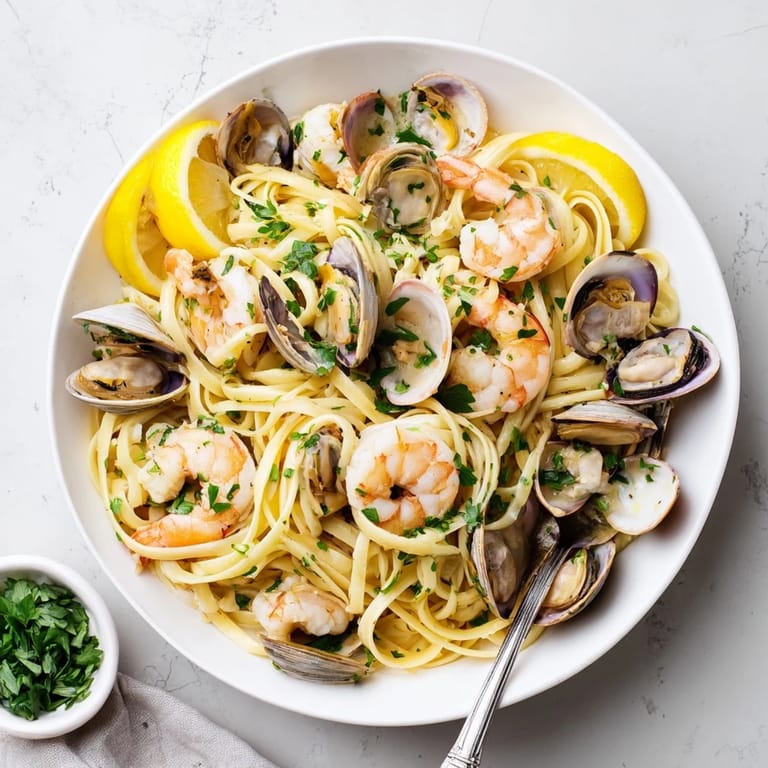
 The smell of garlic hitting hot olive oil still takes me back to a tiny apartment kitchen where I first attempted this dish. I was terrified of overcooking the seafood, convinced that restaurant-quality pasta was something best left to professionals. But standing there, watching those shells pop open one by one, I realized the magic was in the simplicity. Now it is my go-to when I want to make something that feels special without spending hours at the stove.
Last summer, I made this for friends on our balcony as the sun went down. We ate it straight from shallow bowls, dipping crusty bread into the sauce long after the pasta was gone. Someone commented that this was the kind of meal that makes you pause between bites, not because you are full, but because you want to stay in that moment a little longer.
Ingredients
- Large shrimp: Peeled and deveined saves precious minutes and lets the garlic flavor penetrate directly
- Fresh clams: Scrub them well and discard any that do not open during cooking
- Fresh mussels: Remove the beards by pulling toward the hinge before rinsing
- Dried linguine: Its flat shape holds onto sauce better than spaghetti
- Extra virgin olive oil: The foundation of the sauce, so use the good stuff
- Garlic cloves: Thinly sliced they melt into the oil rather than burning
- Shallot: Milder than onion and adds a subtle sweetness
- Red pepper flakes: Optional, but they add a gentle warmth that balances the white wine
- Dry white wine: Choose something you would actually drink, it matters here
- Fish or chicken stock: Builds depth without overwhelming the delicate seafood
- Unsalted butter: Finishes the sauce with a silky richness
- Lemon zest: Brightens everything and cuts through the seafood sweetness
- Fresh lemon juice: Adds just enough acid to make each bite sing
- Fresh parsley: More than garnish, it brings a fresh herbal contrast
Tired of Takeout? 🥡
Get 10 meals you can make faster than delivery arrives. Seriously.
One email. No spam. Unsubscribe anytime.
Instructions
- Get your pasta water ready:
- Bring a large pot of salted water to a boil and cook the linguine until just al dente. Reserve that half cup of pasta water before draining, it is liquid gold for emulsifying the sauce later.
- Build your flavor base:
- Heat olive oil in a large deep skillet over medium heat. Add the sliced garlic and chopped shallot, cooking them until fragrant and soft, about two minutes. Toss in the red pepper flakes now if you want that gentle heat.
- Sear the shrimp quickly:
- Crank the heat to medium-high and add those shrimp. Give them just one minute per side until they turn pink, then pull them out immediately. They will finish cooking later, and this keeps them from turning rubbery.
- Steam the shellfish:
- Add the clams and mussels to the same skillet. Pour in the white wine, cover the pan tightly, and let them steam for 3 to 4 minutes. Any shells that refuse to open go straight into the compost.
- Create the sauce:
- Pour in the stock and let it simmer uncovered for 2 to 3 minutes. Slide those seared shrimp back into the pan so everything warms through together.
- Bring it all together:
- Add the cooked linguine along with your reserved pasta water, butter, lemon zest, and juice. Toss everything over low heat until the pasta is coated and glossy, seasoning with salt and pepper to taste.
- Finish and serve:
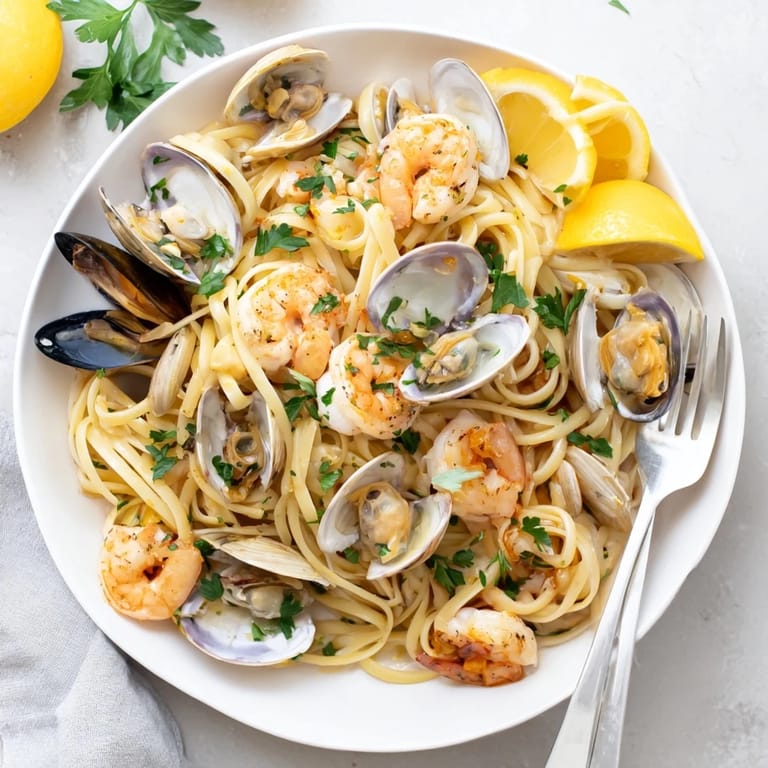
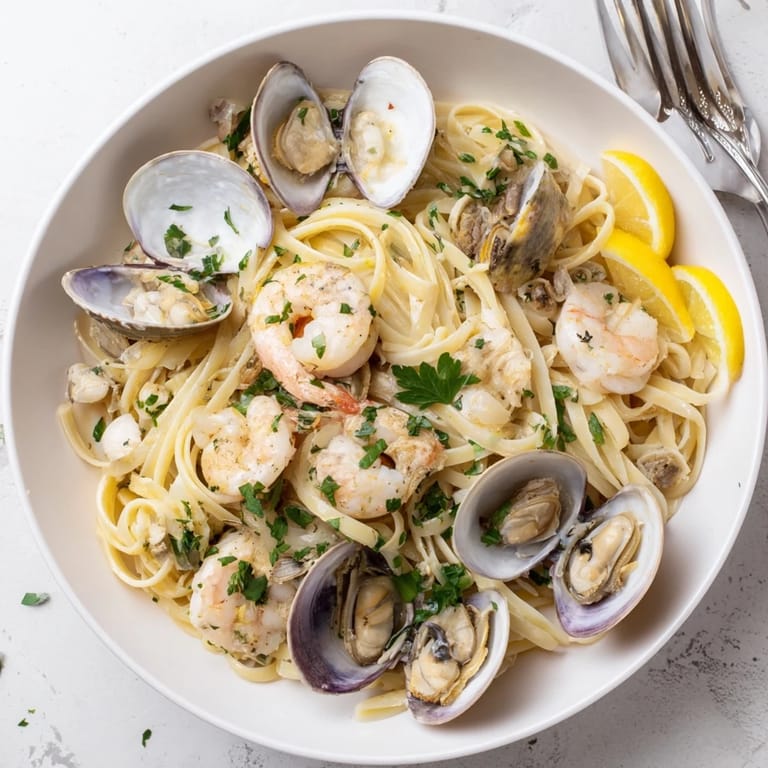
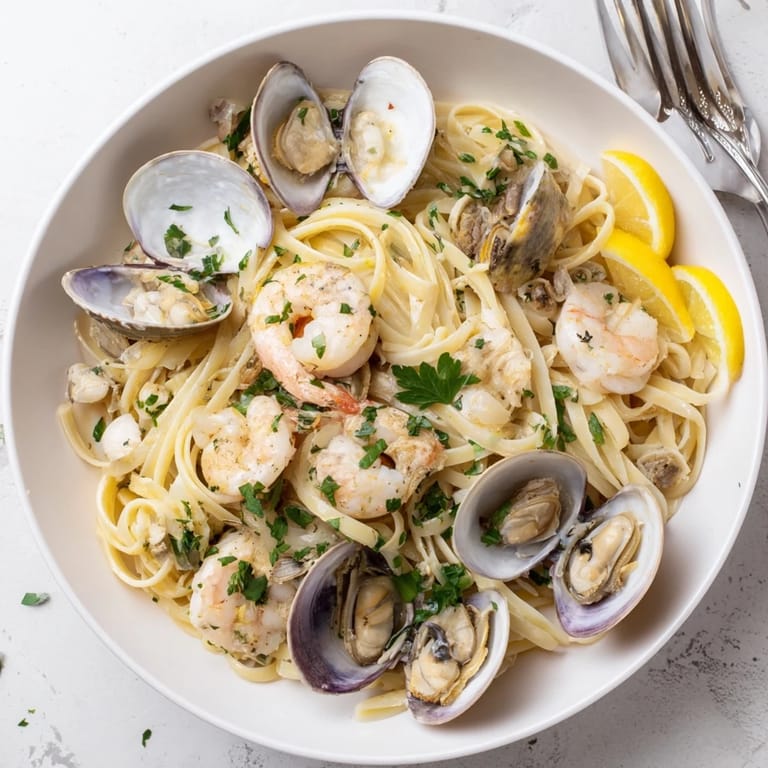
- Plate immediately while the steam is still rising, scattering fresh parsley over the top and adding lemon wedges for squeezing at the table.
 Save to Pinterest
  Save to Pinterest
 My mother-in-law still talks about the first time she tasted this version. She kept asking what the secret ingredient was, unaware that the magic was simply timing and quality ingredients rather than some complicated technique. Sometimes the best recipes are just a few good components treated with respect.
Choosing the Right Seafood
I have learned that the best seafood counter is one that smells like the ocean, not fish. Do not be afraid to ask when the clams and mussels arrived, and tap any open shells to see if they close up. Fresh seafood makes this dish, and there is no way around that truth.
Wine Selection Matters
A crisp Pinot Grigio or Vermentino works beautifully here, both in the pan and in your glass. Avoid anything too oaky or buttery, as it will fight with the delicate sweetness of the shellfish. The wine you cook with becomes the base of your sauce, so make it count.
Timing is Everything
The biggest mistake I see is people trying to multitask too much. Get all your ingredients prepped before you turn on any burners. Once you start cooking, everything moves fast, and you do not want to be chopping parsley while your shrimp are turning into rubber.
- Set out all your ingredients in bowls before you start cooking
- Keep a large bowl ready for the empty shells as you eat
- Have crusty bread nearby, because leaving that sauce behind would be a waste
 Save to Pinterest
  Save to Pinterest
 This is the kind of meal that turns a Tuesday into something worth celebrating. Enjoy every bite.
Answers to Recipe Questions
- → Can I use frozen seafood instead of fresh?
Yes, thaw frozen shrimp, clams, and mussels completely before cooking. Pat them dry with paper towels to remove excess moisture, which helps achieve better searing and prevents the sauce from becoming watery.
- → What wine works best for this dish?
Dry white wines like Pinot Grigio, Sauvignon Blanc, or Vermentino work beautifully. Avoid cooking wines or overly sweet varieties, as they affect the final flavor profile of the delicate seafood broth.
- → How do I know when shellfish are properly cooked?
Clams and mussels are done when their shells open completely—discard any that remain closed after cooking. Shrimp should turn pink and opaque, curling slightly. Overcooking makes seafood tough and rubbery.
- → Can I make this dairy-free?
Absolutely. Substitute the butter with olive oil or vegan butter alternative. The sauce remains creamy and luxurious from the emulsified pasta water and olive oil base without needing dairy.
- → What pasta alternatives work well?
Fettuccine, spaghetti, or angel hair pasta all work beautifully. For gluten-free options, try brown rice linguine or chickpea pasta—just adjust cooking time according to package instructions and reserve extra pasta water.
- → How can I tell if clams and mussels are fresh?
Live clams and mussels should have closed shells or close when tapped. Discard any with cracked shells or that remain open. They should smell like the ocean, not fishy or ammonia-like.