 Save to Pinterest
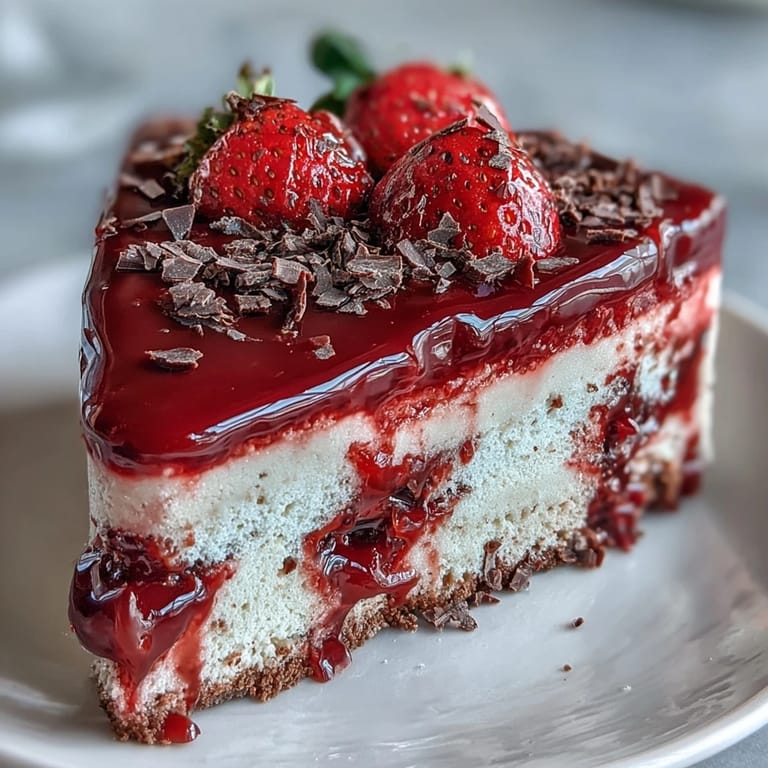
 My sister texted me three days before Valentine's Day with a photo of an impossibly elegant strawberry mousse cake from a French patisserie, asking if I could recreate it. I'd never made anything quite so sophisticated, but there was something about the layers—that delicate sponge, the cloud-like mousse, the glossy ruby glaze—that made me want to try. Turns out, it's far more approachable than it looks, and the magic happens when you understand that each layer is really just a simple component waiting to be combined into something show-stopping.
The first time I made this for my partner, I was so nervous about the gelatin bloom that I set my phone timer and checked it obsessively. When we finally cut into it at dinner, that perfect quiver in the mousse layer—not too stiff, not too loose—made the whole afternoon of hovering over the fridge completely worth it. Watching someone's face light up when they taste something you've made with genuine care is its own kind of love language.
Ingredients
- 3 large eggs, room temperature: Room temperature eggs whip up fluffier and faster because the proteins incorporate air more easily; cold eggs take forever and give you half the volume.
- 90 g granulated sugar (for sponge): This precise amount creates the structure without making the cake dense or overly sweet, letting the strawberries shine.
- 1 tsp vanilla extract: Just enough to deepen the flavor without announcing itself; use real vanilla if you can, as it tastes cleaner than imitation.
- 90 g all-purpose flour: Sift this with the baking powder and salt before folding to avoid lumps and keep the cake tender.
- 1/2 tsp baking powder: This gives the sponge its lift without the need for a ton of mechanical whipping.
- 300 g fresh strawberries for mousse: Peak-season berries are sweeter and more fragrant, so you might need less added sugar if they're exceptional.
- 70 g sugar for mousse: Taste the strawberry purée before adding all of this; incredibly ripe berries might need only half.
- 1 tbsp lemon juice: Brightens the strawberry flavor and keeps the mousse from tasting flat or one-dimensional.
- 6 g powdered gelatin for mousse: Bloom it properly or you'll end up with grainy texture; never skip this step even if you're impatient.
- 250 ml heavy whipping cream, cold: Cold cream whips to peaks faster and holds them better; take it straight from the fridge.
- 150 g fresh strawberries for glaze: Use slightly firmer berries here since the glaze should be smooth and glossy, not chunky.
- 40 g sugar for glaze: The glaze will be sweeter than the mousse since it's more concentrated, so taste as you go.
- 3 g powdered gelatin for glaze: Less gelatin than the mousse because this layer should be silky, not rubbery.
Tired of Takeout? 🥡
Get 10 meals you can make faster than delivery arrives. Seriously.
One email. No spam. Unsubscribe anytime.
Instructions
- Prepare your workspace and preheat:
- Set your oven to 175°C (350°F) and line your 9-inch springform pan with parchment paper. Having everything ready before you start mixing means you can move quickly once the eggs are whipped, which is important because air deflates fast.
- Whip the eggs and sugar into clouds:
- Beat the room-temperature eggs and sugar together until the mixture is pale, thick, and has nearly tripled in volume—this takes about 5 minutes and you'll hear the mixer sound change as air incorporates. Add the vanilla and mix just until combined, then gently sift the flour, baking powder, and salt over the top.
- Fold with intention:
- Using a rubber spatula, fold the dry ingredients into the egg mixture with slow, deliberate strokes from the bottom up, rotating the bowl as you go. Stop as soon as you don't see white streaks anymore; overmixing deflates all those bubbles you just worked for.
- Bake the sponge until golden:
- Pour the batter into the prepared pan and smooth the top gently. Bake for 20–25 minutes until the top is lightly golden and a toothpick inserted in the center comes out clean, then let it cool completely in the pan before moving forward.
- Purée and bloom the strawberries:
- Blend the hulled strawberries with sugar and lemon juice until completely smooth. In a small bowl, sprinkle gelatin over cold water and let it sit for 5 minutes until it looks spongy and bloomed, which means the granules are fully hydrated.
- Dissolve gelatin into warmth:
- Pour about one-third of the strawberry purée into a saucepan and warm it gently over low heat until steaming but not boiling. Remove from heat, add the bloomed gelatin, and stir until completely dissolved and smooth.
- Combine the two purées:
- Pour the gelatin mixture back into the remaining strawberry purée and stir well to distribute evenly. Let this cool to room temperature, stirring occasionally, before proceeding to the cream.
- Whip cream to soft peaks:
- In a separate, very clean bowl, whip the cold cream until it holds soft peaks—peaks that curl over when you lift the whisk. This usually takes 2–3 minutes; stop before it becomes grainy or you'll have butter.
- Fold cream into strawberry mixture:
- Gently fold the whipped cream into the cooled strawberry mixture in two additions, using the same careful bottom-to-top folding motion you used for the sponge. The mousse should be airy, pink, and fully combined with no white streaks.
- Assemble the cake layers:
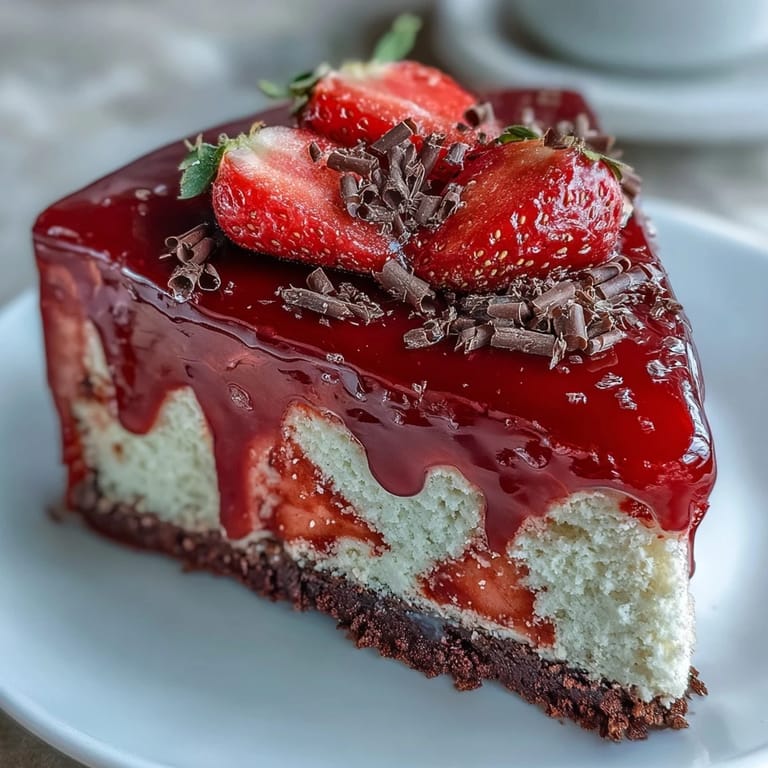
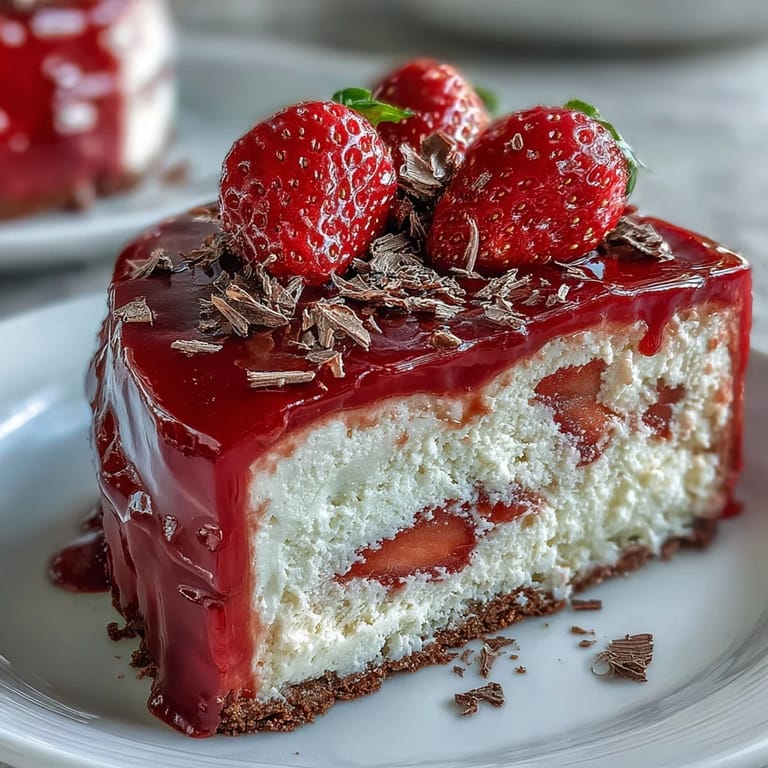
- Release the cooled sponge from the pan, clean the springform ring, and place the cake back inside. Pour the mousse evenly over the sponge, smooth the top with an offset spatula, and refrigerate for at least 2 hours until the mousse is completely set and firm to the touch.
- Make the glossy glaze:
- While the mousse chills, blend the strawberries for the glaze with sugar and lemon juice until smooth. Bloom the gelatin in cold water for 5 minutes, warm a few tablespoons of the purée, dissolve the gelatin in it, then stir this back into the remaining purée and let it cool slightly.
- Add the final glossy layer:
- Pour the cooled glaze gently over the set mousse, smoothing it carefully to the edges with an offset spatula. Refrigerate for another hour until the glaze is firm and glossy, then decorate with fresh strawberries, chocolate shavings, or edible rose petals before serving.
 Save to Pinterest
 Years later, I still remember my grandmother tasting a slice and saying it was fancier than anything she'd ever made, even though she'd been baking professionally. That moment crystallized something for me: complicated-looking desserts are often just simple components treated with care and respect, layered together with intention. It's a lesson that goes beyond cake.
Why This Cake Feels Special
There's something about serving a homemade mousse cake that shifts the mood of a meal entirely. The lightness of the mousse contrasts beautifully with the tender crumb of the sponge, and that glossy glaze catches the light like jewels. It's the kind of dessert that makes people slow down and actually taste what they're eating instead of just finishing a plate.
Mastering the Gelatin Game
The most common mistake I see is skipping the bloom step or blooming gelatin in hot water, which breaks down the protein structure and leaves you with a floppy mousse. Always bloom in cold water for exactly 5 minutes until it looks spongy, then dissolve it in warm liquid—this preserves its setting power. Think of blooming as waking up the gelatin gently, letting it hydrate before you ask it to do its job.
Timing and Temperature Matter
The pacing of this cake is important: you need the sponge completely cool, the mousse mixture at room temperature, and the cream freshly whipped before you fold them together. Rushing this step or working with cold mousse mixture will result in lumps and an uneven texture. I learned this by trying to speed things up once and ending up with a cake that separated during the second chill.
- Prep all three components before you start assembling so you're not waiting around mid-project.
- If your mousse does break or separate when you fold in the cream, gently whisk it back together and fold in one more addition of fresh whipped cream.
- Cold equipment makes a difference—chill your bowls before whipping cream so it sets up faster and stays stable longer.
 Save to Pinterest
 This cake asks for patience and precision, but the payoff is a dessert that tastes like love looks. Serve it with sparkling rosé or a light Moscato, slice it carefully with a warm knife, and watch people's faces light up.
Answers to Recipe Questions
- → How do I ensure the mousse sets properly?
Bloom gelatin in cold water before dissolving it in warmed strawberry purée. Fold gently into whipped cream and refrigerate for at least 2 hours to allow proper setting.
- → Can I use frozen strawberries for mousse and glaze?
Fresh strawberries are best for bright flavor and texture, but thawed frozen strawberries can be substituted. Drain excess liquid to prevent thinning.
- → How do I avoid a dense sponge cake?
Beat eggs and sugar until pale and tripled in volume to incorporate air, then gently fold in dry ingredients to keep the sponge light and airy.
- → What alternatives can be used for garnish?
Try white or dark chocolate shavings, edible rose petals, or fresh halved berries to complement the mousse layers.
- → Can this cake be made gluten-free?
Replace all-purpose flour with a gluten-free flour blend in the sponge layer to accommodate gluten-free diets without compromising texture.
- → How should this dessert be stored?
Keep refrigerated until serving to maintain mousse consistency and glaze firmness. Consume within 2 days for best freshness.