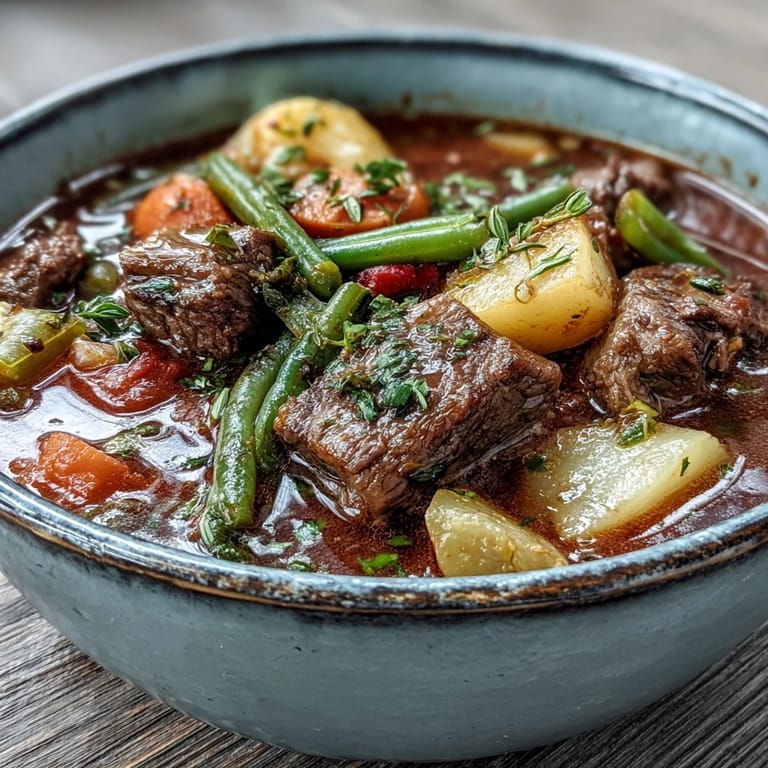
 Save to Pinterest
 There's something about the smell of beef browning in a hot pot that makes everything else fade away. My neighbor stopped by one February afternoon, coat dusted with snow, and the aroma of this soup pulled her right into the kitchen before she could even say hello. She stayed for a bowl, then another, and we spent the next hour talking about nothing in particular while the soup simmered away. That's when I realized this wasn't just sustenance—it was an invitation, a reason for people to linger at the table.
I made this soup the first time during a snowstorm when my fridge felt suspiciously bare. I had beef chuck and whatever vegetables were lurking in my crisper drawer, and I just committed to the process. By the time my partner came home from being snowed in at work, the entire house smelled like comfort. He took one spoonful and didn't speak for a full minute—just kept eating.
Ingredients
- Beef chuck, cut into 1-inch cubes (1.5 lbs): This cut has enough marbling and connective tissue to break down beautifully during the long simmer, giving you that melt-in-your-mouth texture that makes the soup worthwhile.
- Olive oil (2 tbsp): You need enough to get a proper sear on the beef—this creates flavor depth that you can't rush or skip.
- Onion, diced (1 large): The sweetness develops as it cooks down, creating an invisible flavor foundation that brings everything together.
- Garlic, minced (3 cloves): Add this after the aromatics soften, never at the start, or it'll burn and turn bitter.
- Carrots, sliced (3 medium): They hold their shape better than you'd expect and add natural sweetness that balances the savory beef.
- Celery stalks, sliced (2): This is your secret weapon for depth—celery gives soup an umami boost that most people can't identify but absolutely notice.
- Potatoes, peeled and diced (2 medium): They thicken the broth slightly as they break down, making the soup feel more substantial without any extra effort.
- Parsnip, peeled and diced (1, optional): If you use it, you'll get a subtle earthiness that elevates the whole thing—I never skip it anymore.
- Green beans, cut into 1-inch pieces (1 cup): These stay bright and crisp if you add them early, adding texture contrast to the softer vegetables.
- Frozen peas (1 cup): Wait until the very end to add these so they stay tender and don't turn to mush.
- Diced tomatoes, undrained (1 can, 14.5 oz): The acidity wakes up all the other flavors and adds a subtle tang that makes the soup taste more complex than it is.
- Beef broth (8 cups): Quality matters here—a good broth is the backbone of everything, so taste yours before you commit to the salt amount.
- Bay leaves (2): Remove them before serving or your guests will find one, which is awkward for everyone involved.
- Dried thyme and oregano (1 tsp each): These work together to give you that familiar comfort-food flavor without overpowering the beef.
- Black pepper and salt (½ tsp and 1 tsp): Start with these amounts and adjust at the end—you'll taste better once everything has cooked down.
- Fresh parsley, chopped (2 tbsp): This is your finishing touch, the thing that makes people say this tastes like it came from somewhere important.
Tired of Takeout? 🥡
Get 10 meals you can make faster than delivery arrives. Seriously.
One email. No spam. Unsubscribe anytime.
Instructions
- Get your pot hot and sear that beef:
- Heat the olive oil in your Dutch oven over medium-high heat until it shimmers slightly. Working in batches if needed, brown the beef cubes on all sides—you're looking for a deep golden crust, which takes about five to seven minutes total. Don't crowd the pan or the beef will steam instead of sear, which ruins the whole point.
- Build the flavor base:
- Remove the beef and set it aside, then add your onion, carrots, and celery to the same pot with all those browned bits stuck to the bottom. Let them soften for about five minutes, stirring occasionally, then add your garlic and cook for just one more minute so it becomes fragrant without burning.
- Combine everything and commit:
- Return the beef to the pot and add your potatoes, parsnip if using, green beans, tomatoes with their juice, beef broth, bay leaves, thyme, oregano, pepper, and salt. Stir everything together so nothing sticks to the bottom, then bring it all to a rolling boil.
- Let time do the work:
- Reduce the heat to low, cover the pot, and let it simmer gently for about one hour and fifteen minutes, stirring occasionally. The beef will transform from tough cubes into tender pieces, and the whole pot will smell like something worth waiting for.
- Finish strong with the final vegetables:
- Add your frozen peas and cook uncovered for another ten to fifteen minutes, just until everything is tender and cooked through. The peas will soften completely, and this is when you taste everything and adjust the seasoning because salt and pepper always need tweaking at the end.
- Clean up and plate:
- Fish out those bay leaves before anyone takes a bite, ladle the soup into bowls, and finish each one with a pinch of fresh parsley. Serve immediately with crusty bread for soaking up every last drop.
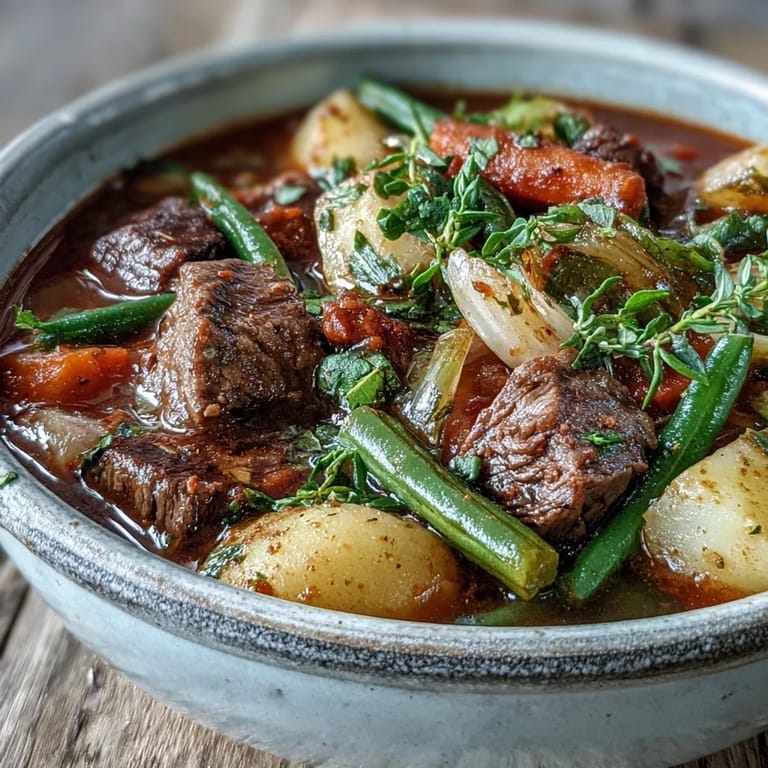 Save to Pinterest
 This soup became my go-to when life got chaotic. During a particularly stressful month, I'd make a big batch on Sunday and know that at least one meal every day was handled. My daughter started requesting it by name, which is when I knew it had transcended recipe status and become part of our family routine.
Why This Soup Became a Winter Standard
There's a reason this particular combination has survived so long in so many kitchens. The beef provides serious protein and satisfaction, the vegetables disappear into the broth until they're almost part of it, and the whole thing costs less than takeout while tasting like you spent all day cooking. The first time I made it for a crowd, I watched people get quiet and focused the way they only do when food is genuinely good and genuinely comforting.
Timing and Temperature Matter More Than You Think
The length of the simmer is what separates this soup from something forgettable. Ninety minutes isn't arbitrary—it's the exact amount of time the beef needs to go from tough to tender without the broth becoming over-reduced. I once got impatient and turned up the heat to speed things along, and the beef ended up stringy while the broth tasted too intense. Now I set a timer and trust the process.
Customization Without Losing the Soul
The beauty of this soup is that it's forgiving enough to work with what you have. I've made it with sweet potatoes when regular potatoes ran out, and the subtle sweetness wasn't wrong—just different. I've added a splash of Worcestershire sauce when the broth seemed thin on flavor, and I've left the parsnips out when someone at the table wouldn't eat them.
- A dash of smoked paprika at the end adds a layer of complexity that tastes like a professional secret.
- Serve it with really good crusty bread because soaking up that broth is half the pleasure.
- Leftovers genuinely taste better the next day as the flavors settle into each other overnight.
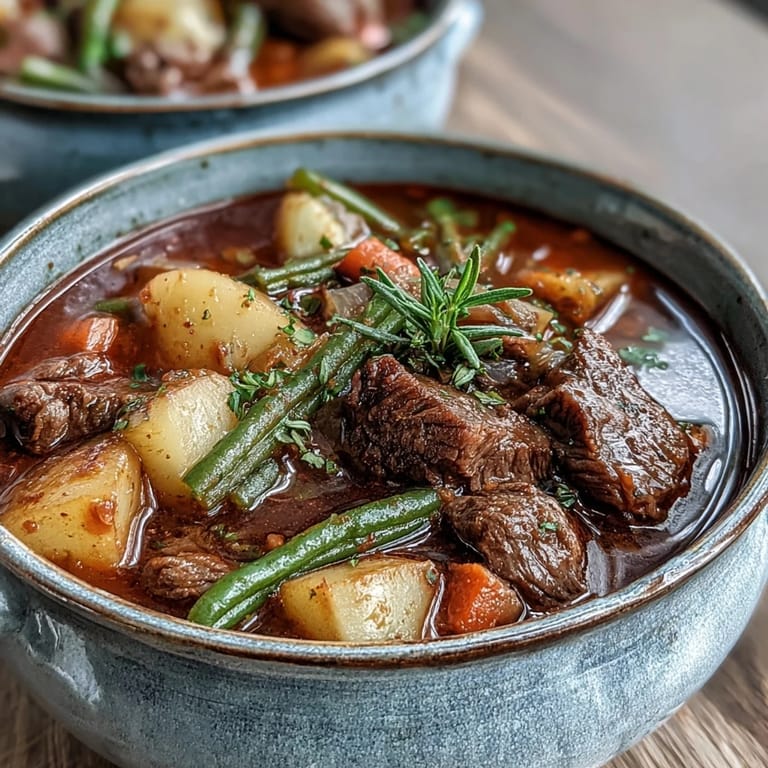 Save to Pinterest
 Make this soup when you need proof that simple ingredients matter more than complexity. It's the kind of cooking that reminds you why people gather around tables in the first place.
Answers to Recipe Questions
- → What cut of beef works best for this soup?
Beef chuck is ideal because it becomes tender during long simmering. The marbling breaks down beautifully, creating rich flavor and melt-in-your-mouth texture.
- → Can I make this soup in a slow cooker?
Absolutely. Brown the beef first, then add all ingredients to your slow cooker. Cook on low for 7-8 hours or high for 4-5 hours until beef is tender.
- → How long do leftovers keep in the refrigerator?
Leftovers store well for up to 4 days in an airtight container. The flavors continue developing, often making it even better the next day.
- → What vegetables can I substitute?
Try sweet potatoes, turnips, or rutabaga instead of regular potatoes. You can also add other vegetables like corn, zucchini, or spinach based on preference.
- → Can I freeze this soup?
Yes, freeze for up to 3 months. Cool completely before transferring to freezer-safe containers. Thaw overnight in the refrigerator before reheating.