 Save to Pinterest
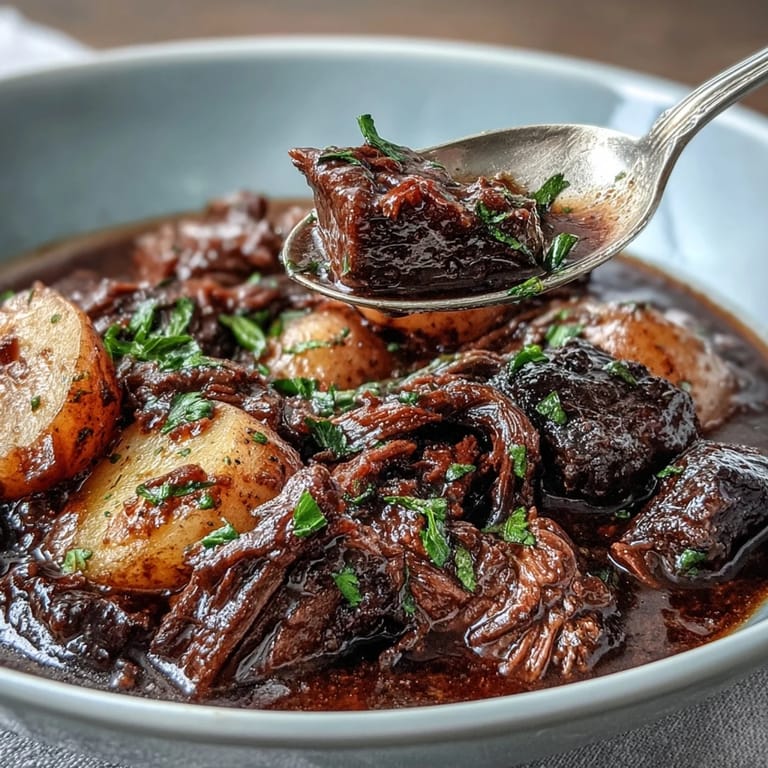
 There's something about the sound of beef hitting a hot skillet that signals the beginning of real comfort food. My kitchen filled with that brown-crust aroma one November afternoon, and I knew this slow cooker was about to do the heavy lifting for hours while I went about my day. By evening, when I lifted that lid, the smell alone made everyone pause and drift toward the kitchen. This beef stew became my go-to for those moments when you want something that tastes like it took all day, but only demands about twenty minutes of actual work from you.
I made this for a dinner party where someone brought a bottle of wine and mentioned they'd been craving something warming and unpretentious. We talked through the afternoon while it bubbled away, and when we finally sat down, that first spoonful proved that slow cooking isn't just technique—it's a way of showing people you care enough to let time do the work. That night, nobody wanted dessert; they just wanted another bowl.
Ingredients
- Beef chuck, 2 lbs cut into 1.5-inch cubes: This cut has enough marbling and connective tissue that it transforms into something incredibly tender during the long, slow cook, while leaner cuts would dry out.
- Kosher salt and black pepper: Season the meat before searing to help build that flavorful crust that anchors the whole dish.
- Carrots, 3 large cut into 1-inch pieces: They soften completely without dissolving, and their natural sweetness balances the savory broth beautifully.
- Parsnips, 2 peeled and sliced: If you've never used these in stew, they add an earthy, slightly sweet note that feels like a discovery.
- Yukon Gold potatoes, 2 large chopped into chunks: These hold their shape better than russets and have a buttery flavor that doesn't need additional fat.
- Yellow onion, 1 large diced: It practically dissolves into the broth, making it the foundation of your flavor base rather than something you actually see in the bowl.
- Celery, 3 stalks sliced: Adds depth without overpowering; it's the quiet character that makes everything else taste better.
- Garlic, 3 cloves minced: Stir it in raw at the beginning; it mellows into something sweet and savory as it cooks all day.
- Tomato paste, 2 tbsp: A spoonful concentrates flavor and adds a subtle tang that keeps the stew from feeling one-note.
- Worcestershire sauce, 1 tbsp: This ingredient is the secret handshake—it brings umami and a little mystery that people can taste but can't quite name.
- Bay leaf and dried herbs: Use dried thyme and rosemary here; fresh herbs would lose their punch during eight hours, but dried ones become part of the fabric of the broth.
- Beef broth, 4 cups: This is your foundation, so use something you actually enjoy drinking, and verify it's gluten-free if that matters for your table.
- Dry red wine, 1 cup: It adds acidity and complexity; if you skip it entirely, add more broth instead of leaving the pot under-liquided.
- Cornstarch slurry, 2 tbsp mixed with cold water: This thickens the stew at the very end without making it feel heavy or flour-dusted.
Tired of Takeout? 🥡
Get 10 meals you can make faster than delivery arrives. Seriously.
One email. No spam. Unsubscribe anytime.
Instructions
- Season and sear your beef:
- Pat the beef cubes dry, then season generously with salt and pepper. Working in batches, lay them in a hot skillet without crowding and let them sit for about three minutes per side until you see a golden-brown crust forming; this step builds flavor that slow cooking can't create on its own.
- Build your vegetable base:
- Chop your carrots, parsnips, potatoes, onion, and celery into the slow cooker. The one-inch pieces matter because they'll soften without falling apart, and the sizes should be roughly similar so everything finishes cooking at the same moment.
- Layer in aromatics and flavor:
- Stir the minced garlic, tomato paste, Worcestershire sauce, bay leaf, thyme, and rosemary into the vegetables. Don't skip the mixing step; you want the tomato paste distributed throughout rather than sitting in a clump on one side.
- Add your liquids and start the long cook:
- Pour in the beef broth and red wine, stirring gently to make sure nothing's stuck to the bottom. Cover and set your slow cooker to low for eight hours; the lid traps all that steam and lets everything become impossibly tender.
- Finish and thicken at the end:
- Mix cornstarch and cold water in a small bowl until smooth, then stir this slurry into the finished stew. Switch the slow cooker to high, leave it uncovered, and let it cook for fifteen minutes while the starch thickens everything into something silky and cohesive.
- Taste and adjust:
- Fish out the bay leaf, then taste a spoonful and decide if you want more salt, pepper, or herbs. This is your moment to make it exactly right for your palate.
 Save to Pinterest
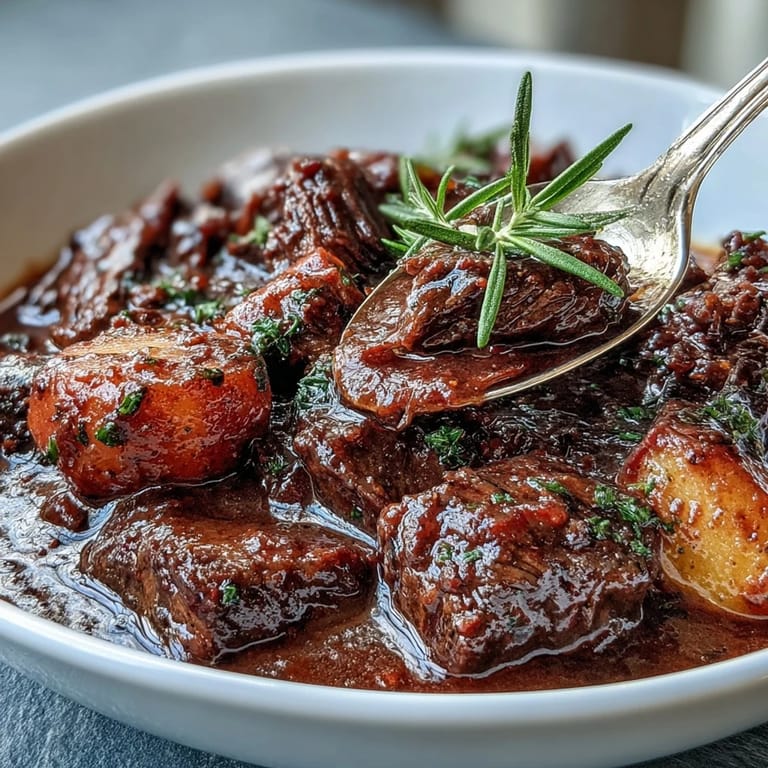
 What surprised me most was how this dish became a comfort ritual rather than just a meal. Someone would text asking what was for dinner, smell it through the house, and suddenly the evening shifted from ordinary to something we all looked forward to. That's when I realized slow cooking isn't really about the beef—it's about creating a moment where everyone feels taken care of.
Making It Your Own
The beauty of this stew is how forgiving it is, which means you can adjust it based on what you have or what you're craving. In the last hour, I've added a cup of sliced mushrooms for earthiness, or a handful of frozen peas for a pop of sweetness and color. Some versions I've made swap out the Yukon Golds for sweet potatoes, which changes the whole personality of the dish into something slightly more autumnal and elegant.
Serving Suggestions That Actually Matter
The stew itself is a complete meal, but the way you serve it shapes how people experience it. A thick slice of crusty bread beside the bowl is perfect for soaking up broth, while mashed potatoes underneath turn it into something almost luxurious. I've also spooned it over egg noodles on nights when I wanted something different, and it shifted the whole feel without changing a single ingredient in the pot.
Storage and Timing Notes
This stew tastes even better on the second day after the flavors have had time to get to know each other, so don't hesitate to make it ahead. It keeps in the fridge for about four days and freezes beautifully for up to three months, which means you can build a quiet stockpile of comfort for busy weeks ahead.
- If you're omitting the wine, replace it with extra broth to keep the liquid ratio balanced.
- Check your Worcestershire and beef broth labels carefully if you need this meal to be truly gluten-free.
- The cornstarch slurry must be mixed with cold water first, or it'll clump into little balls instead of thickening smoothly.
 Save to Pinterest
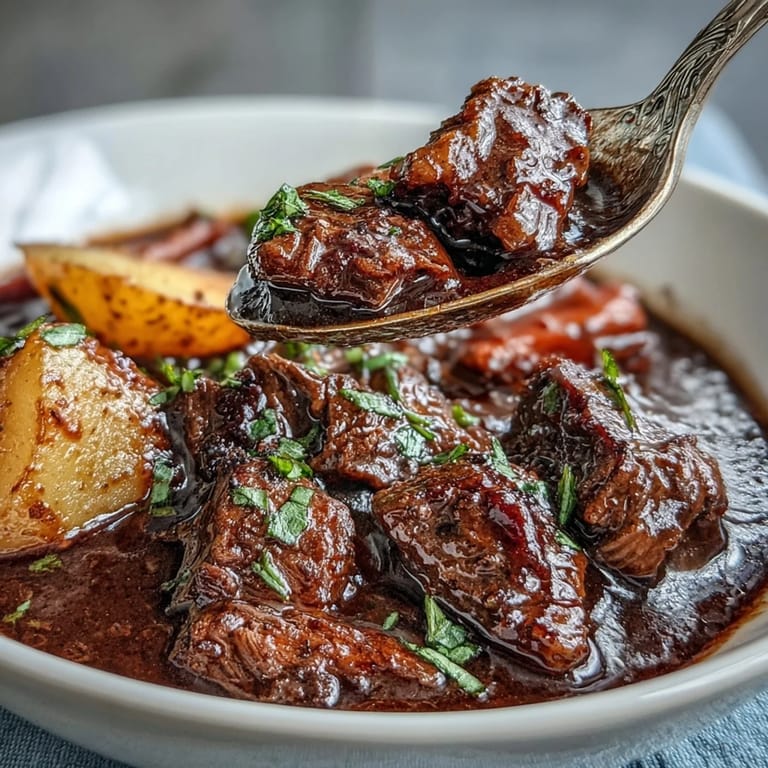
 This beef stew is the kind of recipe that quietly becomes a favorite because it asks so little of you while delivering so much. Make it once, and you'll find yourself returning to it whenever the weather turns cool and your soul needs something warm.
Answers to Recipe Questions
- → What cut of beef works best for this stew?
Beef chuck is ideal due to its marbling and ability to stay tender and flavorful after long, slow cooking.
- → Can I prepare this dish without alcohol?
Yes, simply omit the red wine and replace it with additional beef broth to maintain the liquid balance and flavor.
- → How do I thicken the stew properly?
Mix cornstarch with cold water to create a slurry and stir it into the hot stew. Cook uncovered for about 15 minutes to let it thicken evenly.
- → What vegetables complement the flavors best?
Root vegetables like carrots, parsnips, and Yukon Gold potatoes provide sweetness and texture that balance the savory beef broth.
- → Can I cook this stew without a slow cooker?
Yes, slow simmering in a heavy pot on the stovetop at low heat works well but requires regular stirring and monitoring.