 Save to Pinterest
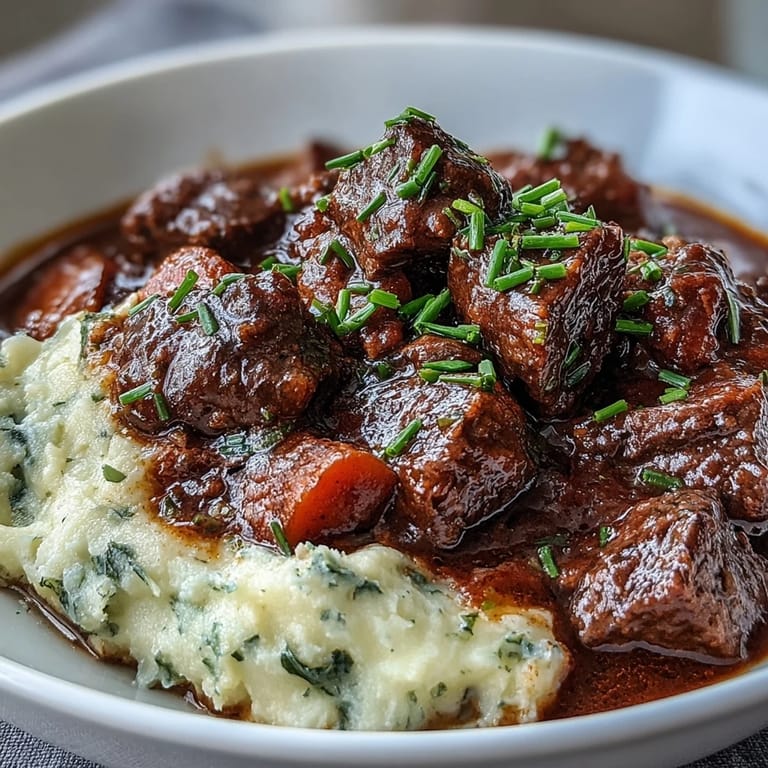
 My sister called one rainy Tuesday asking if I could make her famous Irish stew, the one she remembered from our grandmother's kitchen, except lighter because she'd started running marathons. I laughed and said I'd give it a shot, but with cauliflower mash instead of potatoes to keep the carbs down. What emerged from that pot was something unexpected—beef so tender it practically dissolved on your tongue, a broth deep with wine and herbs, and this silky cauliflower underneath that somehow felt more indulgent than the original ever was.
I made this for a dinner party where someone mentioned being gluten-free, and another guest was watching her carbs, and honestly I was nervous about pleasing everyone at once. But when I ladled that rich, wine-darkened stew over the cauliflower mash and set it in front of the table, the room got quiet in that specific way that means food has landed right. My friend with the marathon training plan went back for seconds, and the person who'd just started keto asked for the recipe before dessert even came out.
Ingredients
- Lean beef stew meat, 1 lb: Trimming every bit of visible fat doesn't make the meat less flavorful—it actually lets the herbs and wine shine through more clearly, and the browning step makes it taste even richer than fattier cuts.
- Olive oil, 1 tbsp: Just enough to get the pan hot enough for a proper sear, which builds the foundation of the entire stew's depth.
- Onion, carrots, celery: This holy trinity breaks down into the broth itself, so by the time you eat it, you're not biting into chunks but rather tasting their sweetness woven throughout.
- Garlic, 3 cloves: Minced fine and cooked briefly so it perfumes the pot without turning bitter, a mistake I made exactly once.
- Beef broth and dry red wine: The wine cuts through the richness while the broth carries everything together, creating a savory depth that feels like hours of work even though it isn't.
- Tomato paste, Worcestershire sauce, herbs: These three things—the paste, the sauce, and the thyme and rosemary—are what makes this taste authentically like an Irish stew rather than just beef in broth.
- Bay leaves and peas: The bay leaves perfume the whole pot, and the peas add sweetness and texture at the very end without needing extra cooking time.
- Cauliflower, 1 large head: Boiled until it's almost falling apart and then blended with butter and milk, it becomes something completely different from roasted cauliflower—creamy, almost luxurious.
- Butter and milk, 2 tbsp each: The butter makes the mash taste indulgent while the milk keeps it from becoming gluey, and this ratio is precise because I learned it through trial and a few failed batches.
Tired of Takeout? 🥡
Get 10 meals you can make faster than delivery arrives. Seriously.
One email. No spam. Unsubscribe anytime.
Instructions
- Prepare and sear the beef:
- Pat your beef pieces completely dry—this matters because wet meat steams instead of browning, a lesson learned the hard way. Season generously with salt and pepper, then work in batches over medium-high heat, letting each piece sit undisturbed for a minute or two so it develops that dark, flavorful crust.
- Build your flavor base:
- In the same pot, soften the onion, carrot, and celery for about five minutes, letting them release their natural sweetness. Add the minced garlic and cook just until fragrant—the moment your kitchen smells like garlic is the moment to move forward.
- Deepen with tomato and herbs:
- Stir in the tomato paste, thyme, rosemary, and bay leaves, cooking for a minute so the spices wake up and the paste loses its raw edge. This single minute of cooking changes everything about how the final stew tastes.
- Braise the beef low and slow:
- Return the beef to the pot, pour in the red wine, and use a wooden spoon to scrape up all those browned bits stuck to the bottom—that's pure flavor. Add the beef broth and Worcestershire sauce, bring to a simmer, then drop the heat low, cover, and let it go for about an hour and fifteen minutes, stirring every twenty minutes or so.
- Finish with freshness:
- Remove the lid, scatter in the frozen peas, and simmer uncovered for another five to ten minutes until they're tender and heated through. Taste and adjust salt and pepper because this is your moment to make it taste exactly right.
- Make the cauliflower mash:
- While the stew is in its final stretch, boil cauliflower florets in salted water until they're very tender, almost falling apart. Drain them well—really press them in a colander—then pulse them in a food processor with butter and milk until silky.
- Plate and serve:
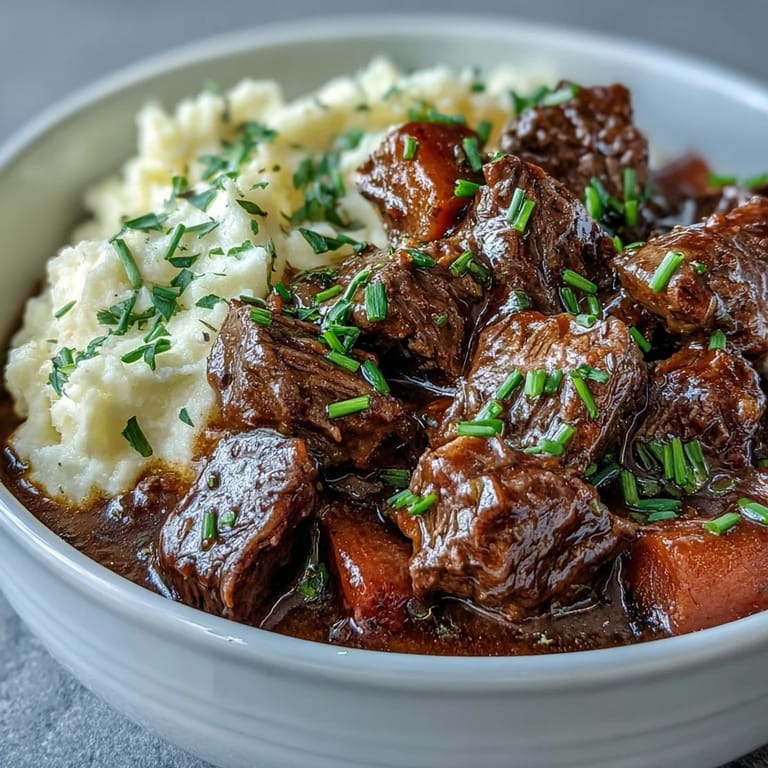
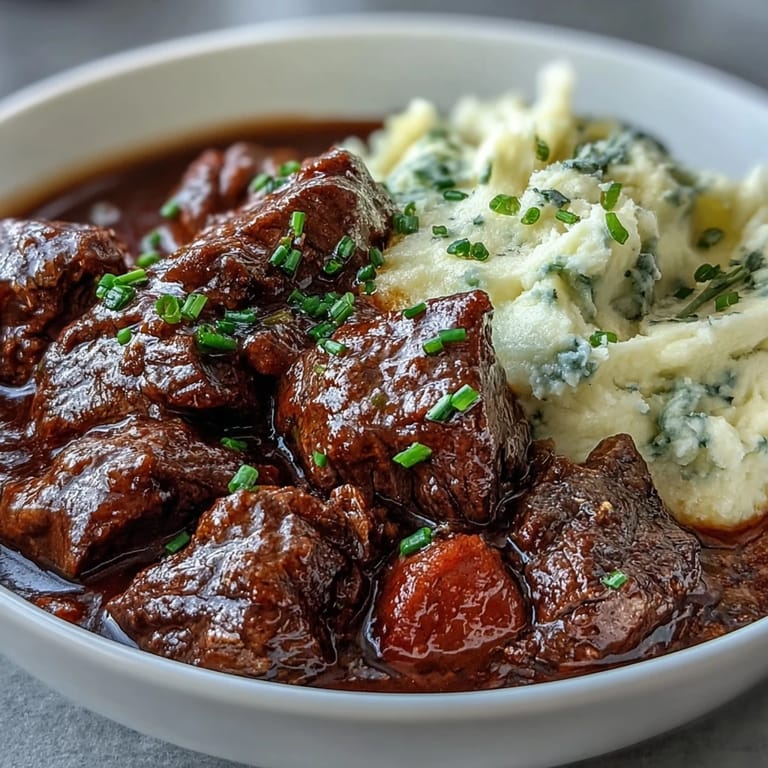
- Spoon the cauliflower mash into a bowl or onto a plate, then ladle the hot stew over the top, letting some of that rich broth pool around it. Scatter fresh chives over the top if you have them, because the green and the slight onion flavor make the whole thing taste fresher.
 Save to Pinterest
 There's something about serving a bowl of stew that makes people slow down and actually taste their food instead of just eating it mechanically. My sister texted me the next morning saying she'd had it for lunch the day after and it was even better, which is the ultimate compliment because it means this stew doesn't fade or feel thin when you revisit it.
Why Wine Matters Here
The red wine isn't optional flavor—it's essential chemistry. As the stew simmers, the alcohol cooks off and what remains is this subtle fruity undertone that makes the beef taste more like itself, more concentrated and genuine. I've tried making this with extra broth instead of wine for friends who prefer it, and the stew becomes pleasant but somehow one-dimensional, like it's wearing a single note instead of a whole chord.
The Cauliflower Question
I know cauliflower mash sounds like a compromise, like you're settling for something less than the real thing. But when it's made with butter and milk and blended until it's completely smooth, it becomes genuinely luxurious in its own way—less starchy than potatoes, which somehow lets the stew itself be the star rather than competing for attention. The texture is more delicate, the taste is almost neutral, and it absorbs the broth in a way that feels intentional rather than accidental.
Making It Your Own
The beauty of a dish this fundamental is that it invites tinkering without falling apart. Some people swear by adding a splash of Guinness instead of red wine, which adds a dark, almost coffee-like undertone that's incredibly appealing. Others have mentioned swapping sweet potatoes for some of the carrots to add a different kind of sweetness, and while I haven't tested this myself, the person who suggested it made it sound convincing enough that I'm planning to try it soon.
- If your stew seems too thin at the end, remove a half cup of the cooked vegetables, mash them roughly, and stir them back in to thicken it naturally.
- The stew tastes measurably better the next day, so make it ahead if you have the time and just reheat it gently on the stove.
- Fresh chives are optional but genuinely worth grabbing from the grocery store because they add a bright note that cuts through all that richness in the best way.
 Save to Pinterest
 This stew somehow manages to feel like home cooking while also being something you'd feel good about eating regularly, which is exactly the kind of recipe that earns its place in permanent rotation. Make it once and you'll understand why my sister called asking for it in the first place.
Answers to Recipe Questions
- → What cut of beef works best for this stew?
Use lean stew meat trimmed into 1-inch cubes for tender, flavorful results after slow cooking.
- → Can I substitute the red wine in the stew?
Yes, you may replace red wine with additional beef broth or a splash of Guinness for a richer flavor.
- → How is the cauliflower mash prepared?
Cauliflower florets are boiled until tender, then blended with butter and low-fat milk until smooth and creamy.
- → What herbs enhance the stew’s flavor?
Dried thyme, rosemary, and bay leaves lend an aromatic and earthy depth to the slow-simmered beef.
- → Can this meal accommodate dietary restrictions?
Yes, it is gluten-free and low-carb. Use plant-based butter and milk alternatives for dairy-free needs.