 Save to Pinterest
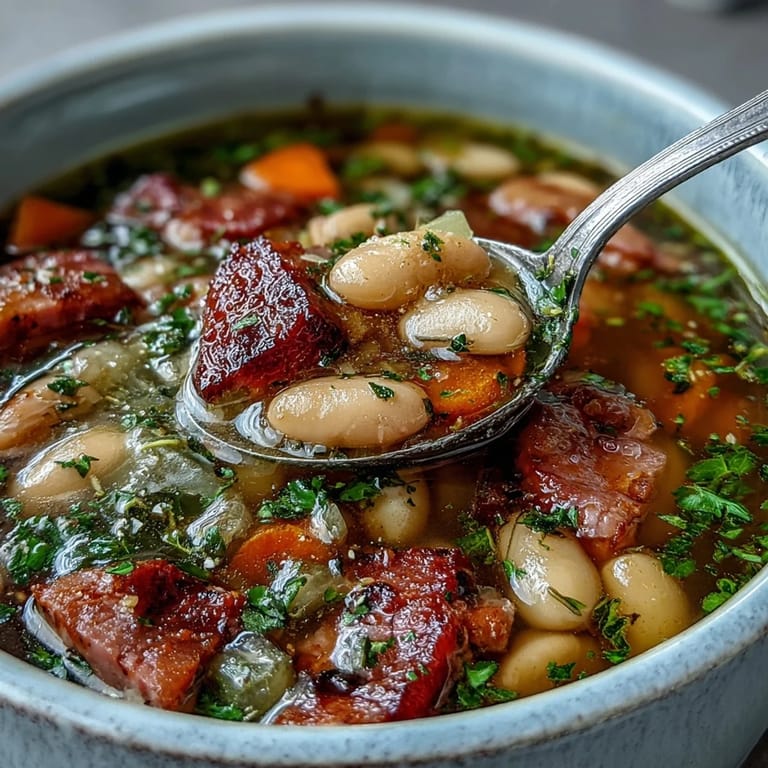
 There's something about the smell of ham simmering with fresh herbs that makes a kitchen feel instantly lived-in and warm. My neighbor stopped by one crisp autumn afternoon asking what smelled so good, and when I ladled her a bowl of this soup, she sat at my kitchen counter for an hour just talking and eating. That's when I knew this recipe had become one of those dishes that does more than feed people—it brings them in and makes them stay.
I made this for my sister the week she moved into her first apartment, and she told me years later that opening a container of it in her empty kitchen made the whole place feel like home. She still asks me for it when she's feeling overwhelmed or just needs something that tastes like someone's been thinking about her.
Ingredients
- Cooked ham, diced (2 cups): This is your umami anchor—the salty, smoky depth that makes everything else taste richer and more intentional, so don't skimp on quality ham.
- Yellow onion (1 medium): Dicing it fine helps it dissolve almost completely into the broth, building a sweet, mellow foundation that barely announces itself but would be deeply missed if it weren't there.
- Carrots (2 medium): Their natural sweetness balances the ham's saltiness, and they soften into tender coins that feel almost luxurious to bite into.
- Celery stalks (2): The aromatic trio with onion and carrot creates the flavor backbone that European cooking has relied on for centuries—it's humble but essential.
- Garlic (3 cloves, minced): Added after the softer vegetables, it wakes everything up without burning or turning bitter, giving the soup a gentle, inviting savory note.
- Cannellini beans (2 cans, 15 oz each): Their creamy texture and mild flavor mean they don't compete with the ham—instead, they cuddle up to it and become part of something bigger.
- Chicken or vegetable broth (6 cups): Use low-sodium so you can taste the actual ingredients and adjust salt yourself rather than fighting an already-salted broth.
- Fresh parsley (2 tbsp, chopped): Stirred in at the very end, it brings a bright, grassy freshness that prevents the soup from tasting heavy or one-dimensional.
- Fresh thyme (1 tbsp, chopped): Subtle and woodsy, thyme has a way of making simple food taste like you've been cooking all day, even if you haven't.
- Fresh rosemary (1 tbsp, finely chopped): A little goes a long way with rosemary, but that piney earthiness is what makes people pause and say, 'What is that flavor?'
- Bay leaf (1): It steeps quietly during cooking and should be removed before serving, but the flavor it imparts is surprisingly profound and warm.
- Freshly ground black pepper (1/2 tsp): Fresh-cracked pepper tastes infinitely better than the pre-ground stuff that's been sitting in a tin, so invest in a pepper mill if you haven't already.
- Salt (1/2 tsp, adjusted to taste): Start conservative since the ham is already salty—you can always add more, but you can't take it back.
- Olive oil (2 tbsp): A good extra-virgin olive oil makes the initial sauté smell absolutely divine and adds a subtle richness that vegetable oil simply can't match.
Tired of Takeout? 🥡
Get 10 meals you can make faster than delivery arrives. Seriously.
One email. No spam. Unsubscribe anytime.
Instructions
- Warm your oil and start the vegetables:
- Pour the olive oil into your largest soup pot and let it heat over medium until it shimmers and smells nutty. Add the diced onion, carrots, and celery all at once, stirring them around so they're coated in that warm oil.
- Let them soften and sweeten:
- Sauté for 5 to 7 minutes, stirring occasionally, until the vegetables lose their raw edges and turn translucent. You'll know it's right when the smell shifts from sharp to sweet, almost caramelized.
- Add garlic and let it bloom:
- Stir in the minced garlic and give it about a minute—you want the raw bite to cook out but the aromatic magic to release into the oil. The kitchen will smell impossibly good at this point.
- Bring in the ham:
- Add the diced ham and stir it around for another couple of minutes, letting the edges brown slightly and the flavors begin to marry with the vegetables.
- Combine beans, broth, and seasonings:
- Pour in the drained cannellini beans and the broth, then add the bay leaf, salt, and pepper. Stir everything together so nothing sticks to the bottom, and let the flavors start getting to know each other.
- Bring to a simmer and let time do its work:
- Turn the heat up just enough to bring the soup to a boil, then reduce it to low and let it simmer uncovered for 30 minutes. The longer, gentle cooking helps all the flavors deepen and meld together, transforming simple ingredients into something that tastes like it's been on the stove for hours.
- Finish with fresh herbs and final seasoning:
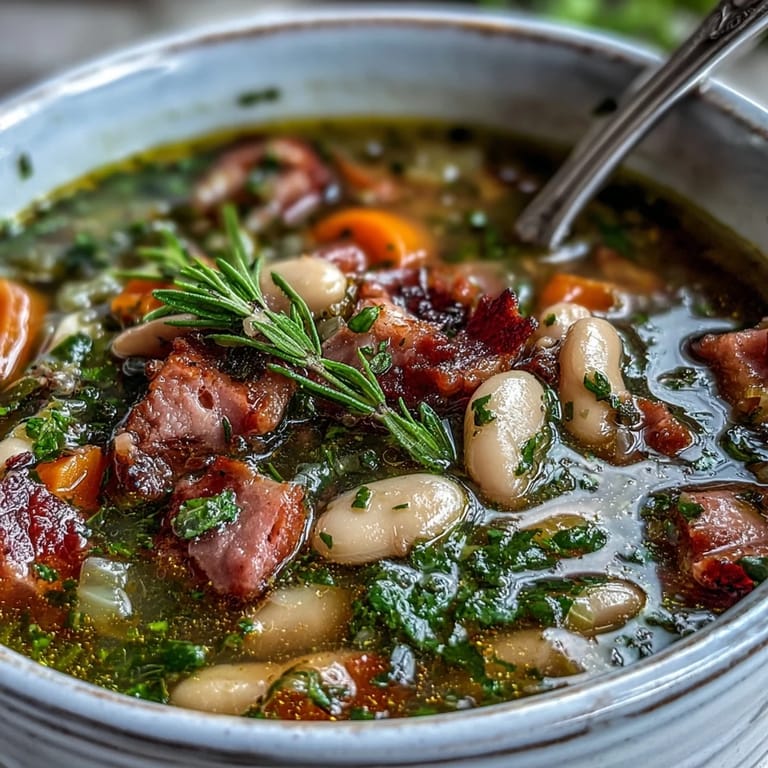
- Fish out the bay leaf with a spoon, then stir in the chopped parsley, thyme, and rosemary. Simmer for just 2 to 3 more minutes—you want those herbs alive and bright, not cooked into submission.
- Taste and adjust:
- Ladle a spoonful into a small bowl and taste it while it's hot. Adjust salt and pepper until it tastes like home to you, then serve it steaming in whatever bowls make you happy.
 Save to Pinterest
 My father came home from the hospital after a procedure and looked at this soup like I'd handed him something far more valuable than chicken noodle. He ate three bowls that first night and slept better than he had in weeks, and I realized that sometimes the most nourishing thing food can do is remind us that someone's been thinking of us.
When Beans Make All the Difference
Cannellini beans are mild and creamy in a way that lets other flavors shine without competing for attention. I learned this after years of using more assertive beans that made every soup taste like beans instead of like a complete, balanced dish. Once I switched, the whole recipe clicked into focus—the ham wasn't fighting the beans anymore, and the broth had room to taste like itself.
The Magic of Adding Fresh Herbs Last
There's a reason restaurants always finish soups with a last-minute herb garnish, and it has nothing to do with pretension. Those herbs, added when the soup is still steaming, release their volatile oils and fragrant compounds right when you're about to eat. It's the difference between tasting thyme and tasting the idea of thyme that's been cooked to oblivion.
Customizing and Storing Your Soup
This soup is infinitely forgiving, which is part of why I love making it. Navy beans or Great Northern beans work beautifully if that's what's in your pantry, and if you want it thicker, just simmer it uncovered for an extra 10 minutes or mash more beans into the broth.
- Leftover soup keeps for 3 to 4 days in the refrigerator and tastes even better the next day once all the flavors have had time to deepen and mingle.
- You can freeze it for up to 2 months if you have the freezer space, though the beans will soften slightly upon thawing—it's still delicious, just a touch less structured.
- Serve it with crusty bread for soaking up every last drop, and a glass of crisp Sauvignon Blanc if you're in a celebrating mood.
 Save to Pinterest
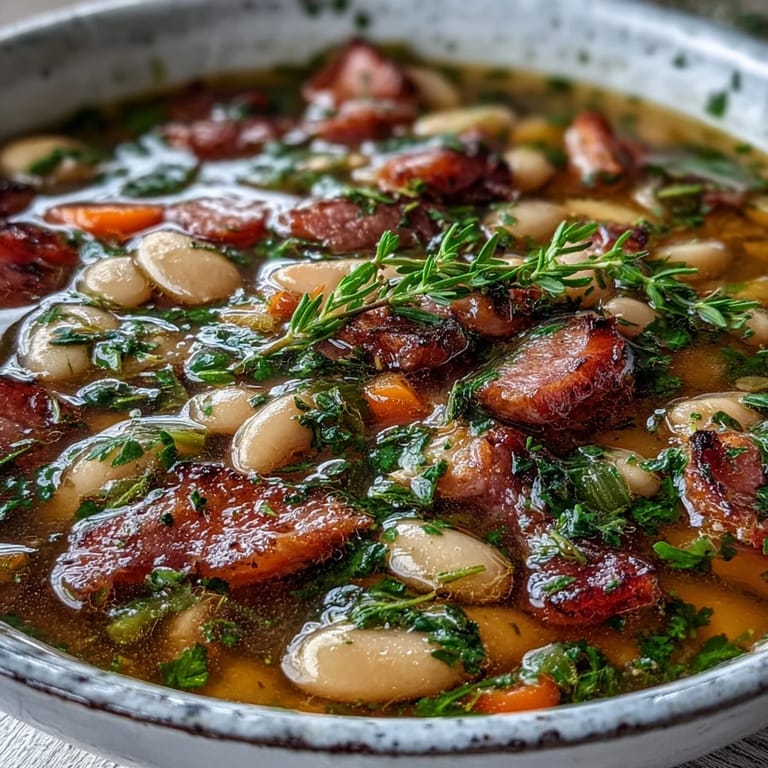
 This soup has become one of those recipes I make without looking at the measurements anymore, the kind that feels like muscle memory and tastes like home. I hope it does the same for you.
Answers to Recipe Questions
- → Can I substitute cannellini beans?
Yes, navy beans or Great Northern beans work well as alternatives with a similar creamy texture.
- → How do I make the soup creamier?
Mash some of the beans against the side of the pot before serving to add thickness and creaminess.
- → What herbs are best for this soup?
Fresh parsley, thyme, and rosemary add bright and earthy flavors that complement the ham and beans perfectly.
- → Can I use vegetable broth instead of chicken broth?
Yes, vegetable broth works well and keeps the soup lighter while maintaining a rich flavor.
- → Is this soup suitable for a gluten-free diet?
It is naturally gluten-free if you use a certified gluten-free broth and check canned beans for additives.