 Save to Pinterest
 I stumbled into fesenjan on a cold October evening when a neighbor brought over a small container, still warm, with a note that simply said try this with rice. The sauce was dark, glossy, and smelled like nothing I'd cooked before. One spoonful and I was hooked on that strange, beautiful tension between tart pomegranate and earthy walnuts. I asked for the recipe the next morning, and she laughed, saying her grandmother never measured anything. So I learned it my own way, through trial and plenty of tasting.
The first time I made fesenjan for friends, I panicked halfway through because the sauce looked thin and pale. I almost added flour, but something told me to wait. After another twenty minutes of simmering, the walnut oil rose to the surface in little amber pools, and the whole pot turned glossy and thick. My friends ate two servings each, scraping their plates with bread, and I realized sometimes the best cooking lessons come from resisting the urge to fix things too soon.
Ingredients
- Boneless chicken thighs or duck: Thighs stay tender through the long simmer, and duck brings a richer, more traditional flavor, though chicken is easier to find and just as delicious.
- Walnuts: The backbone of the sauce, they need to be finely ground so they melt into the liquid and create that signature velvety texture.
- Pomegranate molasses: This is where the magic happens, the molasses gives fesenjan its tart, fruity soul, so taste yours before adding sugar to know how sweet it already is.
- Sugar: Balances the pomegranate's sharpness, but start with less and add more at the end once you see how the flavors settle.
- Cinnamon, turmeric, and cardamom: Warm spices that add depth without shouting, turmeric gives a subtle golden undertone, and cardamom is optional but lovely if you have it.
- Onion: Sautéed until deeply golden, it sweetens the base and adds a caramelized richness that supports everything else.
Tired of Takeout? 🥡
Get 10 meals you can make faster than delivery arrives. Seriously.
One email. No spam. Unsubscribe anytime.
Instructions
- Season and prep the meat:
- Rub the chicken or duck with salt and pepper, letting it sit while you chop the onion. This small step helps the meat absorb flavor before it even hits the pot.
- Sauté the onions until golden:
- Heat the oil over medium heat and add the onions, stirring often until they turn a deep amber color. This takes patience, but it builds the sweet, savory foundation of the dish.
- Brown the meat:
- Add the seasoned pieces to the pot and let them sizzle, turning occasionally until all sides are browned. You're not cooking them through, just building flavor and texture on the outside.
- Toast the ground walnuts:
- Stir in the walnuts and cook for a few minutes, stirring constantly so they don't stick or burn. You'll smell them turn nutty and warm, that's when you know they're ready.
- Add the liquids and spices:
- Pour in the pomegranate molasses, water, sugar, and spices, then stir everything together until it's well mixed. The pot will look soupy at first, and that's exactly right.
- Simmer covered for one hour:
- Bring the stew to a gentle boil, then lower the heat, cover the pot, and let it bubble quietly. Stir every 15 minutes or so to keep the bottom from sticking.
- Simmer uncovered to thicken:
- Remove the lid and let the stew cook for another 30 minutes, stirring more often now as the sauce reduces and darkens. When walnut oil pools on top and the sauce clings to the spoon, it's done.
- Adjust and serve:
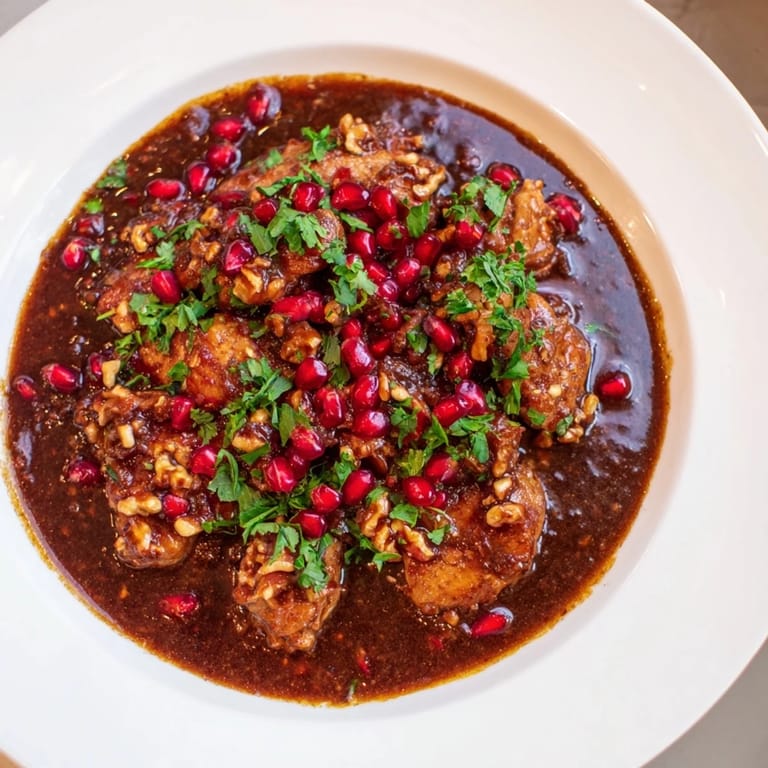
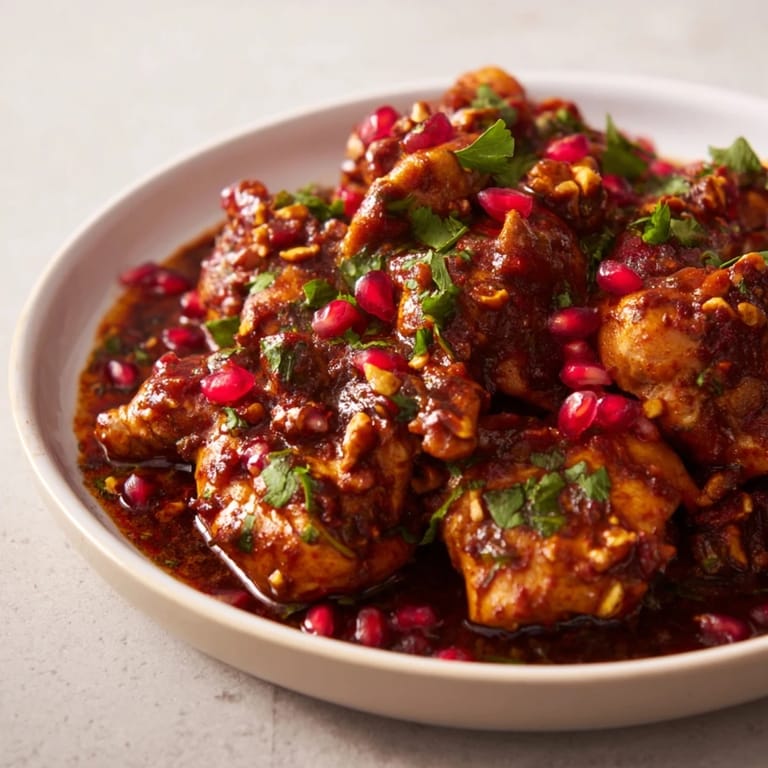
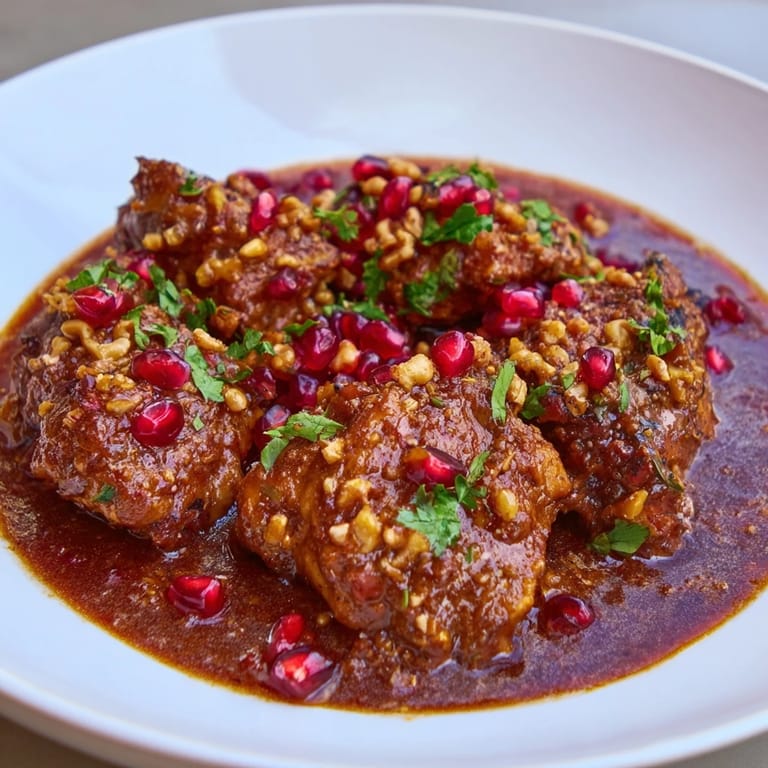
- Taste and tweak the balance with more sugar or a splash of molasses if needed. Spoon it over rice, scatter pomegranate seeds and parsley on top, and watch people go quiet as they taste it.
 Save to Pinterest
 I once served fesenjan at a small dinner party where half the guests had never heard of Persian food. One friend sat back after her first bite and said it tastes like a story. I didn't know what she meant at the time, but now I think she was right. There's history in every spoonful, layers of flavor that unfold slowly, and a kind of warmth that feels like it's been passed down through generations.
Choosing Your Meat
Duck is the traditional choice and brings a deeper, almost gamey richness that holds up beautifully against the bold sauce. Chicken thighs are milder and more forgiving, and they're what I reach for on a weeknight. If you want to go vegetarian, thick slices of roasted eggplant or whole cremini mushrooms work surprisingly well, soaking up the sauce and adding their own earthy sweetness.
Balancing Sweet and Sour
Every bottle of pomegranate molasses is different, some are intensely tart, others have a hint of sweetness already built in. Taste yours straight from the spoon before you start, then adjust the sugar as the stew simmers. I like mine on the tart side, but I've had friends add an extra tablespoon of sugar and a handful of raisins for a sweeter, fruitier version that's just as lovely.
Serving and Storing
Fesenjan begs to be served over a mound of fluffy basmati rice, preferably saffron-scented if you're feeling fancy. The rice soaks up the sauce and balances the richness with its clean, fragrant simplicity. Leftovers keep beautifully in the fridge for up to four days, and they reheat gently on the stove with a splash of water to loosen the sauce.
- Let the stew cool completely before refrigerating, and store it in an airtight container.
- Freeze portions in individual containers for up to three months, then thaw overnight in the fridge.
- Reheat slowly over low heat, stirring often, and add a little water if the sauce has thickened too much.
 Save to Pinterest
 This dish taught me that patience and balance aren't just cooking techniques, they're how you make something unforgettable. I hope your first spoonful feels as surprising and satisfying as mine did.
Answers to Recipe Questions
- → What types of meat work best for this stew?
Chicken thighs or duck are ideal due to their tenderness and ability to absorb the rich sauce flavors.
- → Can this dish be made vegetarian?
Yes, substituting mushrooms or eggplant maintains texture and complements the walnut-pomegranate sauce well.
- → How do I balance the sweet and sour flavors?
Adjust the sugar and pomegranate molasses quantities to taste, finding the desired harmony between tanginess and sweetness.
- → What spices are used in the sauce?
Cinnamon and turmeric bring warmth, while optional cardamom adds subtle aromatic notes.
- → What is the best way to thicken the sauce?
Simmer gently and stir frequently until the sauce thickens and releases oil from the ground walnuts.
- → How should this dish be served?
Traditionally served hot with basmati or Persian saffron rice to complement the rich sauce.