 Save to Pinterest
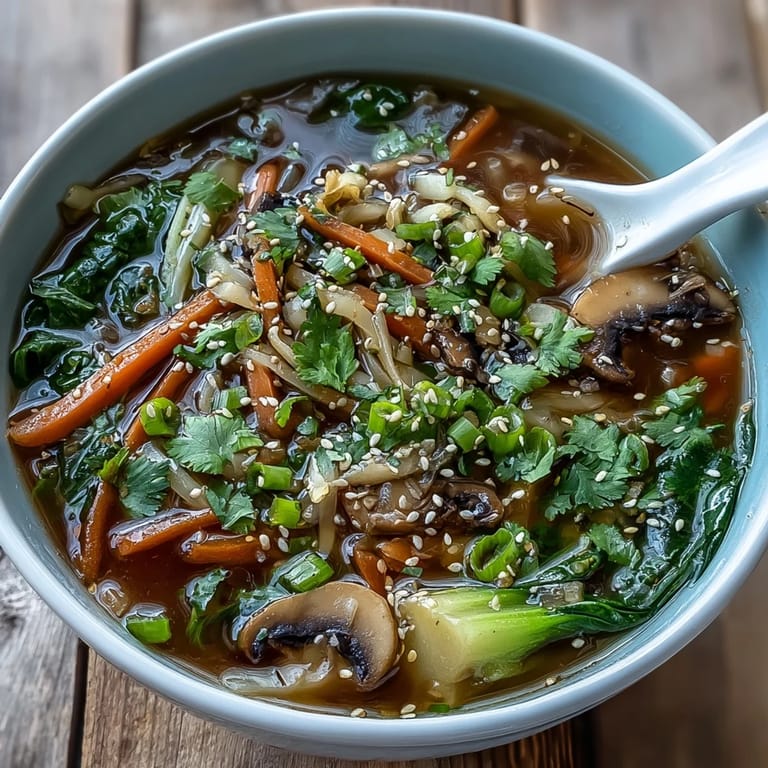
 There's something about the smell of ginger hitting hot broth that makes you stop whatever you're doing and just breathe it in. I discovered this soup on a grey afternoon when my kitchen felt too quiet, and I needed something that would warm me from the inside out without feeling heavy. The miso paste was sitting in my fridge, and somehow ginger and broth and a few vegetables came together in less than thirty minutes into something I've made dozens of times since.
I made this for my sister when she wasn't feeling well, and watching her face change as she tasted it reminded me that food doesn't need to be complicated to be healing. She asked for the recipe before she finished the bowl, and now it's become her go-to when life feels overwhelming.
Ingredients
- Vegetable broth (6 cups): Low-sodium is key because you want to taste the ginger and miso, not salt, and you'll be adding more seasoning as you go.
- Fresh ginger (2-inch piece): Peel it with the edge of a spoon so you don't waste any, and slice it thin enough that it will infuse quickly but thick enough to find easily if someone wants to push it aside.
- Garlic (2 cloves): Slice it thin like the ginger so it softens into the broth rather than staying sharp and overwhelming.
- White or yellow miso paste (2 tablespoons): This is your soul of the soup, so use miso you actually like tasting on its own because that's what you'll taste here.
- Shiitake mushrooms (1 cup): They add an earthy richness that plain broth could never deliver on its own, and they get tender without falling apart.
- Baby spinach or bok choy (1 cup): These wilt in seconds, so add them at the very end so they stay bright and don't turn into mush.
- Carrot (1 medium): Julienne it thin so it cooks through in the five minutes the mushrooms need.
- Green onions (2): Slice them before cooking and save some raw pieces to scatter on top for a sharp, fresh contrast.
- Toasted sesame seeds (1 tablespoon): The nuttiness brings everything together, and toasting them yourself takes two minutes and makes a real difference.
- Fresh cilantro (1 tablespoon, optional): Not everyone loves it, but if you do, it brings a bright note that cuts through the warmth.
- Chili oil or red pepper flakes (1 teaspoon, optional): A little heat makes the ginger sing louder.
Tired of Takeout? 🥡
Get 10 meals you can make faster than delivery arrives. Seriously.
One email. No spam. Unsubscribe anytime.
Instructions
- Start with a gentle simmer:
- Bring the broth to a gentle simmer over medium heat in a large saucepan. You want movement in the pot, not a rolling boil that will turn your delicate vegetables to nothing.
- Let the ginger and garlic introduce themselves:
- Add the sliced ginger and garlic to the simmering broth and let them sit undisturbed for 10 minutes. This is when the soup stops being broth and starts becoming something with a personality.
- Build your vegetable layers:
- Add the mushrooms and carrot slices to the fragrant broth and cook for 5 minutes until they soften but still have a little resistance when you bite them. The mushrooms will deepen in color and the carrot will start to taste sweet.
- Make friends with the miso:
- Ladle out a cup of hot broth into a small bowl and whisk the miso paste into it until it's completely smooth with no lumps hiding in the corners. This is the trick that keeps the miso from clumping and turning the soup grainy.
- Bring it all together gently:
- Lower the heat to low and pour the miso mixture back into the pot, stirring as you go. Never let it boil after the miso goes in because that kills the live cultures that make it worth using miso in the first place.
- Finish with the greens:
- Stir in the spinach or bok choy and green onions and watch them wilt in about a minute. The soup will turn a deeper, more inviting green.
- Taste and adjust:
- A spoonful on its own will tell you if it needs more miso for depth or a splash of soy sauce for salt. Trust your mouth.
- Serve with intention:
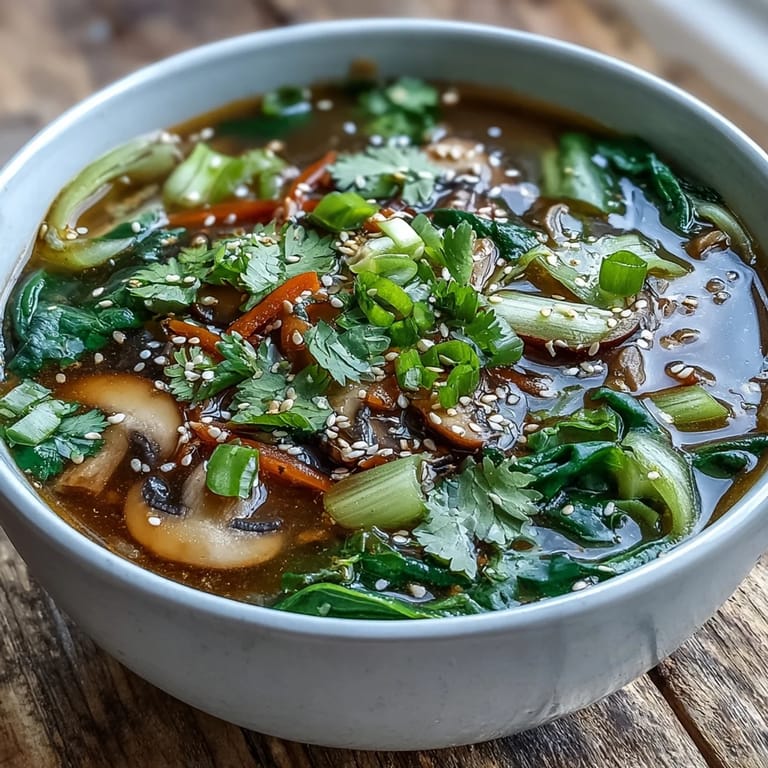
- Ladle into bowls and top each one with sesame seeds, cilantro if you're using it, and a drizzle of chili oil or pinch of red pepper flakes. The toppings aren't just decoration, they're the final note of the song.
 Save to Pinterest
 This soup has become my winter ritual, the thing I make when the weather turns and I want something that feels like a hug in a bowl. It's taught me that the simplest ingredients, when treated with intention, can taste like so much more than the sum of their parts.
The Ginger Difference
I used to throw ginger into hot broth and wonder why it never tasted like much, until I realized that slicing it thin and letting it actually simmer instead of just landing in hot water changes everything. The thinner you slice it, the more surface area gets to know the broth, and the more flavor travels into every spoonful. If you're using a particularly fibrous piece, you might want to slice it even thinner, almost translucent, so it softens faster and doesn't end up chewy in anyone's bowl.
Mushroom Selection Matters
Shiitakes are my first choice because their earthy depth makes the miso taste even more like umami, but I've made this with cremini mushrooms, oyster mushrooms, and even dried shiitakes rehydrated in the broth. The dried ones are a secret weapon if you're trying to deepen the flavor without adding more salt or miso. Whatever you choose, slice them all the same thickness so they cook evenly and you don't end up with some mushrooms still firm and others falling apart.
Making It More Substantial
This soup is perfect as-is when you want something light, but there are days when you need more staying power in your bowl. Silken tofu cubes added at the very end become warm and creamy without changing the delicate flavor of the broth, and soba or udon noodles turn it into something heartier that still feels like comfort food rather than a heavy meal. If you're adding noodles, cook them separately so you control how soft they get and they don't absorb all your precious broth and turn to mush.
- Cubed silken tofu adds protein without weighing the soup down or turning it cloudy.
- A handful of cooked soba noodles makes it a complete meal that still feels light enough for any time of day.
- Mung bean sprouts scattered on top add crunch and a fresh, almost sweet note that plays well with the ginger.
 Save to Pinterest
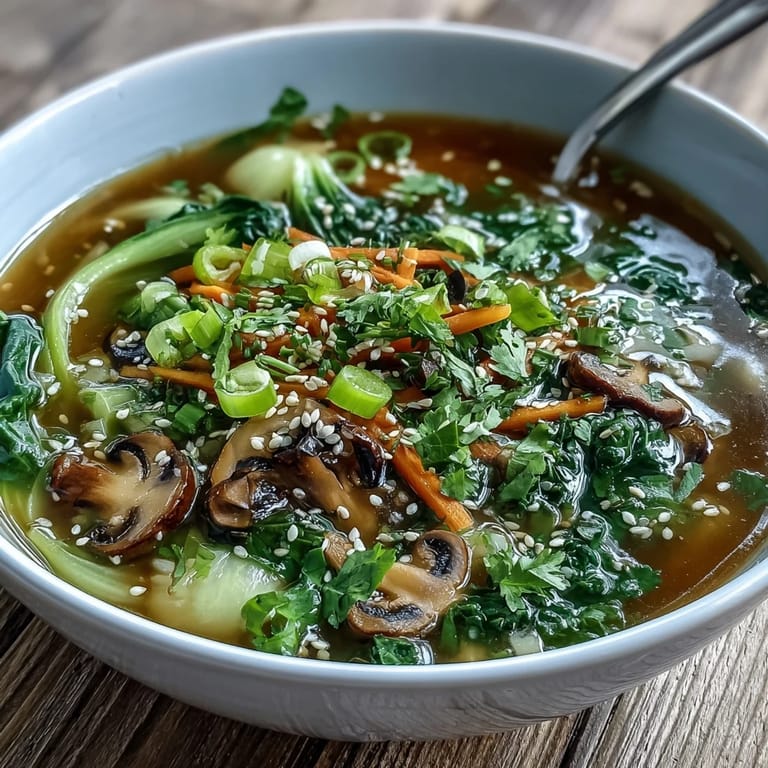
 This soup reminds me that taking care of yourself doesn't have to mean complicated recipes or ingredients you've never heard of. It just means showing up in your kitchen with attention, letting things simmer, and trusting that simple things done well are always better than complicated things done fast.
Answers to Recipe Questions
- → Why shouldn't miso be boiled?
Boiling miso paste destroys the beneficial probiotics and enzymes that make miso so valuable for gut health. Always add miso to hot broth that has been removed from direct heat, or reduce the temperature to low before stirring it in.
- → Can I use different types of miso?
White miso offers a mild, slightly sweet flavor perfect for delicate soups. Yellow miso provides a balanced umami taste, while red miso delivers a deeper, more intense flavor. Feel free to experiment based on your preference.
- → What vegetables work best in this soup?
Shiitake mushrooms add meaty texture and earthy flavor, while baby spinach or bok choy provides vibrant color and nutrients. Carrots contribute sweetness and crunch. Other great options include kale, Swiss chard, snap peas, or sliced radishes.
- → How can I make this soup more filling?
Add cubed silken tofu for extra protein without altering the delicate flavor. For a substantial meal, cook soba or udon noodles separately and ladle the soup over them. You can also increase the quantity of mushrooms or add diced winter squash.
- → Can this soup be made ahead of time?
The broth base can be prepared in advance and stored in the refrigerator for up to 3 days. However, add the miso paste and fresh greens just before serving to preserve the probiotics and prevent the vegetables from becoming overcooked.