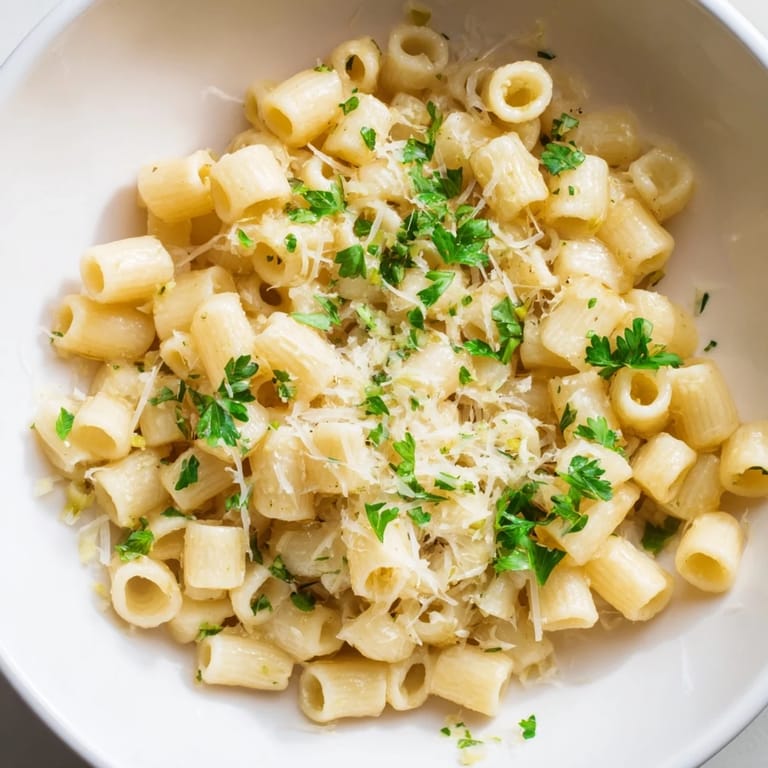
 Save to Pinterest
 There's something about a weeknight when you're tired and hungry that makes you crave the simplest, most satisfying meals. One evening, watching the clock tick closer to dinner time with nothing planned, I dumped pasta into a pot of simmering broth and butter, and what emerged was pure comfort in a bowl. The smell of garlic turning golden in butter, the gentle bubbling of the broth, the way it all came together in under twenty minutes—that's when I realized this one-pot dish could become a regular in my kitchen.
I made this for a friend who'd just moved into their first apartment, armed with only a saucepan and hope. Watching their face light up as they tasted that first bite—realizing good food doesn't require fancy equipment or hours of prep—made me understand why this recipe matters. It's proof that simplicity and flavor aren't at odds.
Ingredients
- Ditalini pasta: These small tube-shaped pieces are perfect here because they catch and hold the broth, becoming tender and flavorful rather than separate and dry.
- Low-sodium chicken broth: The foundation of everything—use good broth because you'll taste it, and vegetable broth works just as well if you're vegetarian.
- Unsalted butter: Three tablespoons might seem rich, but it's what transforms the dish from bland to silky; use real butter, not substitutes.
- Garlic cloves: Four large ones, minced fine, so they mellow and perfume the entire pot rather than sitting as harsh chunks.
- Parmesan cheese: Freshly grated makes all the difference; pre-grated versions have additives that don't melt as smoothly.
- Black pepper: Grind it fresh just before adding to maintain its sharp bite.
- Red pepper flakes: Optional, but they add a whisper of heat that wakes up the whole dish.
- Fresh parsley: A small garnish that brightens the plate and adds a pop of green.
Tired of Takeout? 🥡
Get 10 meals you can make faster than delivery arrives. Seriously.
One email. No spam. Unsubscribe anytime.
Instructions
- Toast the garlic in butter:
- Melt butter over medium heat and watch for that moment when it smells nutty. Add minced garlic and shallot, stirring constantly for a minute or two until fragrant but still pale—you want perfume, not burnt bits.
- Coat the pasta:
- Toss the raw ditalini into the butter and garlic, stirring for just a minute so each piece gets a light coating. This small step keeps them from clumping later.
- Add the broth and simmer:
- Pour in the chicken broth and bring to a rolling boil, then drop the heat to a gentle simmer. Stir every couple of minutes to keep the pasta from sticking to the bottom, where it can scorch and turn bitter.
- Cook until creamy:
- After ten to twelve minutes, the pasta will be tender and most of the liquid will be absorbed into something that looks almost creamy. If it dries out too quickly, splash in a bit more hot broth or water.
- Finish with cheese and seasonings:
- Remove from heat, stir in the Parmesan, black pepper, and red pepper flakes. Taste and adjust salt carefully, remembering that the broth and cheese already have saltiness built in.
- Rest and serve:
- Let it sit off the heat for two minutes so the starches set and the sauce thickens slightly. Serve right away, topped with parsley and extra Parmesan for anyone who wants it.
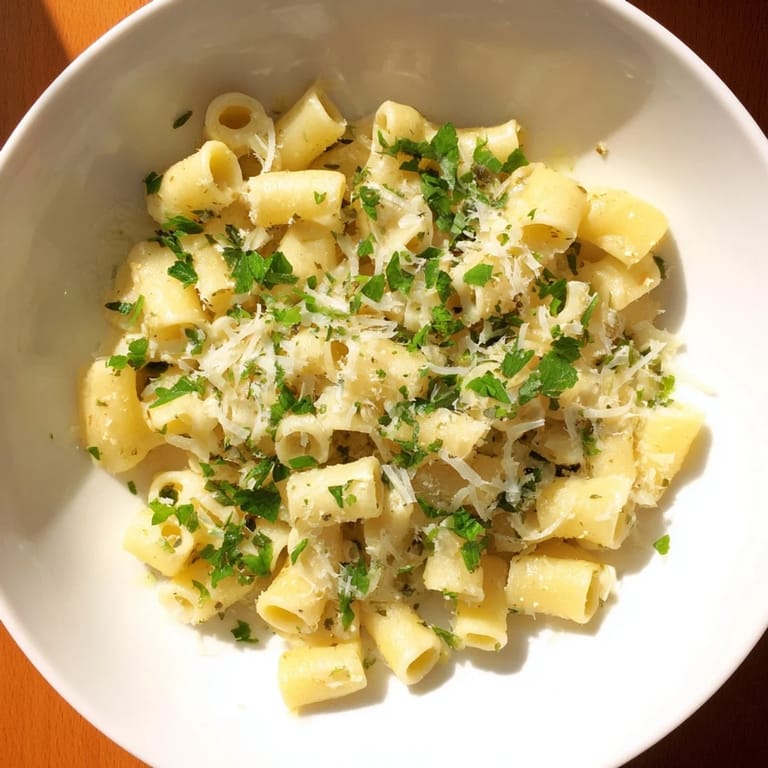 Save to Pinterest
 My grandmother used to say that the best meals are the ones that bring people to the table without fuss, and that's exactly what this dish does. It's humble, it's warm, and it asks only that you show up with an appetite.
Why This Works as a Weeknight Staple
The one-pot approach means minimal cleanup, which matters more when you're exhausted than any cooking trick ever could. Everything happens in the same vessel, so flavors layer and deepen naturally rather than being scattered across multiple pans. The broth does the heavy lifting—it cooks the pasta and becomes the sauce simultaneously, which is efficiency and elegance wrapped into one bowl.
Building Flavor Without Fuss
Garlic and butter are a conversation that never gets old, and adding them first means their flavor threads through every element that follows. The shallot is optional but worth including if you have one; it adds a whisper of sweetness that makes the garlic feel more sophisticated. Salt matters here because it brings all the flavors into focus—taste constantly and trust your instincts.
Making It Your Own
This recipe is a platform rather than a prescription, and some of my favorite versions have happened when I've added what was already open in the fridge. A handful of spinach wilts in perfectly, a few peas add color and sweetness, shredded chicken turns it into something heartier. Even a splash of cream stirred in at the end creates a richer sauce, though the broth-based version is already remarkably creamy.
- Stir in cooked spinach, peas, or diced cooked chicken during the last minute of cooking for extra substance.
- A splash of heavy cream or milk added right before serving creates a luxurious texture without changing the core flavor.
- For vegetarian diets, swap chicken broth for vegetable broth and use vegetarian Parmesan if rennet matters to you.
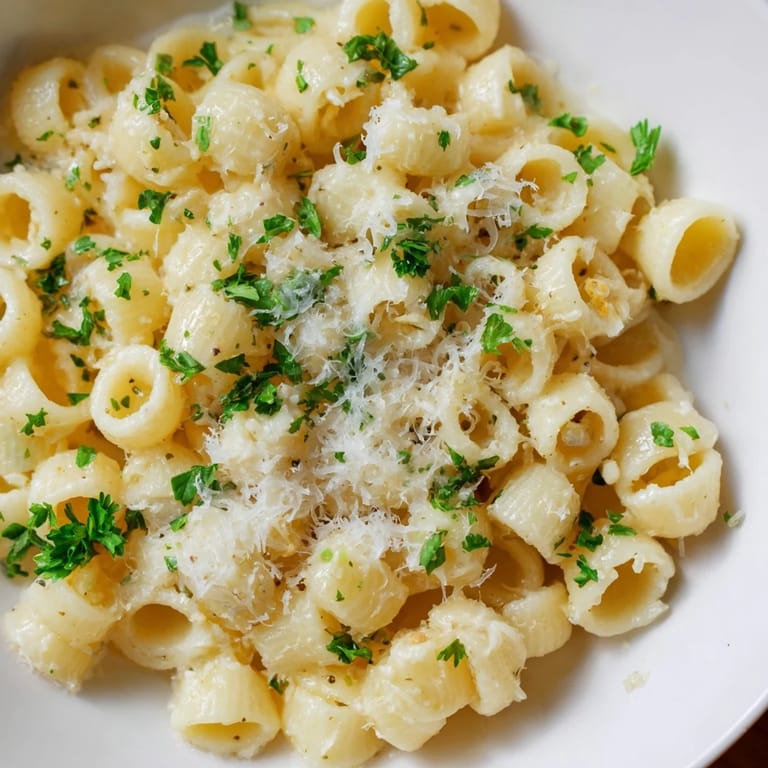 Save to Pinterest
 This is the kind of recipe that reminds you why you love cooking in the first place: minimal ingredients, maximum flavor, and a bowl of warmth at the end of it all. Make it once and it'll become part of your regular rotation.
Answers to Recipe Questions
- → What pasta is used in this dish?
Ditalini pasta is used for its small, tubular shape that absorbs flavors well and cooks quickly.
- → Can I make a vegetarian version?
Yes, substitute chicken broth with vegetable broth and use vegetarian-friendly Parmesan alternatives.
- → How do I prevent the pasta from sticking?
Stir frequently while simmering and add extra broth or hot water if needed to keep the pasta moist.
- → What optional ingredients can enhance this dish?
Sautéed spinach, peas, or cooked chicken can add texture and flavor to the creamy pasta.
- → How can I make it creamier?
Stir in heavy cream or a splash of milk at the end for extra creaminess.
- → What is the best way to serve this dish?
Garnish with fresh chopped parsley and extra grated Parmesan for added flavor and presentation.