 Save to Pinterest
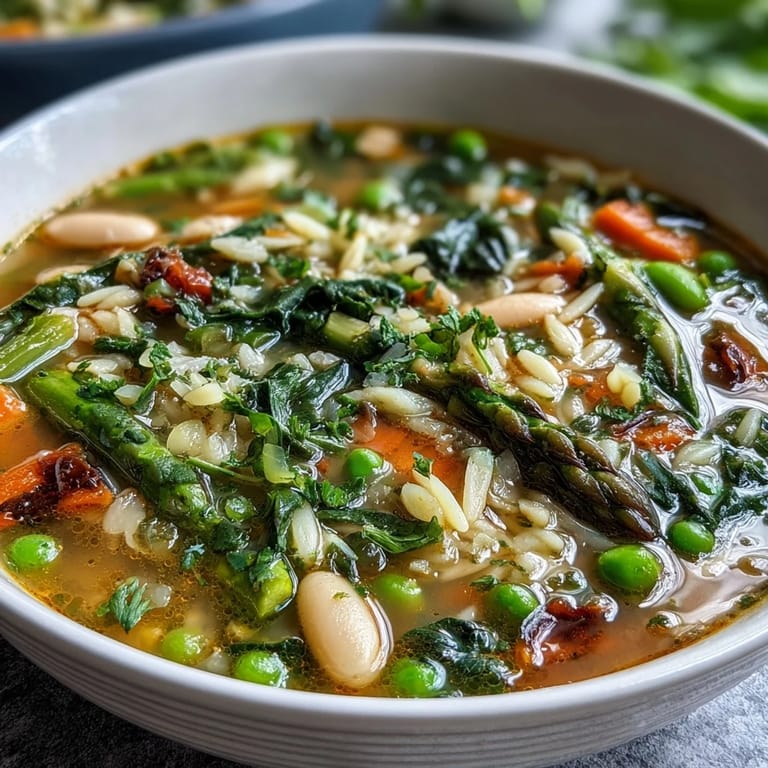
 There's something about April that makes me crave soup, even when the weather's finally warming up. I discovered this particular version while rummaging through my vegetable drawer one spring afternoon, staring at a bunch of asparagus that wouldn't last another day and half a bag of frozen peas. The idea came together almost by accident—what if I combined those tender spring vegetables with the comfort of a classic minestrone? That first bowl, steaming and bright with lemon, felt like the season itself in a spoon.
I made this for my neighbor once when she was stuck at home with a cold, and she texted me a photo of the empty bowl with just a smiley face. That moment taught me that sometimes the most nourishing thing isn't the ingredients themselves, but knowing someone made something with care specifically for you. Now whenever I simmer a pot of this, I think of how a simple vegetable soup can feel like a warm conversation.
Ingredients
- Olive oil: Use a tablespoon to start the aromatics—it's the foundation that lets everything else shine without overwhelming the delicate spring vegetables.
- Onion, carrots, and celery: This holy trinity gives the broth its body and sweetness; don't rush the sauté, as five minutes of gentle cooking builds flavor you can't fake.
- Garlic: Two cloves minced and cooked just until fragrant prevents that raw bite that can throw off an otherwise balanced soup.
- Zucchini: A small one stays tender and doesn't turn mushy; larger zucchini can water down the broth if you're not careful.
- Asparagus: Cut into one-inch pieces so they cook evenly and don't turn to mush; add them late in cooking to preserve that snap.
- Peas: Frozen ones are honestly better here than fresh because they stay intact and sweet; fresh peas are wonderful but need less cooking time.
- Baby spinach or Swiss chard: This is your green note and nutritional powerhouse; stir it in at the very end so it wilts gently rather than darkening.
- White beans: Canned and rinsed work perfectly and save you hours; they add protein and that creamy texture without cream.
- Small pasta: Ditalini or tiny shells are ideal because they don't overpower a broth-based soup and cook in the same time as the vegetables.
- Vegetable broth: Low-sodium lets you control the salt and taste the actual vegetables; a good broth is worth seeking out.
- Dried thyme and oregano: These Mediterranean herbs were practically made for spring vegetables; don't skip them even though they're dried.
- Bay leaf: Adds depth without a flavor you can directly taste; remove it before serving or warn people to watch for it.
- Lemon zest: This brightens everything at the end and reminds you that spring is citrus season too.
- Fresh parsley: Stirred in at the finish, it adds a fresh herbal note that makes this feel alive rather than stewed.
Tired of Takeout? 🥡
Get 10 meals you can make faster than delivery arrives. Seriously.
One email. No spam. Unsubscribe anytime.
Instructions
- Build your flavor base:
- Heat olive oil in a large pot over medium heat and add your diced onion, carrots, and celery. Let them soften together for about five minutes, stirring occasionally—you'll know it's working when the kitchen smells sweet and savory at once. This unhurried beginning is where minestrone gets its soul.
- Wake up the garlic:
- Stir in your minced garlic and cook for just about a minute until it becomes fragrant and golden at the edges. This moment matters because garlic goes from sweet to bitter in seconds, so stay close and don't let it brown.
- Add the tender zucchini:
- Toss in your diced zucchini and cook for two more minutes, letting it warm through and release its subtle sweetness into the pot. You're building layers of flavor, not rushing toward the finish line.
- Bring in the broth and herbs:
- Pour in your vegetable broth and add the thyme, oregano, and bay leaf, then bring everything to a gentle boil. The broth should smell herbaceous and inviting, like you're cooking in an Italian countryside kitchen.
- Simmer the beans and pasta:
- Stir in your drained white beans and dry pasta, then reduce the heat and let it all simmer together for about ten minutes. The pasta will absorb some broth and become tender while the beans warm through and infuse the soup with their creamy presence.
- Add the spring vegetables:
- Now stir in your asparagus pieces and frozen peas, cooking for another five to seven minutes until both are tender but still hold their shape. The asparagus should still have a slight give when you bite it, not collapse into the broth.
- Finish with brightness and greens:
- Turn off the heat or lower it to the gentlest simmer, then add your spinach or Swiss chard, lemon zest, and fresh parsley. Stir gently until the greens soften and wilt, then taste and adjust your salt and pepper to your preference.
- Serve and celebrate:
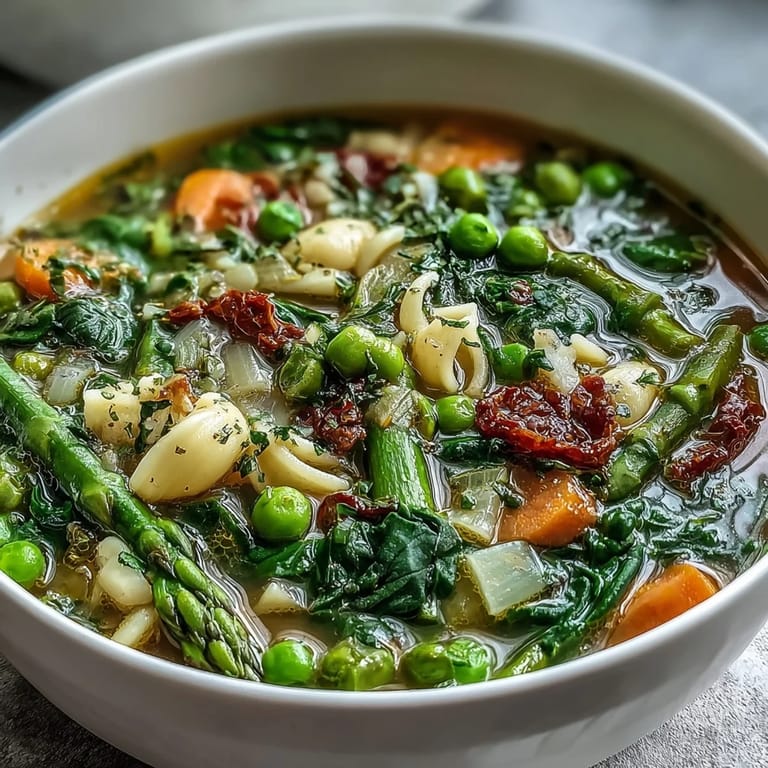
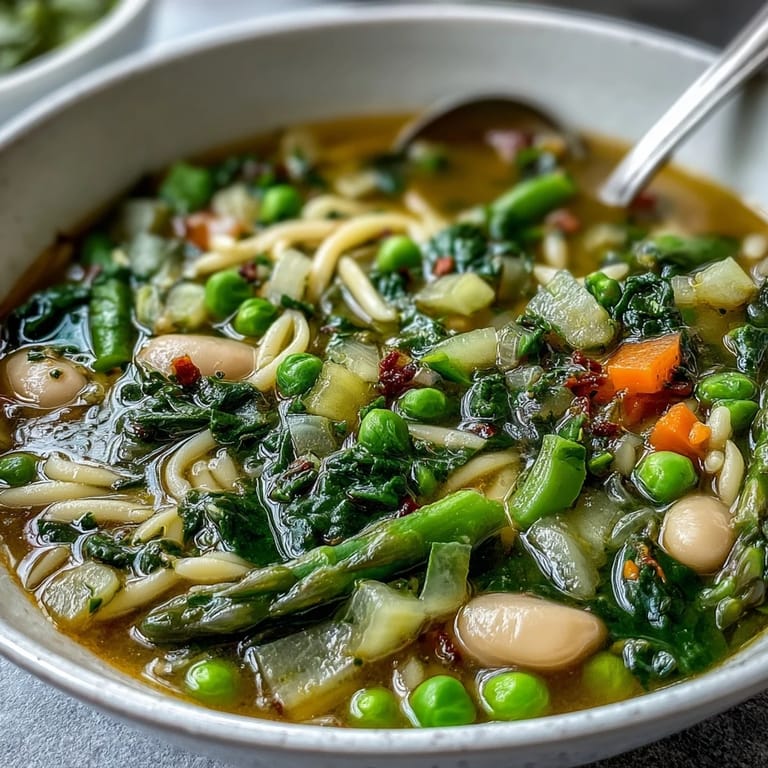
- Remove that bay leaf, ladle the soup into bowls, and top with Parmesan if you'd like and a drizzle of extra virgin olive oil. Each bowl should look like spring itself—vibrant, fresh, and utterly inviting.
 Save to Pinterest
 I've learned that minestrone isn't really a recipe as much as it's a conversation between you and whatever season you're cooking in. This spring version taught me that simplicity—just good vegetables, good broth, and patience—can be more satisfying than anything complicated.
Why Spring Vegetables Matter Here
Spring vegetables have a delicate sweetness that gets lost if you cook them too long or bury them under heavy flavors. In this soup, they're the stars, and everything else—the broth, the pasta, the herbs—exists to support them. I learned this the hard way by making minestrone in winter with root vegetables and then in spring with tender greens and asparagus; the difference was profound. Spring vegetables cook faster too, which is why this soup comes together in thirty minutes instead of the hour or more that a heavier vegetable soup might take.
The Secret to Bright Flavor
That lemon zest isn't optional, even though it's easy to skip. It hits at the end like a revelation, cutting through the earthiness of the vegetables and reminding your palate that this is spring, not autumn. I started adding it after a dinner party where someone said the soup tasted a bit flat, and I realized brightness was exactly what was missing. A squeeze of fresh lemon juice right before serving (in addition to the zest) takes it even further, but the zest alone makes a real difference.
Making It Your Own
The beauty of minestrone is that it's forgiving and adaptable. I've made this version with fava beans instead of white beans, swapped the asparagus for green beans when asparagus season ended, and added kale instead of spinach when that was what I had. The structure stays the same: sauté your aromatics, build a flavorful broth with herbs, add heartier vegetables first, then tender ones later, and finish with something green and fresh.
- Substitute any spring or early summer vegetables you can find—fresh herbs like basil work beautifully stirred in at the end too.
- If you prefer a thicker soup, mash some of the white beans with a potato masher before serving.
- Leftover soup keeps beautifully in the refrigerator for four days and can be frozen for up to three months if you haven't added the greens yet.
 Save to Pinterest
 There's a particular kind of contentment that comes from ladling a bowl of minestrone for yourself or someone you love. This spring version is my favorite reminder that the best meals are often the simplest ones.