 Save to Pinterest
 My cutting board was a rainbow of root vegetables the afternoon I realized I'd been overcomplicating weeknight dinners for months. Beets stained my fingertips purple while carrots and parsnips piled up beside them, and all I could think was how simple this felt compared to my usual fuss. I tossed everything with olive oil, slid the tray into the oven, and let the heat do the work. The smell that filled my kitchen half an hour later, sweet and earthy with a hint of caramelization, made me wonder why I hadn't been roasting root vegetables like this all along.
I brought this to a potluck once, worried it might seem too plain next to all the casseroles and baked pastas. Instead, people kept coming back for seconds, scraping the last bits of tahini sauce from the bowl. One friend asked if I'd added brown sugar to the vegetables because they tasted so sweet, but it was just the natural sugars coaxing out in the oven's heat. That night taught me that the best dishes don't need to shout, they just need to be honest and well made.
Ingredients
- Carrots: Choose firm, bright orange carrots and peel them well, their sweetness deepens beautifully when roasted and balances the earthier vegetables.
- Beets: Wear gloves or accept the stains, beets bring a gorgeous color and a slightly mineral sweetness that becomes mellow and rich in the oven.
- Turnips: Often overlooked, turnips add a peppery bite that softens into something almost buttery when caramelized.
- Parsnips: These look like pale carrots but taste nuttier and more complex, especially once their edges get crispy and golden.
- Olive oil: Use enough to coat every piece lightly, it helps the vegetables brown instead of steam and carries the herbs and salt into every crevice.
- Sea salt and black pepper: Season generously before roasting, the high heat concentrates flavors so under seasoning here means bland vegetables later.
- Dried thyme or rosemary: Optional but wonderful, these herbs add a woodsy note that makes the whole dish smell like a cozy autumn kitchen.
- Quinoa: Rinse it well to remove any bitterness, then cook it in broth instead of water if you want extra depth.
- Tahini: Stir the jar well before measuring because the oil separates, and taste your brand since some are more bitter than others.
- Lemon juice: Freshly squeezed is best, it brightens the tahini and cuts through the richness of the roasted vegetables.
- Garlic: One small clove is enough, raw garlic in the sauce adds a sharp kick that mellows slightly as it sits.
- Maple syrup or honey: A tiny bit of sweetness in the tahini sauce balances the lemon and garlic, making the drizzle taste more rounded.
- Fresh parsley: Chop it just before serving so it stays bright green and adds a fresh herbal contrast to the warm, roasted flavors.
- Toasted pumpkin or sunflower seeds: These add crunch and a nutty finish, toast them yourself in a dry skillet for the best flavor.
Tired of Takeout? 🥡
Get 10 meals you can make faster than delivery arrives. Seriously.
One email. No spam. Unsubscribe anytime.
Instructions
- Preheat and prep:
- Set your oven to 425 degrees F and line a large baking sheet with parchment to prevent sticking and make cleanup easier. This high heat is key for caramelization, so don't be tempted to lower it.
- Toss the vegetables:
- In a big bowl, combine all your chopped root vegetables with olive oil, salt, pepper, and dried herbs if using, making sure every piece is lightly coated. Use your hands if needed, it's the best way to ensure even coverage.
- Roast until golden:
- Spread the vegetables in a single layer on your prepared sheet, giving them space so they roast instead of steam. Slide them into the oven for 30 to 35 minutes, stirring halfway through so all sides get crispy and caramelized.
- Cook the quinoa:
- While the vegetables roast, bring quinoa, water or broth, and salt to a boil in a medium saucepan, then lower the heat and cover. Let it simmer gently for 15 minutes, then remove from heat and let it rest covered for 5 minutes before fluffing with a fork.
- Make the tahini sauce:
- In a small bowl, whisk together tahini, lemon juice, water, minced garlic, salt, and maple syrup if using until smooth and pourable. Add more water a tablespoon at a time if the sauce is too thick, you want it to drizzle easily.
- Assemble the bowls:
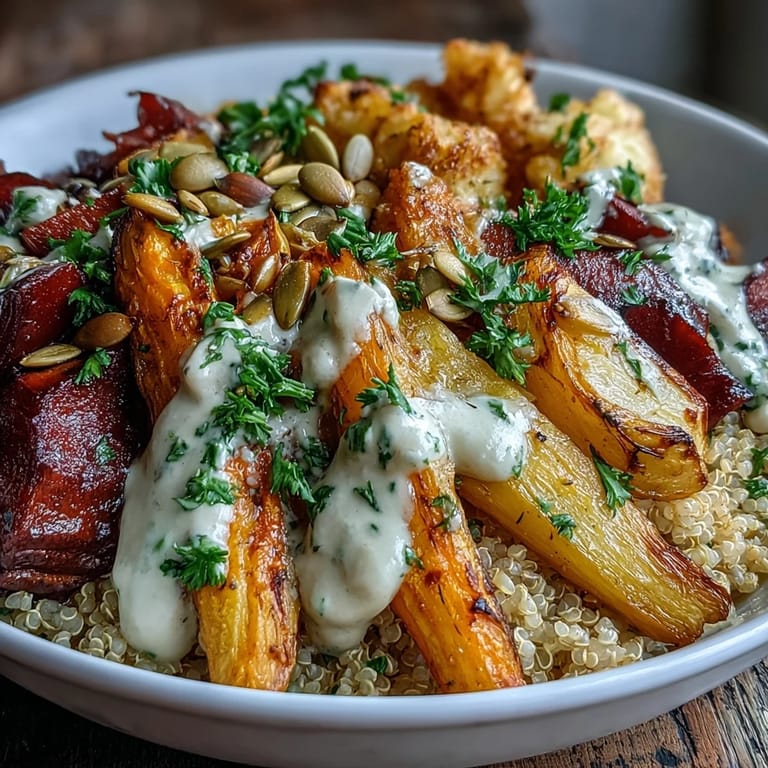
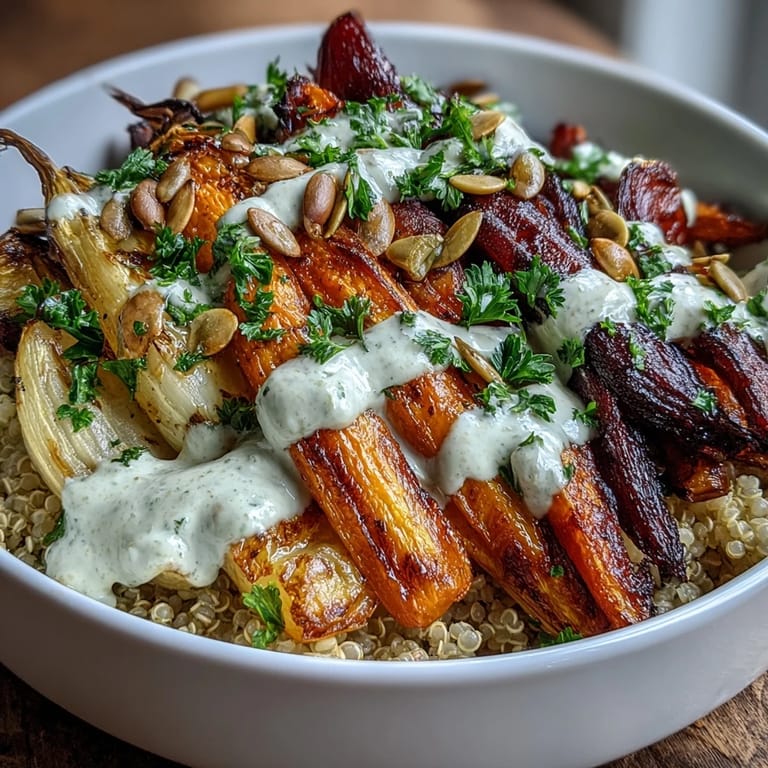
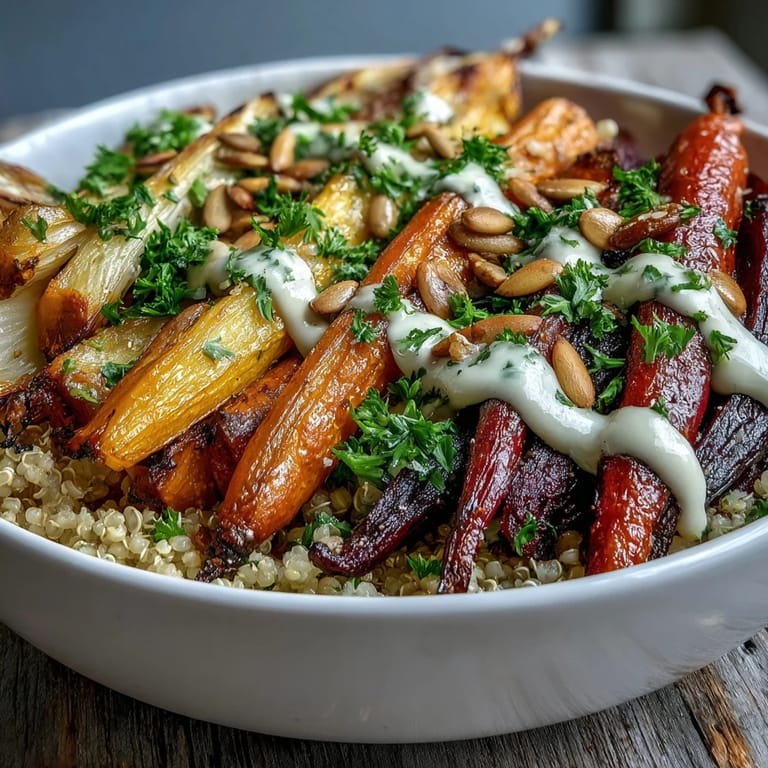
- Divide the fluffy quinoa among four bowls, then top each with a generous portion of roasted vegetables. Drizzle the tahini sauce over everything and finish with a sprinkle of fresh parsley and toasted seeds.
 Save to Pinterest
 There's a moment when you pull the tray from the oven and the vegetables are bronzed at the edges, still sizzling softly, that feels like a small victory. I've served this bowl to myself on quiet weeknights and to a table full of guests, and it always delivers the same warmth. It's proof that you don't need complexity to make something memorable, just good ingredients and a little patience.
Variations and Swaps
I've made this bowl with sweet potatoes when I couldn't find parsnips, and with rutabaga when I wanted something a bit more robust and peppery. You can swap the quinoa for farro, brown rice, or even a bed of hearty greens like massaged kale. If you're not a fan of tahini, a lemony yogurt sauce or even a drizzle of good balsamic vinegar works beautifully. The formula is flexible, so trust your instincts and use what you have on hand.
Serving and Pairing Ideas
This bowl stands on its own as a light dinner, but I've also served it alongside roasted chicken or grilled fish for guests who wanted something heartier. A crisp Sauvignon Blanc complements the tahini's richness, while a pot of herbal tea feels right for a cozy solo meal. Leftovers pack well for lunch the next day, and the flavors actually improve as everything sits together.
Storage and Make Ahead Tips
You can roast the vegetables and cook the quinoa up to three days ahead, storing them separately in airtight containers in the fridge. The tahini sauce keeps for about a week and might thicken as it sits, just whisk in a little water to loosen it before serving. When you're ready to eat, reheat the vegetables and quinoa gently or serve them at room temperature for a different but equally satisfying experience.
- Store each component separately so textures stay distinct and you can mix and match portions throughout the week.
- Add the fresh herbs and seeds just before serving to keep them vibrant and crunchy.
- If freezing, skip the tahini sauce and freeze only the roasted vegetables and quinoa for up to two months.
 Save to Pinterest
 This bowl has become one of those recipes I return to when I need something nourishing without much thought, a reminder that simple ingredients and honest cooking can be more than enough. I hope it fills your kitchen with the same warmth it's brought to mine.
Answers to Recipe Questions
- → Which root vegetables work best for roasting?
Carrots, beets, turnips, parsnips, and sweet potatoes all roast beautifully. They develop natural sugars as they caramelize in the high heat. Sweet potatoes and rutabaga make excellent additions or substitutions.
- → Can I prepare this ahead for meal prep?
Absolutely. The roasted vegetables and quinoa store well in the refrigerator for up to 5 days. Keep the tahini sauce separately and drizzle just before serving. The flavors actually meld and improve after a day or two.
- → How do I get the vegetables evenly caramelized?
Cut all pieces to the same size — about 1-inch chunks ensures uniform cooking. Spread in a single layer without overcrowding the pan, and toss halfway through roasting. A hot oven at 425°F produces the best browning.
- → What can I use instead of tahini?
Cashew cream, almond butter, or Greek yogurt thinned with lemon juice make fine alternatives. Each brings a slightly different flavor profile but still provides that creamy, rich element to balance the earthy vegetables.
- → How do I make this more protein-rich?
Chickpeas tossed with the vegetables halfway through roasting add plant protein and texture. A poached or fried egg on top works beautifully. Crumbled feta or cubed tofu also complement the flavors well.