 Save to Pinterest
 The windows were open that first April evening when I threw everything into one pot and hoped for the best. I'd forgotten to defrost anything for dinner, and the farmers market haul from earlier in the week was sitting on the counter, looking at me expectantly. My roommate wandered in, curious about the clattering of pans and the smell of garlic hitting hot olive oil.
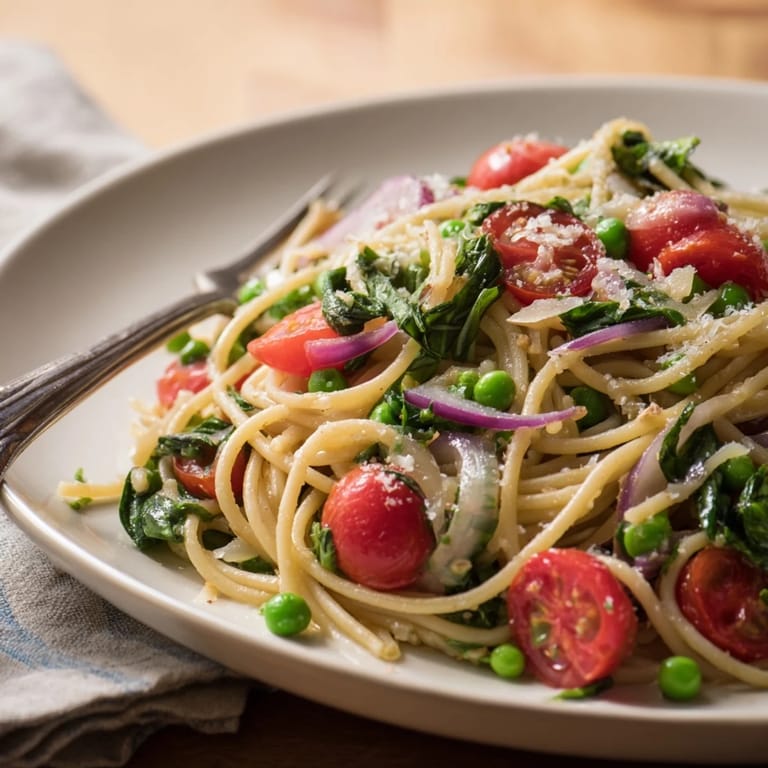
That night we ate standing up in the tiny kitchen, forks in hand, watching the steam rise from our bowls. The pasta had absorbed just enough broth to become impossibly creamy without a drop of cream. I remember my roommate asking for seconds before she'd even finished her first serving, and realizing this wasn't just desperation cooking anymore.
Ingredients
- 350 g (12 oz) dried spaghetti: The pasta releases starch into the cooking liquid, creating a naturally emulsified sauce that clings beautifully to each strand
- 150 g (1 cup) frozen or fresh peas: Add these straight from frozen for a pop of sweetness that balances the savory broth
- 100 g (3.5 oz) baby spinach: Wilt this in at the very end so it stays vibrant and tender
- 200 g (7 oz) cherry tomatoes, halved: They'll blister and burst as the pasta cooks, releasing their juices into the broth
- 2 cloves garlic, thinly sliced: Sliced garlic mellows more than minced, giving you sweet aromatics instead of harsh bites
- 1 small red onion, thinly sliced: Red onion becomes sweet and almost jammy when simmered in the broth
- 1 L (4 cups) vegetable broth: This becomes your cooking liquid and sauce base, so use one you'd happily drink on its own
- 2 tbsp olive oil: Start with this in the pot to bloom your aromatics before adding anything else
- 1/2 tsp salt: Adjust based on how salty your broth is already
- 1/4 tsp black pepper: Freshly cracked gives you more aromatic complexity
- 1/4 tsp red pepper flakes: Optional, but a gentle heat makes everything taste brighter
- Zest of 1 lemon: This brightening trick wakes up the whole bowl and cuts through the richness
- 30 g (1/4 cup) grated Parmesan cheese: Or use a vegetarian alternative for the same salty, umami finish
- Fresh basil leaves: Tear these by hand just before serving for the most fragrant garnish
Tired of Takeout? 🥡
Get 10 meals you can make faster than delivery arrives. Seriously.
One email. No spam. Unsubscribe anytime.
Instructions
- Build your flavor foundation:
- Heat olive oil in your largest pot over medium heat. Add sliced garlic and red onion, stirring frequently for 2-3 minutes until softened and fragrant but not browned.
- Add everything but the finishers:
- Snap spaghetti in half for easier stirring, then add it to the pot along with peas, spinach, and halved cherry tomatoes. Pour in all your vegetable broth and bring it to a boil.
- Season and simmer:
- Add salt, black pepper, and red pepper flakes. Stir occasionally as it bubbles away, keeping an eye on the pot so nothing sticks to the bottom.
- Let it work its magic:
- Cook uncovered for 10-12 minutes until the pasta is al dente and most liquid has absorbed. Stir in the lemon zest right at the end to brighten everything.
- Finish and serve:
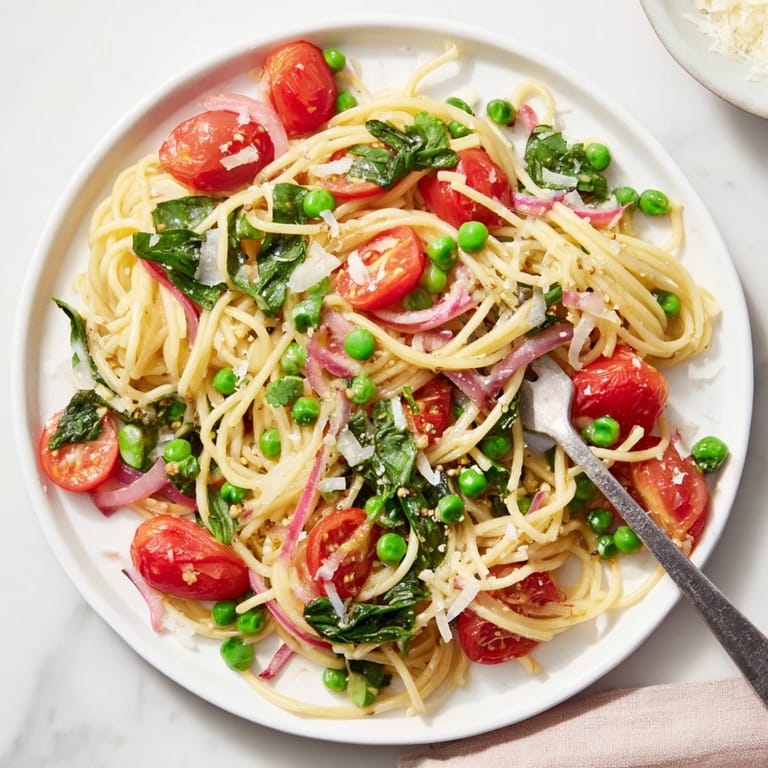
- Remove from heat immediately. Divide between shallow bowls and top generously with grated Parmesan and torn basil leaves.
 Save to Pinterest
 I've made this for dinner parties, weeknight solo meals, and even a skeptical pasta purist who admitted she was wrong about one-pot methods. Something about the way the vegetables soften into the pasta makes it feel like a hug in a bowl, especially when there's still a bit of a chill in the air outside.
Timing Your Vegetables
Quick-cooking vegetables like peas and spinach go in at the beginning because the simmering liquid is gentle enough not to destroy them. Heartier vegetables like asparagus or carrots should be added a few minutes before the pasta goes in so they have time to soften properly.
Broth Matters
Since the broth reduces down and becomes your sauce, its flavor is concentrated in every bite. I keep a stash of good quality vegetable broth in the pantry just for recipes like this where it really shines.
Make It Your Own
This technique works with whatever vegetables you have on hand, whatever pasta shape catches your eye at the store, and whatever season you're in.
- Add a drained can of chickpeas or white beans in step two for extra protein
- Swap spaghetti for any pasta shape, adjusting cooking time slightly for larger formats
- Finish with a drizzle of good olive oil and more cheese if you love it rich
 Save to Pinterest
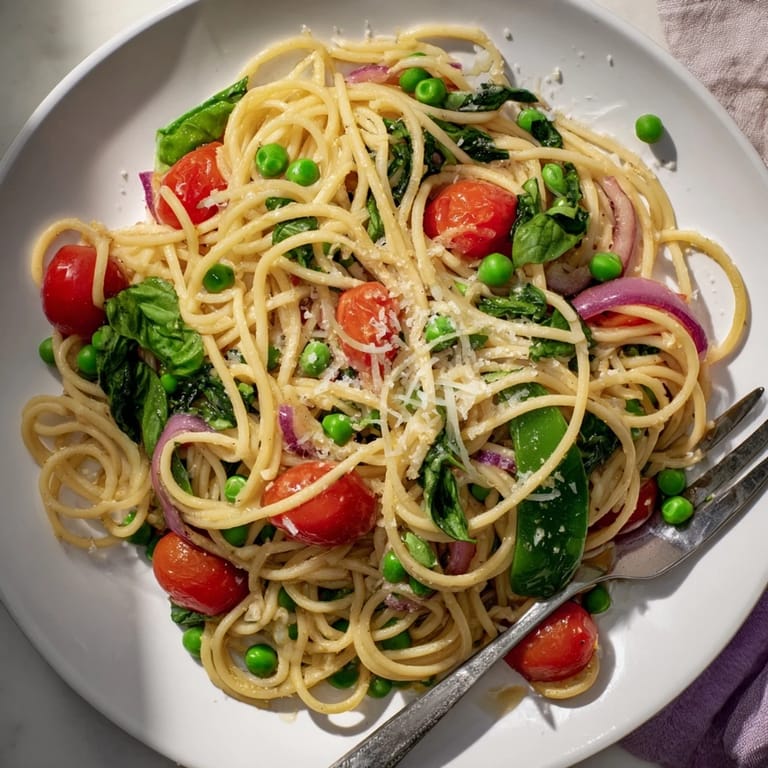
 Spring in a bowl, ready in under half an hour, with almost nothing to clean up afterward. Sometimes the simplest meals really are the best ones.
Answers to Recipe Questions
- → Can I use fresh vegetables instead of frozen?
Absolutely! Fresh peas work beautifully in this dish. Just add them at the same time as indicated in the instructions. Adjust cooking time slightly if using larger fresh vegetables, ensuring they're tender before serving.
- → What vegetables can I substitute?
This dish is versatile. Try zucchini, bell peppers, asparagus, or broccoli. Heartier vegetables may need slightly longer cooking time. Avoid watery vegetables like cucumber. Aim for vegetables that complement the lemon zest and garlic flavors.
- → How do I prevent the pasta from sticking?
Stir occasionally throughout cooking, especially during the first few minutes. The broth keeps the pasta moist as it cooks. If it becomes too thick, add a splash more vegetable broth to maintain consistency.
- → Is this dish gluten-free?
Not naturally, but easily adapted. Simply swap regular spaghetti for gluten-free pasta. Check all ingredient labels, especially the vegetable broth, to ensure no cross-contamination. Cook according to gluten-free pasta package directions.
- → Can I make this vegan?
Yes! Skip the Parmesan or use vegan cheese as garnish. All other ingredients are naturally plant-based. This maintains the dish's heartiness while accommodating dietary preferences.
- → How do I add protein to this dish?
A drained can of chickpeas adds excellent protein and texture. Add it in step 2 along with the other vegetables. White beans or lentils are also wonderful additions for extra substance.