 Save to Pinterest
 I discovered the magic of a well-arranged charcuterie platter on a lazy Sunday afternoon when a friend texted asking if I could pull together something impressive for an unexpected dinner gathering. With no time to cook, I raided my refrigerator and found an assortment of quality meats, cheeses, and fresh vegetables. As I began arranging them on my grandmother's large ceramic platter, something clicked—the visual beauty, the variety of flavors and textures coming together, and the complete absence of carbs made it feel like I'd unlocked a secret. That evening, as everyone reached for piece after piece, I realized this wasn't just a lazy meal solution; it was the perfect keto feast.
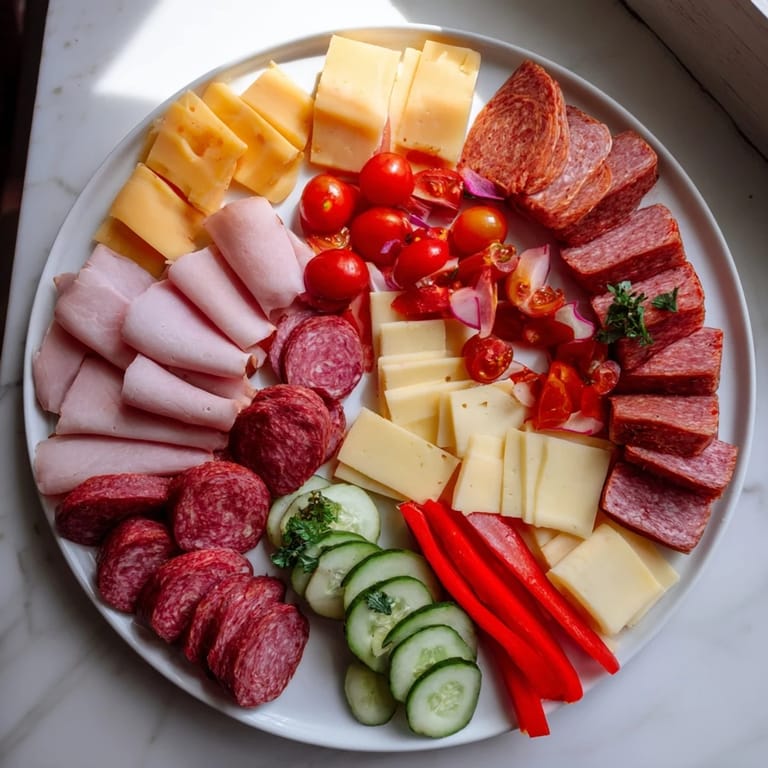
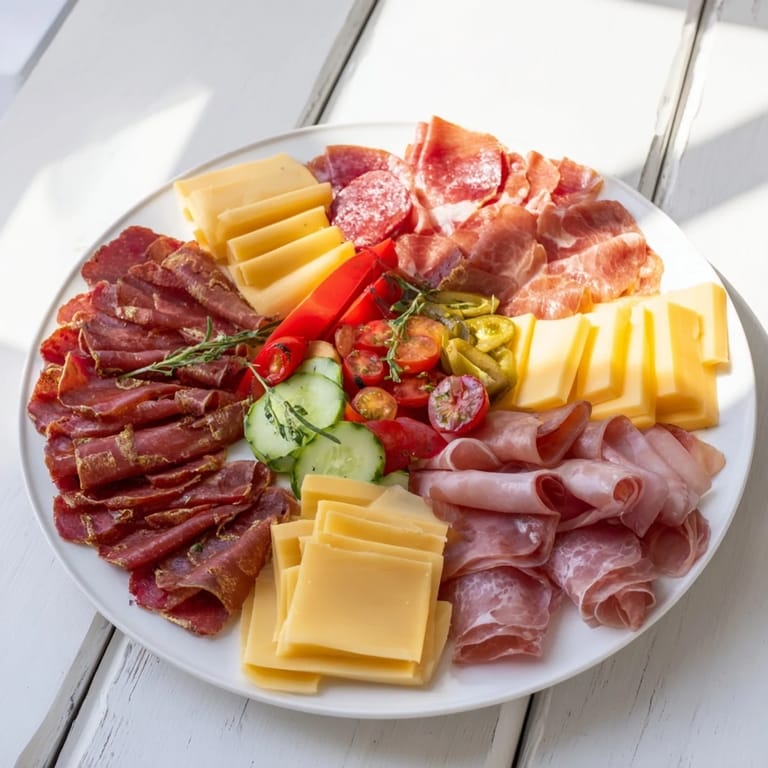
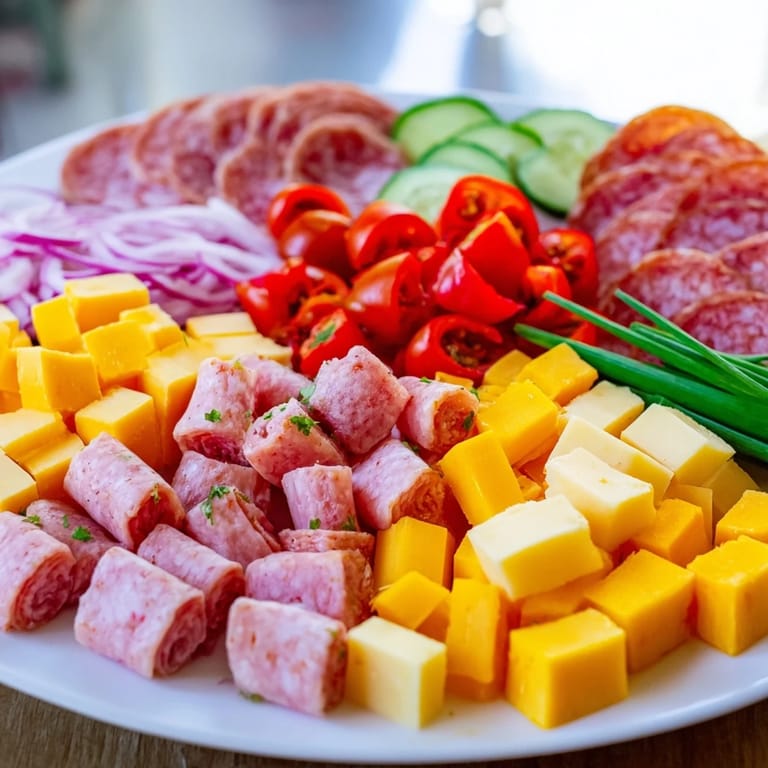
I remember plating this for a dinner party last spring, watching my guests' faces light up as they saw the carefully arranged meats, the jewel-toned cheeses, and the pop of red from the cherry tomatoes. One friend, who'd been skeptical about keto, filled her plate twice and said she'd never realized eating low-carb could look this beautiful. That moment taught me that presentation isn't vanity—it's part of the eating experience, especially when you're trying to prove that healthy eating doesn't mean sacrifice.
Ingredients
- Sliced roast beef (120 g): The richness of roast beef anchors the platter with deep, savory notes. Look for meat that's sliced thin but not paper-thin, so it has substance when you pick it up.
- Sliced smoked turkey (120 g): This brings a lighter smokiness that contrasts beautifully with the beef. Quality matters here—avoid anything with added sugars or fillers.
- Prosciutto (120 g): The delicate, salty punch of prosciutto makes it worth seeking out from a good butcher. It drapes elegantly and melts on your tongue.
- Sliced salami (100 g): Choose a variety with visible fat marbling, which keeps it tender and flavorful. This is where you can experiment with specialty types like soppressata or pepperoni.
- Aged cheddar, cubed (100 g): The sharpness of aged cheddar cuts through the richness of the meats. I prefer chunky cubes over thin slices for better visual texture.
- Gruyère, sliced (100 g): Gruyère adds a nutty sweetness that grounds the flavor profile. Its golden color also looks stunning on the platter.
- Manchego, sliced (100 g): This Spanish cheese brings an earthy complexity. Its pale yellow hue creates natural color contrast without effort.
- Cherry tomatoes, halved (1 cup): The brightness of tomatoes cuts through the salt and fat, and those ruby-red halves become jewels on your platter.
- Cucumber, sliced (1 cup): Cucumber adds refreshing crunch and helps balance heavier elements. Slice them thick enough that they don't wilt.
- Radishes, sliced (1 cup): These peppery discs add color and a subtle bite that keeps your palate interested. They stay crisp longer than most vegetables.
- Baby bell peppers, sliced (1 cup): The sweetness and vibrant colors—red, yellow, orange—make these essential for visual impact and flavor variety.
- Celery sticks (1 cup): Celery is the backbone vegetable that absorbs flavors from everything around it. Keep it cold and crisp.
- Green olives (1/4 cup): Choose pitted or unpitted based on your crowd's preferences. The briny salt is essential to the overall balance.
- Black olives (1/4 cup): A mix of green and black olives creates visual and flavor complexity—don't skip the variety.
- Fresh parsley, chopped (2 tbsp): The bright herbaceous finish ties everything together and adds a final touch of color.
- Extra virgin olive oil (2 tbsp): A quality oil transforms the vegetables from plain to elegant. The fruitiness matters here.
- Freshly ground black pepper: This is your final seasoning layer. Grind it fresh over the vegetables just before serving for maximum aroma and flavor.
Tired of Takeout? 🥡
Get 10 meals you can make faster than delivery arrives. Seriously.
One email. No spam. Unsubscribe anytime.
Instructions
- Gather and chill your platter:
- Start with a large, beautiful platter—this is your canvas. If it's not cold, place it in the refrigerator for 15 minutes before you begin. A cold surface keeps meats and cheeses from warming too quickly and maintains that fresh appeal.
- Arrange the meats in organized clusters:
- Begin by laying out your roast beef, turkey, prosciutto, and salami in separate dense groupings. Think of each meat as its own little neighborhood on the platter. This organization makes it easier for guests to select what they want, and it looks intentional and beautiful rather than random.
- Position the cheeses with intention:
- Place your three cheeses in tight groupings beside the meats. Alternate between cubes of cheddar, slices of Gruyère, and slices of Manchego. The visual contrast of different shapes and colors is what makes this platter sing. Leave small gaps—they're just as important as the food itself.
- Fill the spaces with vegetables:
- Now fill the remaining gaps with your non-starchy vegetables, clustering similar items together. All the cherry tomato halves in one area, cucumber slices in another, radishes grouped by themselves. This creates a sense of structure and makes the platter feel organized rather than haphazard. The vegetables should fill spaces and create visual weight to balance the meats and cheeses.
- Scatter the olives for pops of color:
- Distribute green and black olives throughout the platter, nestling them into gaps and unexpected places. They're like jewels that catch the eye and add visual interest.
- Finish with oil, pepper, and herbs:
- Just before serving, lightly drizzle the vegetables with your best extra virgin olive oil. You want a delicate coating, not a puddle. Grind fresh black pepper over everything, paying special attention to the vegetables. Finally, shower the entire platter with fresh chopped parsley. This final layer of color and fragrance completes the experience.
 Save to Pinterest
 There's a moment that happens at almost every dinner where someone tries the platter and says, 'This is so simple but so good.' That simplicity is the whole point. This isn't about culinary wizardry—it's about respecting good ingredients enough to let them shine. The keto power plate taught me that sometimes the most elegant meals are the ones that require the least pretense.
Customization and Substitutions
This platter is infinitely flexible, which is part of its charm. I've made it with roasted chicken instead of roast beef on nights when I had leftovers to use up. I've swapped in Emmental, Fontina, or Gouda depending on what the cheese counter had looking beautiful that day. The point is to work with what you have and what you love. If you're serving it to a mixed group with different dietary preferences, you can add a small section of nuts or seeds for non-keto guests. One of my favorite variations is adding pickled vegetables—pickled radishes, pickled onions, or cornichons—which add a tangy brightness that elevates the whole experience. Some people love adding a small bowl of herbed cream cheese or aioli for dipping, which transforms the eating experience from picking and grazing to something more interactive and fun.
The Art of Arrangement
I've learned that the way you arrange a platter tells a story about how much you care. It doesn't have to be perfectly symmetrical—in fact, asymmetry often looks more sophisticated. Think about color distribution: you don't want all the red items in one corner. Think about texture: alternate smooth cheese slices with crispy vegetable chips. Think about flow: create visual pathways that guide your eye around the platter naturally. The meats shouldn't all bunch together, and the vegetables shouldn't look like an afterthought. When you step back and look at your finished platter, it should feel like every element is where it is on purpose.
Pairing and Serving Suggestions
This platter is remarkably versatile as part of a larger meal or as a standalone feast. I've served it at casual weeknight dinners, elegant dinner parties, and even as a hearty lunch. It pairs beautifully with dry white wines—a Sauvignon Blanc or Pinot Grigio complements both the meats and the vegetables. If you prefer non-alcoholic options, sparkling water with fresh lemon is perfect; the bubbles cleanse your palate between bites. For a more substantial meal, serve it alongside crusty bread for non-keto guests, though the keto folks will be perfectly satisfied with just the platter. I've also found that this works wonderfully as a board for casual entertaining—set it out, put small plates nearby, and let people graze throughout the evening. It's the kind of food that encourages conversation and lingering at the table.
- Serve on a large platter that allows you to showcase each ingredient without crowding
- Keep the platter in a cool spot until serving, ideally serving within 30 minutes of arranging for best freshness
- Consider providing small individual plates and utensils so guests can build their own bites without using their hands
 Save to Pinterest
 The keto power plate has become my go-to when I want to feel like I've made something special without spending hours in the kitchen. It's proof that eating well doesn't require compromise, and that taking time to arrange your food beautifully is worth the effort.
Answers to Recipe Questions
- → What meats are included in this platter?
It features roast beef, smoked turkey, prosciutto, and salami, each sliced and arranged for variety and flavor balance.
- → Which cheeses complement this dish?
Aged cheddar, Gruyère, and Manchego cheeses provide rich and varied textures and flavors.
- → What vegetables are used in this plate?
Fresh cherry tomatoes, cucumber, radishes, baby bell peppers, and celery contribute crispness and color.
- → How is the platter seasoned?
It’s lightly drizzled with extra virgin olive oil and sprinkled with freshly ground black pepper, then garnished with chopped parsley.
- → Can I customize the meats or cheeses?
Yes, you can substitute with other preferred meats like roast chicken or different cheeses such as Emmental.