 Save to Pinterest
 The first time I assembled something like this, I wasn't thinking about French sophistication—I was thinking about my neighbor's book club gathering and what could possibly impress people who seemed to know wine. I remembered a corner of a Paris bistro from years back, the way a plate arrived with deliberate, almost architectural care. That's when I realized appetizers didn't have to be fussy; they just needed intention. Layers of flavor, textures that surprised, and enough visual drama to make people pause before eating. This became my version of that moment.
I made this for an impromptu dinner party on a rainy October evening, and what stuck with me wasn't the compliments—though there were plenty—but the quiet moment when someone closed their eyes after the first bite. That's when I knew the balance was right. The sweetness, the salt, the slight bitterness from the walnuts, all hitting at once. It became the appetizer I return to whenever I want people to feel welcomed and a little bit special.
Ingredients
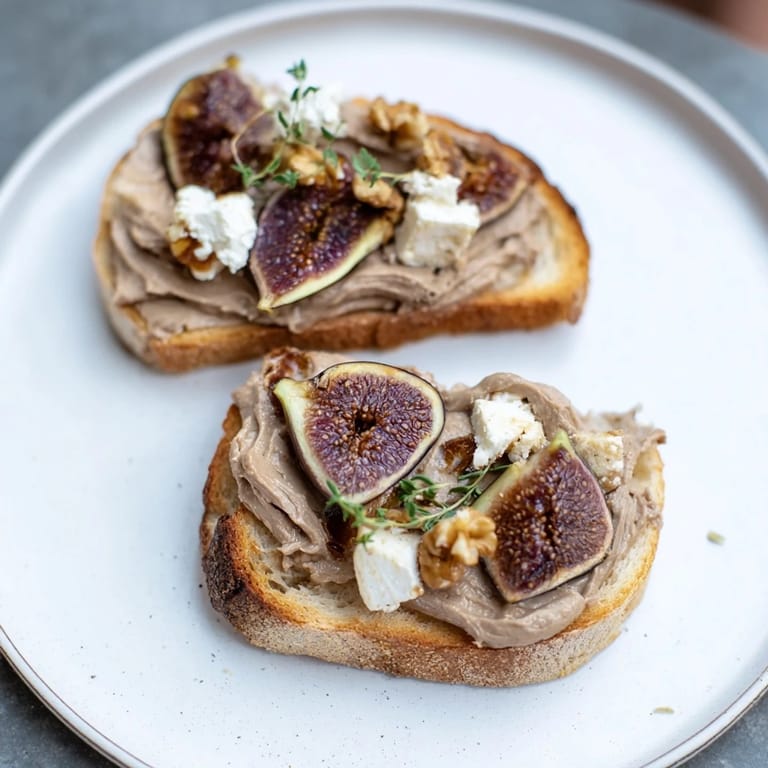
- Duck or chicken liver pâté (200 g): This is your foundation—creamy, rich, and unapologetically luxurious. Room temperature pâté spreads like butter; straight from the fridge it'll tear your delicate toasts.
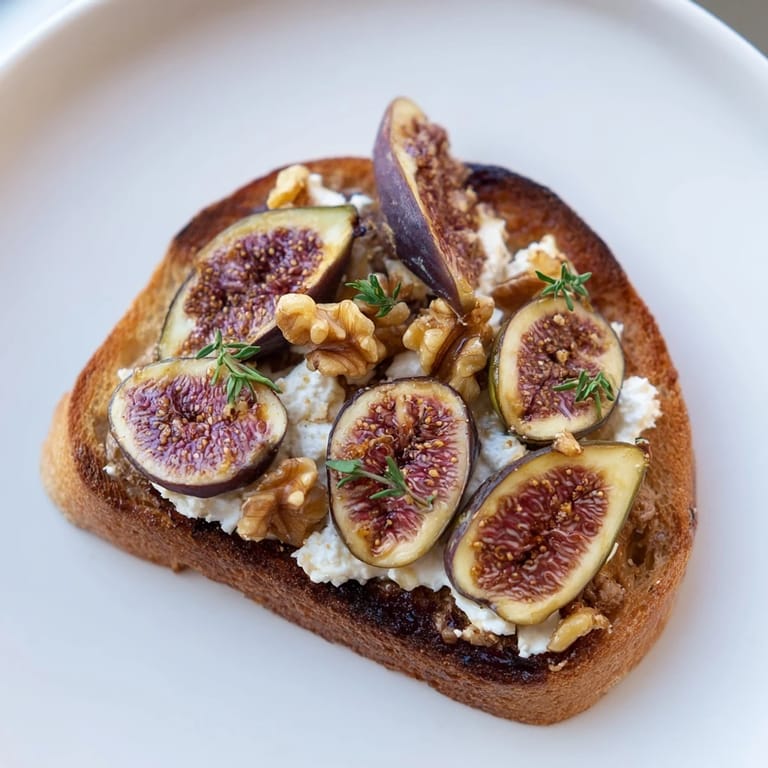
- Dried figs (120 g), thinly sliced: Their natural sweetness and chewy texture create the perfect counterpoint to the pâté's richness. I learned to slice them thinner than I thought necessary—they arrange better and look more refined.
- Soft goat cheese, chèvre (80 g), room temperature: The tang cuts through everything else, keeping your palate from getting overwhelmed. Let it sit out before you start so it dollops easily.
- Toasted brioche or gluten-free crackers (12 slices): The stage for everything else. Toasted matters—it gives you structural integrity and a subtle sweetness that echoes the figs.
- Toasted walnuts (40 g), roughly chopped: A shake of texture and earthiness that nobody expects. The toasting brings out their nuttiness in a way that raw walnuts never do.
- Fresh thyme sprigs: A whisper of herbs that makes the whole thing feel intentional, like it arrived from a proper kitchen.
- Fig jam (2 tbsp, optional): A secret brushstroke that deepens the fig flavor and adds shine. Use it if you want to amplify the sweetness; skip it if you prefer restraint.
Tired of Takeout? 🥡
Get 10 meals you can make faster than delivery arrives. Seriously.
One email. No spam. Unsubscribe anytime.
Instructions
- Set your stage:
- Arrange your toasted brioche slices or crackers on the platter in overlapping rows, like they're all leaning against each other. This isn't random—the tighter they are, the more dramatic the presentation and the easier everything stays in place.
- Build the pâté layer:
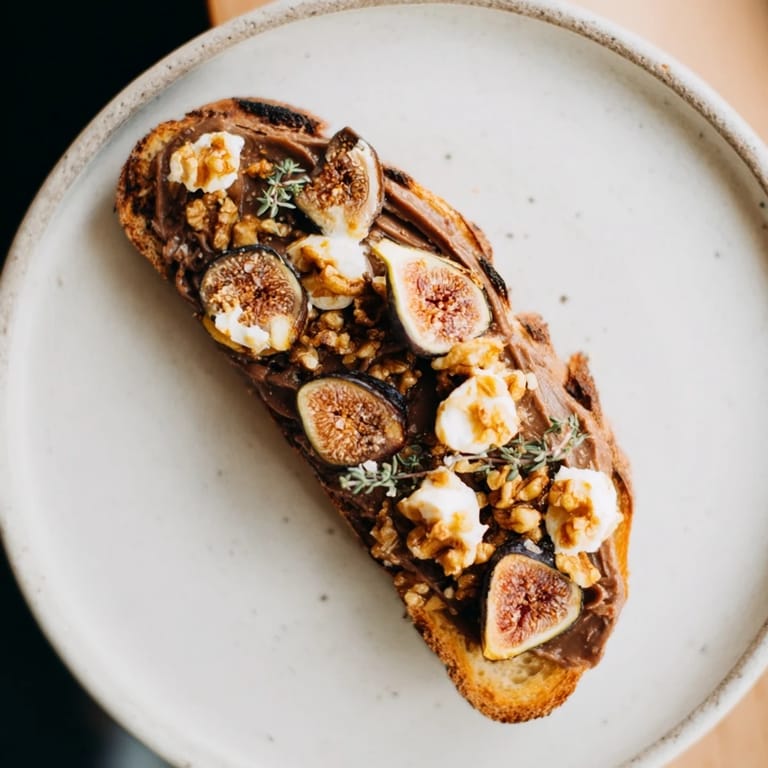
- Spread a generous layer across each piece—thick enough to taste but not so thick it overwhelms. You should still see a hint of toast peeking through.
- Add the figs:
- Layer the thin slices in a way that catches the light, creating depth. The color contrast between dark figs and pale pâté is half the beauty of this dish.
- Dot the cheese:
- Place small spoonfuls of goat cheese across the platter, nestling them between figs. Think about balance—if one side feels heavy, redistribute slightly.
- Crown with walnuts:
- Sprinkle them over everything, letting some tumble into the gaps. They catch the eye and promise texture.
- The final touches:
- If you're using fig jam, drizzle it sparingly—it's a whisper, not a statement. Scatter fresh thyme sprigs as the last flourish, and serve immediately while everything still has presence.
 Save to Pinterest
 There was a moment during that first gathering when someone asked if I'd made the pâté myself, and when I honestly said no, they looked relieved rather than disappointed. That's when I understood appetizers are really about generosity and care, not proving yourself in the kitchen. They're about saying to people, you're worth this small, beautiful thing.
On Pâté and Why It Matters
Pâté intimidates people. It shouldn't. It's butter and liver and time, elevated. The magic isn't in making it—it's in respecting it enough to serve it well. I've learned that the quality of your pâté is worth every dollar because it's the loudest voice on the plate. Splurge here, economize elsewhere. A good pâté tastes like someone cared about the animals, the process, the integrity. That flavor difference is real and it matters.
Building Flavor in Layers
This dish taught me that taste isn't linear; it's architectural. You're not just layering ingredients, you're creating moments of discovery. The first bite hits with salt and richness, the second reveals sweetness, the third brings the walnut's earthiness into focus. Someone once told me that the best dishes are conversations where every component gets a turn to speak. This one does that naturally, which is why people keep coming back for another piece.
Variations and Memories
I've played with this enough times to know what sings and what doesn't. Blue cheese instead of chèvre creates an almost aggressive elegance—it's bold and for people who know what they want. Mushroom pâté for vegetarians turns it into something earthy and subtle, less grand but equally compelling. The versions evolve, but the principle stays: contrast and intentionality. My winter version adds a touch of white wine reduction; my summer version skips it entirely for brightness.
- Try a whisper of honey instead of fig jam if you want floral sweetness rather than fruity depth.
- Toast your walnuts fresh if you can—the difference between day-old toasted and freshly toasted changes everything.
- If you're serving vegetarians, make both versions; it takes the same amount of time and they'll remember that thoughtfulness.
 Save to Pinterest
 This appetizer has become my quiet answer to the question of what makes someone feel cared for. It's not difficult, but it requires presence. That's the real recipe.
Answers to Recipe Questions
- → What types of pâté can be used in this appetizer?
Duck or chicken liver pâté are traditional, but mushroom pâté works well as a vegetarian alternative.
- → Can I substitute the cheese for another variety?
Soft goat cheese adds creaminess, but blue cheese can be used for a stronger flavor profile.
- → What breads or crackers work best for layering?
Toasted brioche provides a rich base, while gluten-free crackers offer a lighter, allergen-friendly option.
- → How does the fig jam affect the flavor?
Fig jam adds a subtle sweetness that complements the savory pâté and nuts, enhancing overall balance.
- → What garnishes enhance the appetizer's presentation and taste?
Fresh thyme sprigs add a fragrant herbal note and elevate the visual appeal.