 Save to Pinterest
 I still remember the first time I created a platter like this for my neighbors—it was an impromptu Sunday gathering, and I wanted to show them that vegan eating could be just as colorful and abundant as any spread. As I arranged those vibrant rainbow carrots next to jewel-toned grapes, I realized this wasn't just about food anymore. It was about creating a moment where everyone, regardless of their diet, could gather around something beautiful and nourishing together.
What I love most is hosting friends who think vegan means boring, then watching their faces as they taste cashew tzatziki for the first time—that moment when someone says, 'Wait, this is vegan?' That's when I know I've created something special.
Ingredients
- Rainbow carrots, 1 cup sliced: Slice them thin enough to be tender and easy to dip, but thick enough to stay crisp. The variety of colors—purple, orange, yellow—makes this platter sing before anyone even tastes it.
- Baby cucumbers, 1 cup sliced or quartered: These stay refreshingly crunchy for hours if you pat them dry after cutting. They're the quiet heroes of any platter, pairing beautifully with every dip.
- Cherry tomatoes, 1 cup assorted colors: Leave some whole to show off those gorgeous reds, yellows, and deep purples. They add a burst of sweetness that balances the savory dips.
- Radishes, 1 cup thinly sliced: Don't skip these—their subtle peppery bite wakes up your palate and their thin, translucent slices look almost architectural on the board.
- Baby bell peppers, 1 cup sliced: These add sweetness and come in the most cheerful colors. I like to keep some whole so guests can dip directly into them like nature's little cups.
- Snap peas, 1 cup: Leave them whole and raw—they're the sweet, tender bite that makes people keep coming back to the platter.
- Seedless grapes, 1 cup mixed colors: Freeze half of them 30 minutes before serving—the cold sweetness creates an unexpectedly refreshing contrast.
- Strawberries, 1 cup halved: These add a gentle sweetness that surprises guests who expected only vegetables. Choose the prettiest ones to halve so the ruby red centers show.
- Pineapple chunks, 1 cup: Fresh pineapple brings tropical brightness and a subtle acidity that cleanses the palate between dips.
- Kiwi sliced, 1 cup peeled: Their vibrant green and tiny black seeds are almost too pretty to eat—almost. They add a tart note that makes dips taste even more complex.
- Classic hummus, 1 cup: The timeless option that grounds your platter with creamy, garlicky comfort.
- Beetroot hummus, 1 cup: This is your wow factor—that deep magenta color makes people lean in immediately.
- Guacamole, 1 cup: Rich and buttery, it's the indulgent dip that even skeptics love. Keep it fresh by pressing plastic wrap directly onto the surface.
- Cashew tzatziki, 1 cup: Soaked cashews blended with lemon, garlic, and herbs create a creamy dip so good that people forget it's vegan. This is the secret weapon that changes minds.
- Pomegranate seeds, 1/4 cup: These jewel-like seeds fill gaps with color and add a tart, crunchy pop that makes every bite interesting.
- Fresh herbs, 1/4 cup mint, basil, parsley: Scatter these throughout as flavor bridges and visual freshness. They prevent the platter from looking heavy.
- Edible flowers, optional: Pansies, nasturtiums, and violas add an unexpected elegance that transforms this from snack to showstopper.
- Gluten-free crackers or pita chips, 1 cup: These give guests who want something more substantial a vehicle for the dips, and they fill visual gaps with texture.
Tired of Takeout? 🥡
Get 10 meals you can make faster than delivery arrives. Seriously.
One email. No spam. Unsubscribe anytime.
Instructions
- Prepare Your Canvas:
- Wash and thoroughly dry all your vegetables and fruits—this is crucial because water makes everything wilt faster and prevents that perfect crunch. Use a salad spinner if you have one, or pat everything down with kitchen towels. As you do this, you're already beginning to arrange in your mind, thinking about which colors should speak to which.
- Choose Your Stage:
- Select a large platter or board as your base. I prefer a wooden board or ceramic platter because they don't reflect light the way white plates do—the colors stay true and rich. If your board is dark, the vegetables will pop. If it's light, they'll seem more delicate. Either way, you're creating a frame for art.
- Position Your Anchors:
- Place your four dips in small bowls at different points on the platter—imagine them as the cardinal directions. This creates natural gathering points and helps guests navigate the spread intuitively.
- Create Color Blocks:
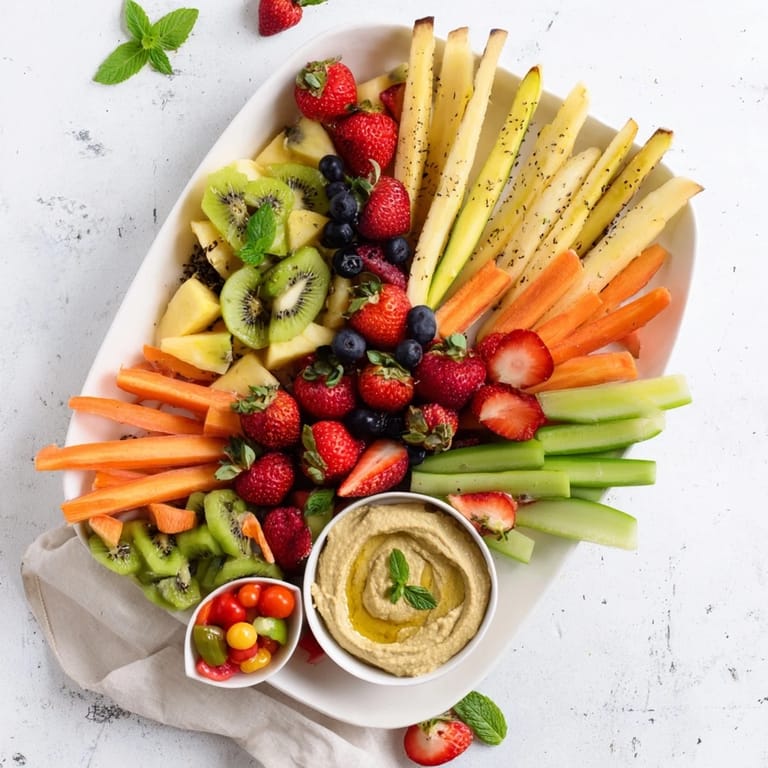
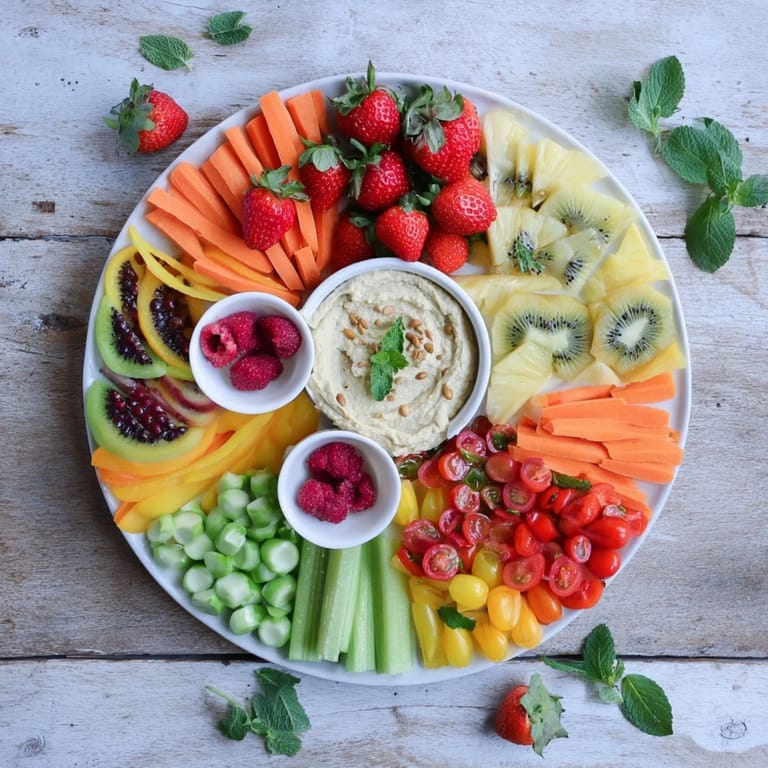
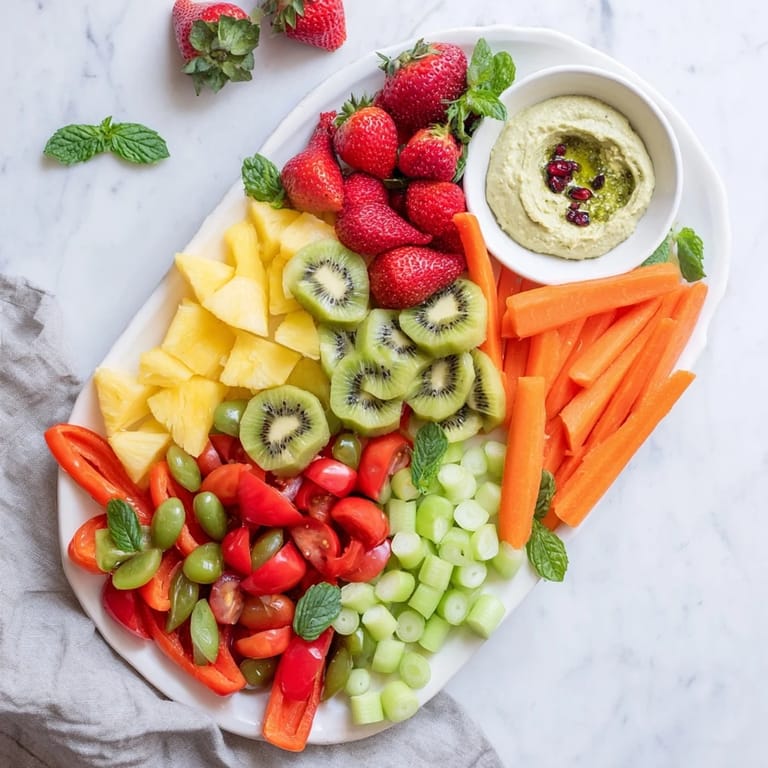
- Now comes the meditative part. Group each type of vegetable and fruit together in small sections, alternating colors and textures deliberately. Put the magenta beets next to the bright green snap peas. Let the orange carrots lead the eye to the red tomatoes. Think of it like painting—you're not scattering random marks, you're orchestrating a conversation between flavors and hues.
- Fill the Negative Space:
- Once your main vegetables and fruits are arranged, step back and look for gaps. This is where the crackers, pomegranate seeds, fresh herbs, and edible flowers come in. These small elements create rhythm and prevent any section from looking sparse or lonely. A single basil leaf between two color groups, a scatter of pomegranate seeds, a few crackers leaning at angles—these touches are what make people stop and stare.
- The Final Flourish:
- Step back and assess. Does it feel abundant? Does the eye know where to travel? If something feels off, rotate a section or add more of a color that needs emphasis. You want every inch of that board to feel intentional and generous, never cramped but never empty either.
- Serve with Intention:
- If you're serving immediately, wonderful—everything will be at its crispest. If you need to hold it, cover the vegetables loosely with a damp kitchen towel and refrigerate, leaving the dips out until just before service to prevent condensation.
 Save to Pinterest
 I'll never forget when my father—the one who'd been skeptical about my vegan cooking—grabbed a piece of pineapple, dipped it in the cashew tzatziki, and just closed his eyes for a moment. When he opened them, he looked at me and said, 'This is really good.' It wasn't the compliment that mattered most; it was that he finally understood that food like this wasn't about restriction. It was about abundance.
The Art of Arrangement
Creating a platter is less about following rules and more about trusting your eye. I've learned that the most visually successful platters are those where you think about temperature and texture alongside color. The cool crunch of radishes next to the soft sweetness of grapes, the sharp angles of carrot sticks contrasting with the round innocence of cherry tomatoes—these combinations work because they create visual rhythm. When people approach your platter, their eye should have a natural path to follow, almost like you've choreographed their movement. Avoid putting all your reds in one corner or all your greens in another. Instead, scatter your colors throughout, using warm tones to balance cool ones and vice versa.
Making the Dips Matter
The dips are what elevate this from a simple vegetable plate to something memorable. Hummus is comforting, but beetroot hummus is surprising. Guacamole is expected, but cashew tzatziki is a conversation starter. If you're buying rather than making your dips, buy from places where you trust the ingredients—these should taste fresh and alive, not like they've been sitting in a industrial kitchen for days. If you do make them yourself, which I'd encourage you to do even just once, you'll understand why they taste so much better than store-bought. The cashew tzatziki especially becomes something you'll want to make again and again—it's vegan, but it tastes indulgent in a way that makes everyone forget to check the ingredients label.
Timing and Temperature
I learned this the hard way: a warm dip on a warm platter of vegetables feels heavy. Everything should be cool and fresh. Chill your dips for at least an hour before serving, and if you have the foresight, put your platter in the refrigerator for 15 minutes before you start arranging—a cool surface keeps everything fresher longer. If you're bringing this to a gathering, transport it in a large flat container and keep it somewhere cool until the moment you want to unveil it. There's real theater in pulling this out—the gasps when people see all that color and abundance are worth the planning.
- Refrigerate dips separately so you can control their temperature independently from the vegetables
- If berries are in your produce, add them last—they'll stay firmer and prettier if they're not sitting on a cold board too long
- Taste a vegetable of each type before serving to make sure everything is at its peak freshness and crunch
 Save to Pinterest
 This platter has become my answer to almost every gathering question—potluck, bridal shower, casual dinner party, even an impromptu weeknight meal. It says, 'I care about what you eat and how it makes you feel,' without any fuss. Make it, watch people smile before they even taste it, and know that you've created something nourishing in every sense of the word.
Answers to Recipe Questions
- → What are some good dip options for this platter?
Classic hummus, beetroot hummus, guacamole, and cashew tzatziki complement the fresh vegetables and fruits perfectly, adding variety and creaminess.
- → Can the vegetables and fruits be substituted?
Yes, seasonal vegetables or fruits can be swapped in to suit availability or preference without losing the platter's vibrant appeal.
- → How should I arrange the platter for best presentation?
Arrange dips in small bowls spaced evenly, then group vegetables and fruits in color-blocked sections around them for contrast and balance.
- → What garnishes enhance the platter’s freshness?
Fresh herbs like mint, basil, and parsley, pomegranate seeds, and edible flowers add color, aroma, and a touch of elegance.
- → How long can the platter be prepared in advance?
Prepare and assemble the platter shortly before serving to maintain optimal freshness, or cover and refrigerate for a few hours if needed.
- → Are there allergy considerations to keep in mind?
Yes, cashew tzatziki contains nuts and hummus may contain sesame. Gluten-free crackers should be verified. Adjust ingredients accordingly for allergies.